


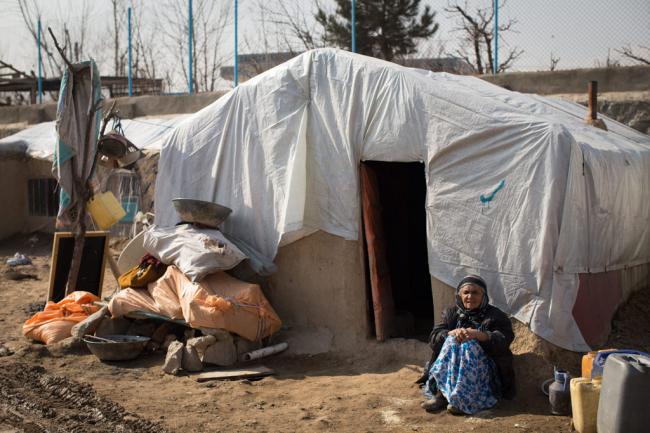
Worsening food insecurity forcing more people to migrate, finds new UN report
In its new report, At the Root of Exodus: Food security, conflict and international migration, the UN World Food Programme (WFP) found that each 1 per cent increase in food insecurity pushed 1.9 per cent more people towards migration. However, the act of migration itself can cause food insecurity, given the costs, lack of opportunities and often hazardous conditions along the journey, and force people to continue to move.
“With millions of our brothers and sisters having fled their homes and facing so much hardship, it is our duty to shed light on their tragic situation,” David Beasley, the Executive Director of WFP, said in a news release announcing the report.
“By understanding the dynamics that compel people to move, we can better address what lies at the heart of forced migration and what must be done to end their suffering,” he added.
The report is launched at a moment when multiple protracted crises and a period of political transition challenge the levels of international food and humanitarian assistance provided for refugees and people who have been forcibly displaced.
Link between food insecurity and armed conflict
The WFP study is the first time such comprehensive analysis has been carried out on the subject. It is based on quantitative and qualitative research and features often dramatic accounts of people forced to take extreme measures when left with nothing at all.
A country with rising levels of food insecurity and conflict will experience greater outward migrationWFP report
One particularly troubling finding was the link between food insecurity and armed conflict: food insecurity was found to be a significant cause for the incidence – and intensity – of armed conflict, with 0.4 percent more people fleeing a country for each additional year of conflict.
“This means that a country with rising levels of food insecurity and conflict will experience greater outward migration, or movement of people away from their homes,” noted the UN agency.
People want to stay closer to their homes
The report also found that people who are displaced often do not want to move far away from their homes, and try to stay as close to their place of origin as possible.
Nearly eight in ten Syrian refugee families interviewed had been internally displaced inside Syria at least once, and 65 per cent twice or more. Almost every single Syrian participant in the study strongly affirmed a desire to return to Syria if the situation stabilized and security prevailed.
In light of these findings, one of the key recommendations contained in the report is for increasing investments in food security and livelihoods at or near people's place of origin.
“Doing so may prevent further displacement, reduce forced onward migration, result in more cost-effective humanitarian interventions and yield greater socioeconomic benefits now and in the long term,” noted WFP.
Photo: WFP/Eoin Casey
Source: www.justearthnews.com
Support Our Journalism
We cannot do without you.. your contribution supports unbiased journalism
IBNS is not driven by any ism- not wokeism, not racism, not skewed secularism, not hyper right-wing or left liberal ideals, nor by any hardline religious beliefs or hyper nationalism. We want to serve you good old objective news, as they are. We do not judge or preach. We let people decide for themselves. We only try to present factual and well-sourced news.
Support objective journalism for a small contribution.


