


WHO welcomes European regulators’ initial green light on malaria vaccine
“This is the first time ever that a malaria vaccine has gotten to the point to be reviewed by a regulatory authority,” WHO spokesperson Gregory Hartl told reports in Geneva.
It followed the announcement by the European Medicines Agency (EMA) that it had adopted a “positive scientific opinion” for the vaccine Mosquirix for use outside the European Union.
Hartl hailed the decision as “a big development” but “not finished yet.”
The spokesperson said the EMA assessment will be reviewed by WHO in October, taking into account public health aspects of the vaccine such as affordability and cost-effectiveness, using the vaccine in field situations in developing countries, and other effective malaria control measures such as such as scaling up bed nets and rapid diagnosis tests.
Following that step, he said, the UN health agency’s policy recommendation – which will go beyond simply the efficacy, quality and safety issue aspects of the vaccine and look into whether or not this vaccine should be added to existing malaria control tools – is expected in November 2015.
There are currently no licensed vaccines against malaria, which is caused by a parasite called Plasmodium, which is transmitted via the bites of infected mosquitoes.
In the human body, the parasites multiply in the liver, and then infect red blood cells.
Symptoms of malaria include fever, headache, and vomiting, and usually appear between 10 and 15 days after the mosquito bite.
If not treated, malaria can quickly become life-threatening by disrupting the blood supply to vital organs.
According to the latest statistics available from WHO, there were nearly 200 million cases of malaria in 2013 and close to 600,000 deaths.
“Most deaths occur among children living in Africa where a child dies every minute from malaria,” according to WHO’s latest malaria fact sheet.
Hartl explained that the clearance given by the EMA did not constitute a regulatory authority approval, since the vaccine was not destined for use in the European Union. The EMA only gave an opinion on its efficacy, quality and safety.
He also clarified what “from a public health perspective” meant, namely, addressing its implementation, its use in the field in conjunction to other measures to combat malaria and measures to make the vaccine fit in with other vaccines.
Key interventions to control malaria include: prompt and effective treatment with artemisinin-based combination therapies; use of insecticidal nets by people at risk; and indoor residual spraying with insecticide to control the vector mosquitoes.
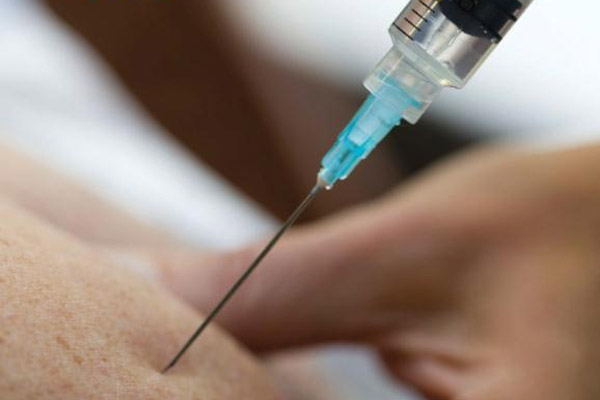
Photo: WHO (file)
Support Our Journalism
We cannot do without you.. your contribution supports unbiased journalism
IBNS is not driven by any ism- not wokeism, not racism, not skewed secularism, not hyper right-wing or left liberal ideals, nor by any hardline religious beliefs or hyper nationalism. We want to serve you good old objective news, as they are. We do not judge or preach. We let people decide for themselves. We only try to present factual and well-sourced news.
Support objective journalism for a small contribution.


