


 COVDI19
We must all accept hard choices if we’re to beat COVID-19, urges WHO
New York:Governments everywhere should adopt a much more focused approach to stopping coronavirus transmission if they want to avoid having to impose sweeping lockdowns once again.
That’s the message on Monday from the World Health Organization, (WHO), whose head of emergencies, Dr Mike Ryan, likened fighting COVID-19 to using specialised tools for surgery, to ensure better outcomes for patients:
16 million cases
The development comes as the WHO announced nearly 16 million cases of reported infection worldwide and more than 640,000 deaths.
“It’s very understandable that no country in the world that’s been through a lockdown wants to go back there, who wants to go back there, there are huge economic and other consequences,” Dr Ryan said.
“If you can understand the dynamics of transmission and be very precise in your disease understanding you can very precise in your response. It’s like in surgery, if you think about people who have brain surgery, surgeons very often use microscopes so that they can actually work at a much finer level.
“And we’ve seen huge increases in the numbers of people surviving from brain surgery because we are much precise in the surgery we can carry out.”
Six months with new coronavirus
Reiterating the need for continued vigilance against the disease and the need for authorities to ramp up tracking and tracing of contacts, WHO Director-General Tedros Adhanom Ghebreyesus noted that Thursday (30 July) marks six months since the UN agency declared COVID-19 a public health emergency of international concern.
This was the sixth time a global health emergency has been declared under the International Health Regulations, “but it is easily the most severe”, he said, during a virtual press conference at WHO headquarters in Geneva.
The pandemic continues to accelerate, Tedros continued, noting that in the past six weeks, the total number of cases had roughly doubled.
Citing Cambodia, New Zealand, Rwanda, Thailand, Viet Nam, and islands in the Pacific and Caribbean, as places that had prevented large-scale outbreaks by respecting transmission reduction measures “carefully and consistently”, Tedros also praised Canada, China, Germany and the Republic of Korea for bringing large outbreaks under control.
Safe choices
Remaining determined to stop the virus in its tracks is key to ending transmission, along with a willingness to make “hard choices to keep ourselves and each other safe”, he said.
“Although our world has changed, the fundamental pillars of the response have not: political leadership, and informing, engaging and listening to communities,” he added.
“Nor have the basic measures needed to suppress transmission and save lives: find, isolate, test and care for cases; and trace and quarantine their contacts.”
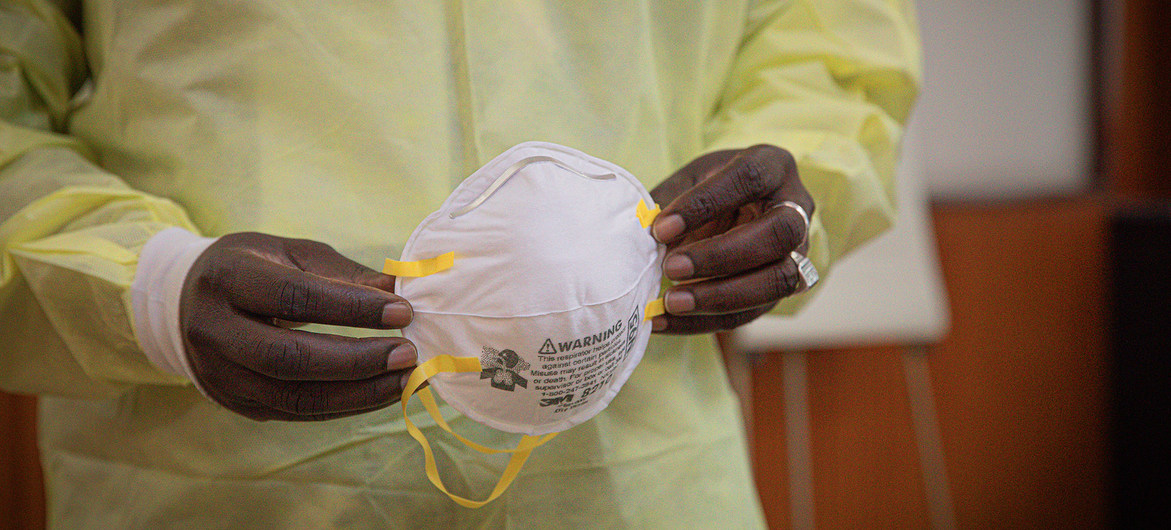
Reiterating advice born of evidence that no single health measure is sufficient to overcome COVID-19, he called on people to “keep your distance from others, clean your hands, avoid crowded and enclosed areas, and wear a mask where recommended. Where these measures are followed, cases go down. Where they’re not, cases go up.”
Under pressure
Echoing that message, WHO’s Dr Maria Van Kerkhove insisted that in addition to wearing masks every day, the world’s “new normal” meant knowing where the virus is “each and every day, where we live, we work, where we want to travel. That’s going to be part of how we move forward with this, finding the balance between keeping the virus transmission low and resuming normal activities.”
Dr Van Kerkhove, Technical lead COVID-19, WHO Health Emergencies Programme, also highlighted the mental health impact of such measures on individuals, families and communities.
“This is very difficult, no matter where we are,” she said, noting that the WHO had issued advice on its website aimed at helping people to cope if they felt under pressure. “Everyone is going through this and I think it’s important that we find different ways to talk about this with each other, whether this within our family, with our loved ones, whether it’s older individuals who are kept isolated, kept separate from the family, whether it’s our kids.”
Support Our Journalism
We cannot do without you.. your contribution supports unbiased journalism
IBNS is not driven by any ism- not wokeism, not racism, not skewed secularism, not hyper right-wing or left liberal ideals, nor by any hardline religious beliefs or hyper nationalism. We want to serve you good old objective news, as they are. We do not judge or preach. We let people decide for themselves. We only try to present factual and well-sourced news.
Support objective journalism for a small contribution.


