


 Qatar Energy
USD 20 billion shock: Qatar Energy hit hard after Iran strikes key gas hub
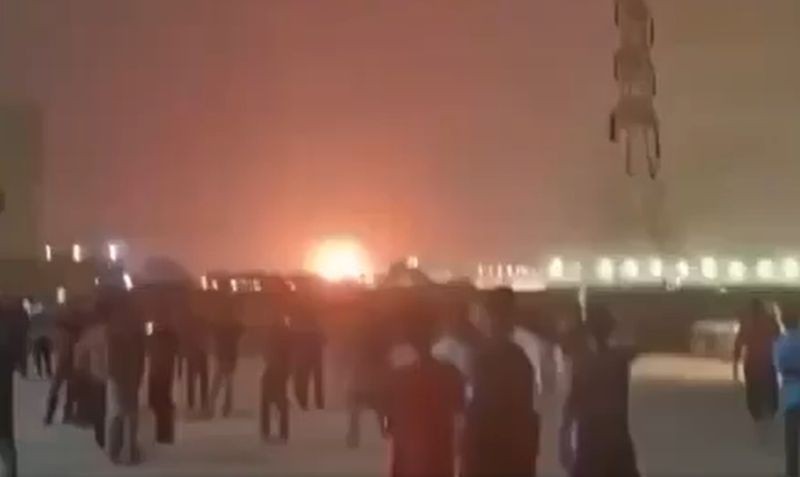
Qatar Energy expects the damage to its Ras Laffan Industrial City caused by Iranian missile strikes to cost about $20 billion a year in lost revenue and to take up to five years to repair, impacting supply to markets in Europe and Asia.
Providing an update on the damage to the facilities at Ras Laffan Industrial City, Saad Sherida Al-Kaabi, the Minister of State for Energy Affairs, the President and CEO of QatarEnergy, said, “I am relieved to confirm that no one was injured by these unjustified and senseless attacks, which weren’t just an attack on the State of Qatar but attacks on global energy security and stability. This was an attack on all of us who stand for development and human progress that is sustained by a fair, reliable, and secure access to energy.”
Qatar Energy said the attacks damaged two liquefied natural gas (LNG) producing Trains 4 and 6 totaling 12.8 million tons per annum (MTPA) of production, representing approximately 17% of Qatar’s exports.
Train 4 is a joint venture between QatarEnergy (66%) and ExxonMobil (34%), and Train 6 is a joint venture between Qatar Energy (70%) and ExxonMobil (30%).
Minister Al-Kaabi said: “The damage sustained by the LNG facilities will take between three to five years to repair. The impact is on China, South Korea, Italy and Belgium. This means that we will be compelled to declare force majeure for up to five years on some long-term LNG contracts.”
The attacks also targeted the Pearl GTL (Gas-to-Liquids) facility, a production sharing agreement operated by Shell, that converts natural gas into high-quality cleaner burning drop-in fuels and produces base oils used to make premium engine oils and lubricants, and paraffins and waxes.
“The damage caused to one of the two trains at Pearl GTL is being assessed and is expected to be offline for a minimum of one year” Minister Al-Kaabi said.
Following the Israel-US attacks on Tehran on February 28, Iran has been firing drones and missiles across the Middle East nations in retaliatory firing.
Meanwhile, Israeli PM Benjamin Netanyahu on Thursday said Iran can no longer enrich uranium or manufacture ballistic missiles.
“After 20 days, I can tell you — Iran today has no ability to enrich uranium, and no ability to produce ballistic missiles,” said Netanyahu in Jerusalem, speaking at his first in-person press conference as quoted by The Times of Israel, since the launch of the US-Israel campaign against Iran on February 28.
“We are continuing to crush these capabilities. We will crush them to dust, to ashes,” he said .
Middle East war shockwaves ripple through Asia-Pacific fuel and supply chains
The fallout from the war in the Middle East is rippling far beyond the Gulf, disrupting fuel supplies, shipping routes and supply chains across Asia and the Pacific, with some of the region’s most vulnerable economies already feeling the strain through rising prices, rationing and threats to jobs, food security and remittances.
The immediate impact is visible in sharp increases in transport costs, energy and fertilizer prices, alongside currency pressures and financial market volatility.
“The most immediate economic impact…are considerable increases in freight costs and oil, gas and fertilizer prices,” Hamza Ali Malik, Director of Macroeconomic Policy Division at the UN’s Asia-Pacific development arm (ESCAP) told UN News.
At the centre of the disruption is the Strait of Hormuz, one of the world’s most critical maritime chokepoints.
The narrow passage carries around a quarter of global seaborne oil trade, along with significant volumes of liquefied natural gas and fertilizers. Escalating hostilities have brought ship transits close to a halt, triggering immediate reactions in global energy markets.
Volatile Brent Crude oil prices have surged well above $100 per barrel, while higher transport and insurance costs are adding to the strain.
These shocks are reverberating across supply chains and raising concerns not only for trade and development, but also for the delivery of humanitarian assistance and essential goods.
Supply chains under pressure
The impact is being felt across all sea routes, with major shipping companies suspending services to the Middle East and containers stranded in congested ports. At least 20,000 seafarers in the region are also affected.
“There are significant early signs of disruption to shipping routes,” said Rupa Chanda, Director of Trade Division at ESCAP, adding that the effects are already hitting key industries.
Shortages of helium and specialised gases from the Gulf are creating a “near-immediate crisis” for semiconductor and advanced electronics production, while disruptions to petrochemical feedstocks threaten manufacturing across major Asian economies.
Fertilizer shortages are also raising concerns about future crop yields across South Asia – home to nearly two billion people – and beyond.
Support Our Journalism
We cannot do without you.. your contribution supports unbiased journalism
IBNS is not driven by any ism- not wokeism, not racism, not skewed secularism, not hyper right-wing or left liberal ideals, nor by any hardline religious beliefs or hyper nationalism. We want to serve you good old objective news, as they are. We do not judge or preach. We let people decide for themselves. We only try to present factual and well-sourced news.
Support objective journalism for a small contribution.


