


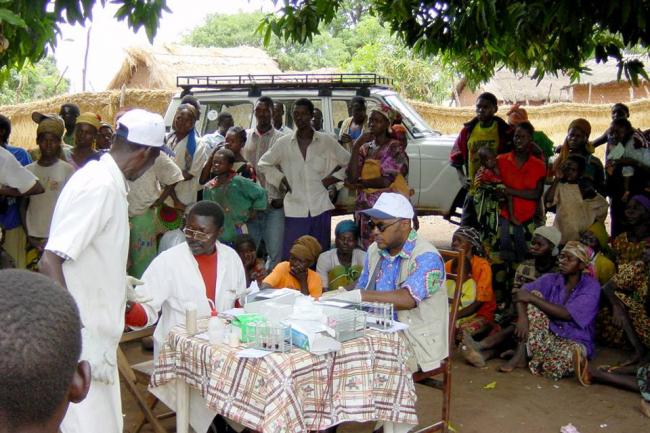
UN urges to boost investments to tackle neglected tropical diseases
Neglected tropical diseases cause blindness, disfigurement, permanent disability and death, particularly among the poor. WHO’s new report, Investing to overcome the impact of neglected tropical diseases, outlines an investment case and essential package of interventions for these diseases.
“Increased investments by national governments can alleviate human misery, distribute economic gains more evenly and free masses of people long trapped in poverty,” says WHO Director-General Margaret Chan in an official statement, which explains that investing in measures to tackle 17 diseases tropical would represent as little as 0.1 per cent of current domestic expenditure on health in affected low- and middle-income countries for the period 2015-2030.
The report highlights progress made in recent years, largely attributed to a scale-up of control interventions in reaching the poorest.
For example, in 2012 alone, more than 800 million people were treated for at least one neglected tropical disease. In 2014 there were just 126 cases reported of Dracunculiasis (guinea-worm disease), compared to almost 1800 in 2010 and 3.5 million in the mid-1980s.
Eradication of this disease is achievable with continued effort and investment.
A key feature of the report, spotlighted by Chang in the documents’ foreword, is that for the first time, it sets out financing needs, options, and targets for meeting WHO Roadmap goals by 2020, but also for reaching universal coverage of all people in need by 2030.
It sets targets for ending catastrophic health expenditures and, as part of the drive to strengthen health systems, for getting services closer to where people live.
The agency also notes that in the face of climate change, countries need to strengthen their ability to anticipate and meet new challenges in terms of vector ecology and management. Diseases spread by insects are on the move because of rapid and unplanned urbanization, population movement and environmental change.
Dengue is one of them: it is now present in more than 150 countries.
“Some of the neglected tropical diseases are no longer strictly tropical,” says Dirk Engels, Director of the WHO Control of Neglected Tropical Diseases Department.
He added, “The potential for spread provides yet another strong argument for making the needed investments – while ramping up research and development efforts – to bring all these diseases under control and eliminate as many of them as rapidly as possible.”
Many countries have recognized the importance and cost effectiveness of investing in preventing and treating neglected tropical diseases. More than 70 countries are already implementing or ready to kick off national plans for accelerated control, according to WHO.
Photo: WHO
Support Our Journalism
We cannot do without you.. your contribution supports unbiased journalism
IBNS is not driven by any ism- not wokeism, not racism, not skewed secularism, not hyper right-wing or left liberal ideals, nor by any hardline religious beliefs or hyper nationalism. We want to serve you good old objective news, as they are. We do not judge or preach. We let people decide for themselves. We only try to present factual and well-sourced news.
Support objective journalism for a small contribution.


