


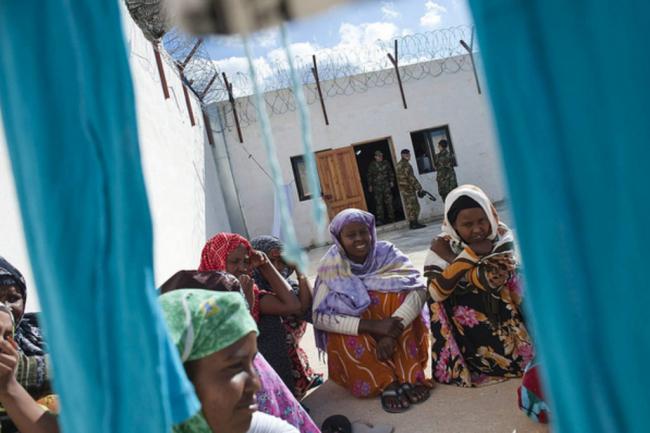
UN rights experts applaud Netherlands Government decision to help homeless migrants
In a press release issued earlier today, Philip Alston, the UN Special Rapporteur on extreme poverty, François Crépeau, the UN Special Rapporteur on the human rights of migrants, and Leilani Farha, the UN Special Rapporteur on the right to adequate housing, greeted the Dutch Government’s announcement as “a significant change” from its earlier stance.
The Government had previously refused to give emergency food, clothing, and shelter (popularly called “bed, bath and bread” in the country), despite repeated disapproval by international and regional human rights bodies.
In December, the European Committee of Social Rights, a body that oversees the European Social Charter, decided in two separate cases that the Netherlands was violating the right to emergency assistance of adult homeless irregular migrants. At the same time, the UN Committee on Economic, Social, and Cultural Rights also expressed concern about the problem.
The UN Special Rapporteurs, meanwhile, suggested that Dutch politicians were trying to score “political points” at the expense of the homeless irregular migrants in the national debate about immigration.
“We commend the Dutch government for recognising by its change of position that anyone, irrespective of whether their stay in a country is lawful, has the right to an adequate standard of living, including food, clothing and housing, and that the responsible government is obliged to allocate resources consistent with its international human rights obligations,” the UN experts declared.
Independent experts or special rapporteurs are appointed by the Geneva-based Human Rights Council to examine and report back on a country situation or a specific human rights theme. The positions are honorary and the experts are not UN staff, nor are they paid for their work.
Aston, Crépeau and Farha said they looked forward to hearing from the Government in “more detail” and “as soon as possible” about their next steps to ensure that the municipalities do, indeed, receive the necessary funding, adding that they would closely monitor developments in the country.
Photo: UNHCR/M. Edström
Support Our Journalism
We cannot do without you.. your contribution supports unbiased journalism
IBNS is not driven by any ism- not wokeism, not racism, not skewed secularism, not hyper right-wing or left liberal ideals, nor by any hardline religious beliefs or hyper nationalism. We want to serve you good old objective news, as they are. We do not judge or preach. We let people decide for themselves. We only try to present factual and well-sourced news.
Support objective journalism for a small contribution.


