


 Japan
Japan
Japanese MP sparks debate by opposing expansion of Muslim burial sites
Tokyo/IBNS: A Japanese lawmaker has ignited fresh controversy after publicly rejecting proposals to expand Muslim burial grounds in the country, highlighting ongoing tensions between Japan’s traditional practices and the demands of its increasingly diverse population.
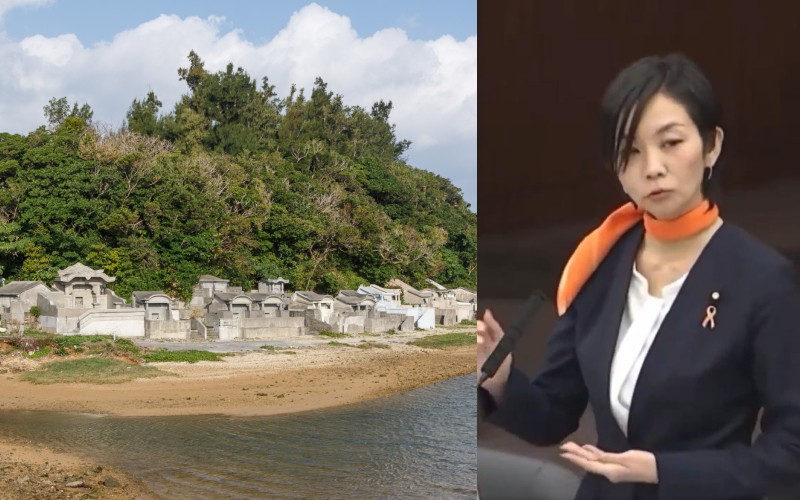
Mizuho Umemura, a member of the conservative Sanseito party, argued during a parliamentary committee session that Japan does not need additional burial sites, pointing to the nation’s overwhelming preference for cremation and longstanding religious and cultural norms.
'Japan has enough burial sites'
Umemura stressed that more than 99% of funerals in Japan involve cremation—an outcome shaped by centuries-old Buddhist and Shinto traditions, as well as limited land availability in this densely populated country.
She maintained that expanding burial plots specifically for Muslims would be unnecessary and impractical.
Far-right Sanseito politician Umemura Mizuho is going viral for speaking out against the burial of Muslim residents of Japan, arguing that cremation is Japanese culture.
— Jeffrey J. Hall 🇯🇵🇺🇸 (@mrjeffu) November 29, 2025
Prior to the 20th century, burial was normal for most Japanese people.pic.twitter.com/bEo0JwKx71
Japan’s Muslim population, estimated at 200,000 to 350,000, faces difficult choices when a family member dies.
Islamic teachings forbid cremation, leaving loved ones struggling between repatriating remains—often at a high financial cost—or securing one of only a handful of dedicated Muslim burial sites within Japan.
Currently, there are about 10 such plots nationwide, with none available in major regions such as Tohoku or Kyushu, leaving many families with no nearby options.
MP suggests cremation or repatriation for Muslims
In her remarks, Umemura suggested that Muslims living in Japan should either accept cremation, despite religious prohibitions, or send bodies abroad for burial.
She referenced practices seen in parts of Europe and the United States, where some families reportedly choose repatriation when faith-based burial facilities are limited.
Her comments have been met with concern among religious rights advocates, who argue that forcing communities to choose between violating religious law and incurring high repatriation costs undermines Japan’s commitment to accommodating minority groups.
Local opposition cites environmental concerns
Efforts to establish new Muslim cemeteries in Japan have repeatedly faced resistance from local residents.
Some communities argue that burials could contaminate soil, groundwater, or agricultural land.
Although experts say modern burial practices can mitigate such risks, the perception persists—fueling opposition to projects in rural and suburban areas.
Municipal councils have, in some cases, rejected proposals for Muslim cemeteries following strong pushback from residents worried about their environment, land value, or shifts in community identity.
A growing debate in an evolving Japan
Japan’s evolving demographic landscape—marked by a rising foreign workforce, more international students, and a steadily growing Muslim community—has tested the country’s ability to adapt its infrastructure for a more multicultural society.
Prime Minister Sanae Takaichi has emphasised preserving Japan’s cultural traditions while cautiously opening the door to necessary policy adjustments.
The debate surrounding Muslim burial sites now stands as a key flashpoint in this delicate balance.
For many in the Muslim community, burial accommodation is not just a logistical issue, but a question of dignity, religious freedom, and belonging.
For conservatives like Umemura, the push to expand burial sites challenges deeply rooted cultural norms and practical realities in a country where land scarcity shapes nearly every aspect of urban planning.
A national conversation far from over
Umemura’s comments have reignited nationwide debate, sparking discussions within parliament, local governments, and civil society groups about how Japan should navigate cultural integration while respecting its traditions.
As the country continues to diversify, the question of how to accommodate religious minorities—both in life and in death—is likely to remain a pressing and contentious issue.
Support Our Journalism
We cannot do without you.. your contribution supports unbiased journalism
IBNS is not driven by any ism- not wokeism, not racism, not skewed secularism, not hyper right-wing or left liberal ideals, nor by any hardline religious beliefs or hyper nationalism. We want to serve you good old objective news, as they are. We do not judge or preach. We let people decide for themselves. We only try to present factual and well-sourced news.
Support objective journalism for a small contribution.


