September 21, 2026 12:24 am (IST)

Follow us:


UN rights council urges universal protections for all
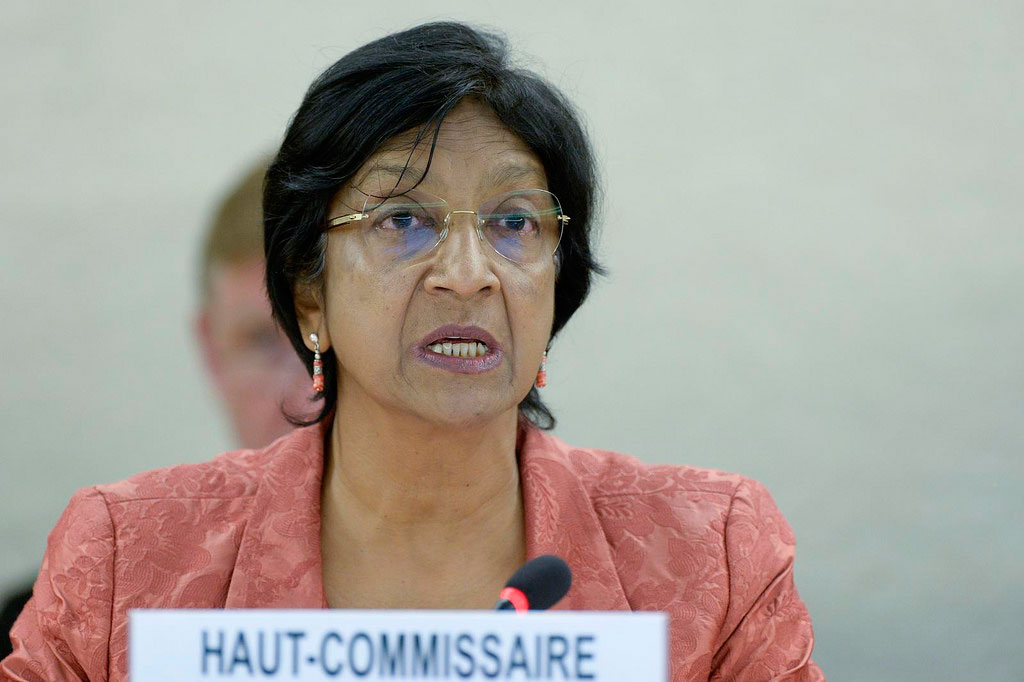
New York, Jun 11 (IBNS): In her last opening statement to the United Nations Human Rights Council, outgoing High Commissioner for Human Rights Navi Pillay stressed on Tuesday the benefit to all countries of ensuring universal protection of individuals and groups from abuse, even if it means the countries are then subject to criticism.
“Effective human rights advocacy must necessarily open a Pandora’s box of hidden abuses. It does so to let in light and air, so that work may begin to ensure better governance and justice,” Pillay, whose term ends 31 August, said as she opened the 26th session of the Council, the Organization’s major human rights body.
“Human rights violations are among the root causes of every type of instability and conflict, which means that every State has an interest in detecting gaps in its human rights protection,” she added.
Noting that she has been High Commissioner over six years out of the eight that the 47-member Council has existed, she said she maintained her belief that “the credibility of human rights work depends on impartiality and commitment to truth, with no tolerance for double standards.”
She said that the Council has brought strength and flexibility to that work and, in particular, that the Universal Periodic Review (UPR), which examines the rights records of all Member States, is “admirably universal, impartial and non-selective and has had remarkable success in encouraging States to recognize and resolve gaps in human rights protection, with new emphasis on dialogue with civil society.”
She praised the evolution of the use of independent experts, or rapporteurs, during her tenure, and the strengthening of human rights treaty bodies, adding that recommendations from all mechanisms are best actualized through integrated national plans.
Regarding the full UN rights machinery, she welcomed the increased attention to human rights by the Security Council, noting that since April alone, the body requested reports on the situation in the Central African Republic, Syria, Libya, Mali, South Sudan, Ukraine and the Democratic Republic of Korea.
She also welcomed Secretary-General Ban Ki-moon’s “Rights Up Front” plan of action to mainstream human rights within the entire UN system. Such initiatives “demonstrate heightened recognition that human rights are fundamental to peace, security and development,” she said.
Describing a gamut of conflict situations, however, she expressed regret that the international community remains unable to consistently react strongly and quickly to crises, “including situations of grave human rights violations with high potential for regional overspill.”
In addition, she pointed to a list of ills that her Office found in many countries, from brutal anti-terror tactics to corruption to austerity policies that hurt the vulnerable, as well as discrimination that caused suffering among women, homosexuals, ethnic minorities and others. She expressed concern that often States were not willing to discuss such problems.
“The very careful reporting and analysis that is done by my Office, and our calls for investigations into allegations of abuse, have frequently been greeted with stone-walling and denial,” she said.
She maintained that such reactions were counterproductive because her Office also assists States to repair gaps in protection regimes, and “to pursue policies that promote equality, dignity, development and the resolution of conflict, thus helping to realise the full sense of its double mandate – to promote and to protect the rights of all.”
Including special discussions on ending female genital mutilation and forced marriage, safety of journalists, and other issues, the 26th session of the Human Rights Council will run through 27 June.
(High Commissioner for Human Rights Navi Pillay addresses the opening of the twenty-sixth session of the Human Rights Council. UN Photo/Jean-Marc Ferré)
Support Our Journalism
We cannot do without you.. your contribution supports unbiased journalism
IBNS is not driven by any ism- not wokeism, not racism, not skewed secularism, not hyper right-wing or left liberal ideals, nor by any hardline religious beliefs or hyper nationalism. We want to serve you good old objective news, as they are. We do not judge or preach. We let people decide for themselves. We only try to present factual and well-sourced news.
Support objective journalism for a small contribution.



Latest Headlines
Italy PM Meloni announces big school plan: Burqa, hijab ban and cap on foreign students
Sun, Sep 20 2026
North Korea fires two missiles toward East Sea, South Korea confirms
Sun, Sep 20 2026
Houthis claim Saudi F-15 shot down as Mecca drone row escalates
Wed, Sep 16 2026