September 21, 2026 12:18 am (IST)

Follow us:


UN deeply concerned over Burundi political infighting
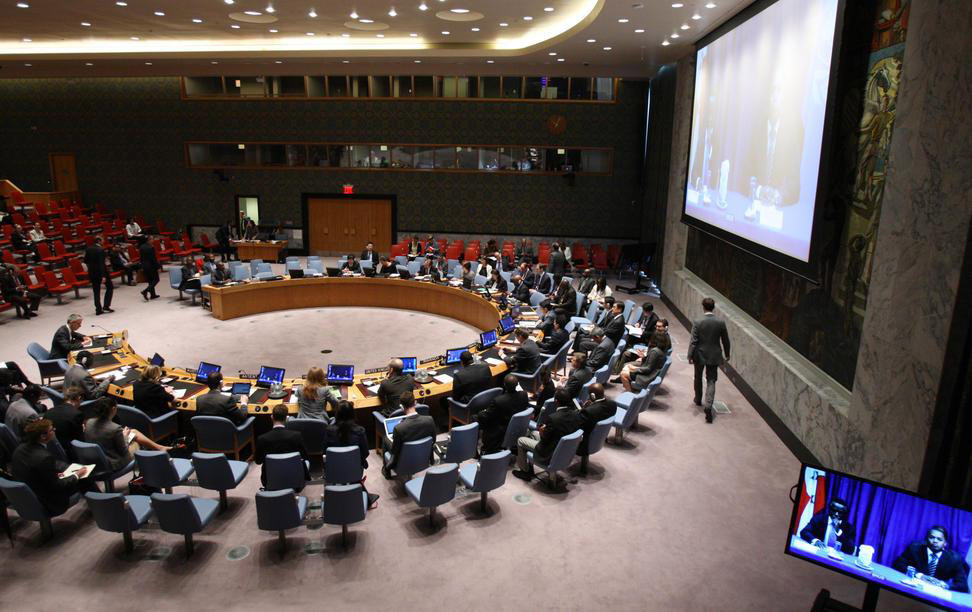
New York, May 15 (IBNS): The political situation in Burundi remains tense with limited political space not conducive to the protection of human rights, a United Nations envoy on Wednesday told the UN Security Council on Wednesday, warning that as the country approaches elections in 2015, there is a possibility of violence.
“In the approach of the election period, there is a propensity to political violence and confrontation between youths affiliated with political parties, reflecting the deleterious political climate,” Secretary-General Ban Ki-moon’s Special Representative, Parfait Onanga-Anyanga, told the 15-member Council.
“To prevent exacerbation, we particularly recommended that the authorities intensify efforts to promote better political governance through dialogue and tolerance, while putting an end to impunity,” he continued, adding that it is also an urgent need to reduce the illicit flow of weapons into the small Central African country.
Mistrust that divides the Burundian political class is still manifesting itself in the negotiations and the adoption of the law in April that established the Truth and Reconciliation Commission, said Onanga-Anyanga.
The law aims to investigate events in the largely inter-ethnic fighting between Hutus and Tutsis that erupted even before Burundi gained independence from Belgium in 1962.
“It is unfortunate that the passage of this important legislation to implement mechanisms of transitional justice has not [led to] overcoming the partisan divide,” he said, warning that the commission’s credibility and long-term prospects for reconciliation hang in the balance.
Burundi has been considered a UN peacebuilding success story. It was among the first, along with Sierra Leone, to be put on the agenda of the UN Peacebuilding Commission (PBC) when it was set up in 2006, to ensure that countries once ravaged by war do not relapse into bloodshed.
The UN Office in Burundi (BNUB) was set up in 2006 following a ceasefire between the Government and the last remaining rebel force to support peace consolidation, democratic governance, disarmament and reform of the security sector. Last month, the Council agreed that BNUB would wrap up at the end of this year, and transition to a UN country team (UNCT).
“In many ways, this is an historic moment, as it marks the beginning of the end of a stand-alone UN political presence in Burundi, in order to focus on development activities through a strengthened UNCT,” Onanga-Anyanga said, lauding the completion of a Joint Transition Plan presented on Wednesday to the Council.
He said he also remains optimistic that despite the “disturbing facts mentioned here”, the Burundian people and Government would “overcome their differences and address, together common challenges.”
He urged calm and stressed that the country has all the assets to build a rich future “provided they finally turn back the demons of exclusion and violence.”
(The Security Council meets on the situation in Burundi. UN Photo/Devra Berkowitz)
Support Our Journalism
We cannot do without you.. your contribution supports unbiased journalism
IBNS is not driven by any ism- not wokeism, not racism, not skewed secularism, not hyper right-wing or left liberal ideals, nor by any hardline religious beliefs or hyper nationalism. We want to serve you good old objective news, as they are. We do not judge or preach. We let people decide for themselves. We only try to present factual and well-sourced news.
Support objective journalism for a small contribution.



Latest Headlines
Italy PM Meloni announces big school plan: Burqa, hijab ban and cap on foreign students
Sun, Sep 20 2026
North Korea fires two missiles toward East Sea, South Korea confirms
Sun, Sep 20 2026
Houthis claim Saudi F-15 shot down as Mecca drone row escalates
Wed, Sep 16 2026