


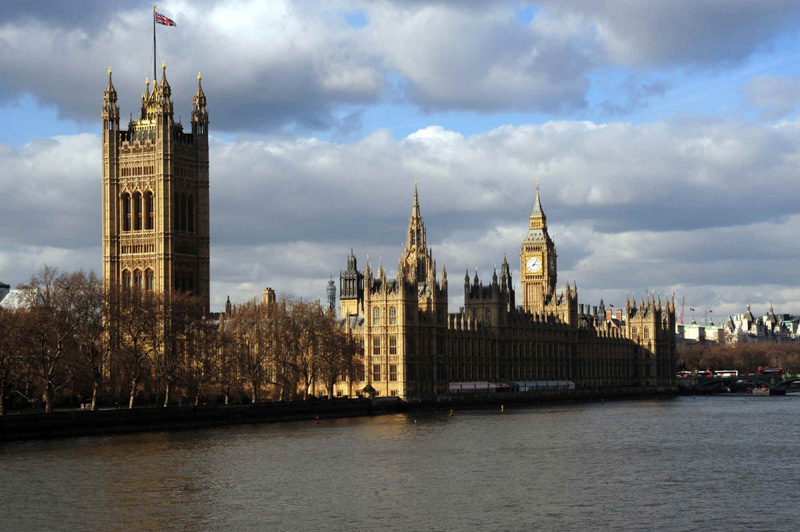
 Committee on Standards
UK: Committee launches new inquiry into All Party Parliamentary Groups
London: The Committee on Standards in the UK on Monday announced a new inquiry into All Party Parliamentary Groups (APPGs).
The Committee will be undertaking a wide-ranging inquiry into the rules for and regulation of the unofficial groups, read an official statement.
It will be the first in-depth investigation into the informal cross-party groups since the Standards Committee previously reviewed them in 2013.
The previous inquiry considered a wide range of aspects of APPG regulation, and in its report proposed a number of changes to the rules on APPGs which were agreed by the House in 2014.
That inquiry followed a report by the Speakers’ Working Group led by the former Leader of the House, Rt Hon Jack Straw MP.
The Committee is now inviting written evidence from interested individuals inside and outside the House, including organisations, companies, think tanks and academics, journalists and members of the public on the rules for and regulation of All-Party Parliamentary Groups.
Some of the areas the Committee is particularly interested to investigate include:
The value and benefits of APPGs to the House.
Transparency and appropriateness of funding of APPG activities and secretarial support.
The role of external secretariats to APPGs
The risk of APPGs being used for access by lobbyists, other organisations or by foreign governments, and how any conflicts of interests arising can be managed
Use of Parliamentary passes by staff exclusively supporting APPGs
Financial governance and controls
Other governance and compliance issues, including assurance that APPGs are meeting relevant employment law and data protection laws
Status of APPGs within the House, including the risk of confusion with select committees, and branding of APPG activities and publications
Who should be accountable for ensuring an APPG complies with the rules
How APPGs can be better supported to comply with the rules
The proportionality and effectiveness of current requirements on holding of AGMs and formal meetings, and election of officers
Since the previous inquiry into APPGs, there has been continual growth in the number of them operating across Parliament, with more than 600 APPGs now active. The unofficial groups can represent anything from subjects such as Acquired Brain Injury to Archaeology, with country groups aiming to foster improved relations or better understanding with other countries.
Chris Bryant MP, Chair of the Committee on Standards, said: “All Party Parliamentary Groups may be informal, but they can play a vital role in the work of Parliament and our democracy."
Support Our Journalism
We cannot do without you.. your contribution supports unbiased journalism
IBNS is not driven by any ism- not wokeism, not racism, not skewed secularism, not hyper right-wing or left liberal ideals, nor by any hardline religious beliefs or hyper nationalism. We want to serve you good old objective news, as they are. We do not judge or preach. We let people decide for themselves. We only try to present factual and well-sourced news.
Support objective journalism for a small contribution.


