


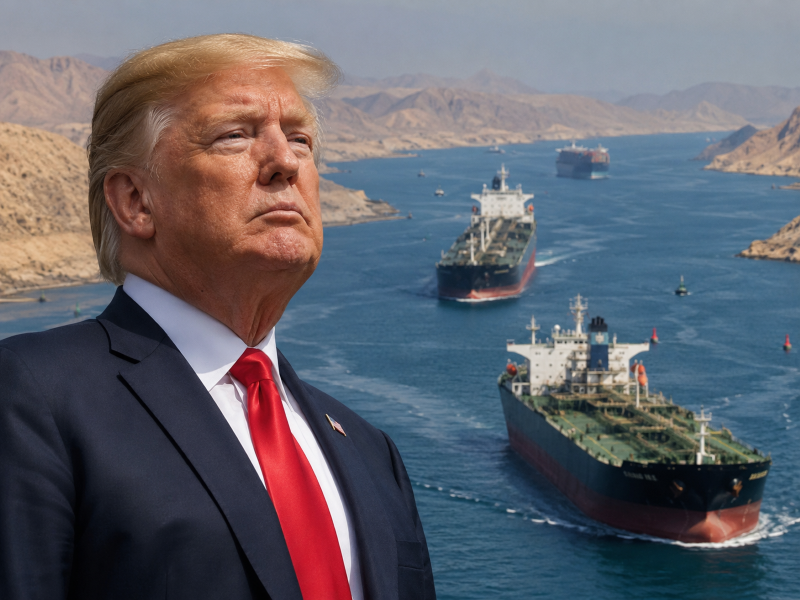
Trump wants countries to pay US for securing Strait of Hormuz amid Iran conflict
US President Donald Trump has demanded that countries benefiting from the security of the Strait of Hormuz reimburse the United States for the costs of protecting the crucial oil-shipping route, as tensions with Iran continue to disrupt regional energy supplies.
Trump made the demand in a series of posts on Truth Social on Monday, arguing that the United States was doing more to protect global energy supplies than for its own interests.
He said countries that benefit from the security provided by US forces should bear part of the cost once the conflict with Iran ends.
Trump also claimed that oil was continuing to flow through the Strait of Hormuz despite the ongoing military confrontation.
Trump: Countries should reimburse US
Trump argued that countries around the world had provided little assistance to the United States while benefiting from American efforts to keep the strategic waterway secure.
His latest remarks revive his earlier push for countries using the Strait to share the cost of US security operations.
In July, Trump had proposed a 20% reimbursement fee on cargo shipped through the waterway, before later saying that arrangement would be replaced by investment deals with Gulf states.
The Strait of Hormuz is a critical global energy chokepoint, making its security a major concern for oil markets and countries dependent on Gulf energy exports.
Iran, US at odds over Hormuz control
Trump's claims come amid competing positions from Washington and Tehran over the status and security of the waterway.
The Trump administration has said US forces are securing the Strait and keeping commercial traffic moving.
The White House said in August that nearly 1,500 commercial vessels had travelled through the waterway under US protection.
Iran, meanwhile, has sought to impose its own conditions on vessels using the Strait and has warned shipping operators over alleged violations of its operating protocols.
Shipping activity remains well below normal levels amid attacks on commercial vessels and continuing restrictions, adding to concerns about global oil supplies.
Trump says Iran wants a deal
Alongside his comments on Hormuz, Trump said Iran was seeking a quick agreement with Washington.
He indicated that the United States remained open to engagement but said any decision on negotiations would ultimately be his.
The comments come as diplomatic efforts to address the Strait of Hormuz standoff face fresh difficulties.
A planned meeting between Iran and Gulf countries in Oman was postponed, with Omani Foreign Minister Badr Albusaidi citing the need for consensus. No new date was immediately announced.
Oil prices rise as Hormuz crisis deepens
The uncertainty surrounding the waterway has continued to weigh on energy markets.
Oil prices rose on Monday as fresh attacks and concerns over supply disruptions added to fears about the impact of the conflict on global energy flows. Brent crude moved above $107 a barrel amid the latest escalation.
The risks extend beyond the Strait itself. Damage to Saudi Arabia's East-West oil pipeline has also raised concerns about alternative routes for Gulf crude exports.
The pipeline is important because it allows Saudi oil to bypass the Strait of Hormuz. Any prolonged disruption could therefore further tighten global supplies.
Houthi attacks add to regional tensions
The crisis has also spread beyond the immediate Gulf theatre.
Iran-aligned Houthi forces in Yemen have launched fresh attacks against Saudi Arabia, further increasing pressure on regional oil and shipping routes.
Reuters reported that the renewed violence came as Gulf states postponed talks with Iran over arrangements for the Strait.
The developments have increased concerns that the conflict could expand to additional fronts and further disrupt global energy supplies.
Diplomatic push hits setback
The postponement of the Iran-Gulf meeting represents another setback for efforts to establish arrangements for shipping through Hormuz.
Oman had been expected to host discussions involving Iran and Gulf states on the strategic waterway, but the meeting was postponed without a new date.
For now, the Strait remains at the centre of the wider conflict, with the US seeking to maintain commercial energy flows, Iran challenging aspects of the US position and regional governments facing growing pressure over the security of vital shipping routes.
Support Our Journalism
We cannot do without you.. your contribution supports unbiased journalism
IBNS is not driven by any ism- not wokeism, not racism, not skewed secularism, not hyper right-wing or left liberal ideals, nor by any hardline religious beliefs or hyper nationalism. We want to serve you good old objective news, as they are. We do not judge or preach. We let people decide for themselves. We only try to present factual and well-sourced news.
Support objective journalism for a small contribution.


