September 21, 2026 12:24 am (IST)

Follow us:


Troop contributions from non-traditional countries on rise: UN
New York, May 30 (IBNS): The United Nations keeps the peace in some of the world's most violent places, and increasingly its peacekeepers are from Member States that are first-time contributors to UN peacekeeping operations with military personnel or civilian staff.
“The largest ones are India, Bangladesh, Pakistan; what we call traditional [contributors],” said UN Assistant Secretary-General for Peacekeeping Operations, Edmond Mulet, in an interview with UN Radio.
As of the end of April, UN peacekeeping missions are comprised of 97,729 police, UN military experts on mission and troops from 122 countries. Of those, 8,034 were Bangladesh citizens, 8,132 from India and 8,027 from Pakistan.
“But now there is an emergence of new troop contributing countries – countries that never participated in peacekeeping,” Mulet said.
Just a few days ago, he said, Vietnam deployed its two first military observers to the UN peacekeeping mission in South Sudan (UNMISS), and Hanoi is preparing demining units and medical units for deployment, as well.
Further, Albania, Mozambique, Papua New Guinea and the former Yugoslav Republic of Macedonia each had one person represented in that mission.
Meanwhile, countries like Mongolia, who last year had 936 citizens in UN peacekeeping operations, or Cambodia, with 649 people, “have been providing troops for the past two years in Latin America in Africa,” he said.
“So there is a multiplicity and diversification of countries that are willing and are prepared now to contribute to peacekeeping.”
There is now also a trend of NATO-member countries that are based in transitioning countries, such as in Afghanistan, to contribute to the Organization, he explained: “They have assets and they have troops and they have specialties and they are now coming to the UN to put those to good use.”
In addition, some countries contribute monetary support to peacekeeping operation for the upkeep of the 16 peacekeeping plus the UN Assistance Mission in Afghanistan (UNAMA). The approved resources for the period from 1 July 2013 to 30 June 2014 equaled about USD 7.83 billion.
“I think this is a partnership,” Mulet said. “Some countries have the financial means of supporting the budget of peacekeeping, and some other countries provide troops or police or civilian staff, so countries provide what they have and what they can.”
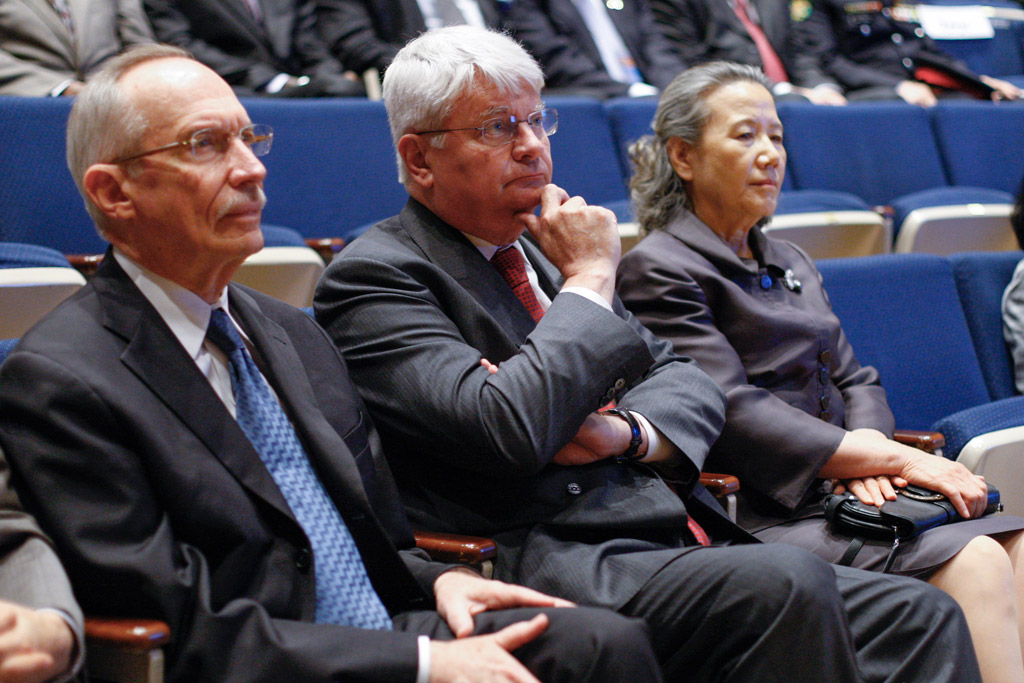
[Assistant Secretary-General for Peacekeeping Operations Edmond Mulet (left), along with Hervé Ladsous, Under-Secretary-General for Peacekeeping Operations, and Secretary-General Ban Ki-moon's wife Yoo Soon-taek at the Dag Hammarskjöld Medal Award Ceremony. UN Photo/JC McIlwaine]
Support Our Journalism
We cannot do without you.. your contribution supports unbiased journalism
IBNS is not driven by any ism- not wokeism, not racism, not skewed secularism, not hyper right-wing or left liberal ideals, nor by any hardline religious beliefs or hyper nationalism. We want to serve you good old objective news, as they are. We do not judge or preach. We let people decide for themselves. We only try to present factual and well-sourced news.
Support objective journalism for a small contribution.



Latest Headlines
Italy PM Meloni announces big school plan: Burqa, hijab ban and cap on foreign students
Sun, Sep 20 2026
North Korea fires two missiles toward East Sea, South Korea confirms
Sun, Sep 20 2026
Houthis claim Saudi F-15 shot down as Mecca drone row escalates
Wed, Sep 16 2026