


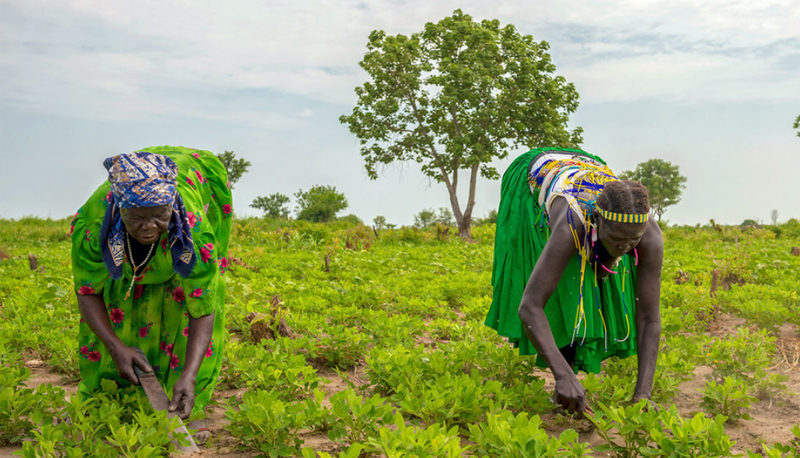
'Temporary Basic Income' could slow COVID surge, provide lifeline for world’s poorest
The immediate introduction of a Temporary Basic Income for the world’s poorest people could slow the current surge in COVID-19 and enable close to three billion people to stay at home, according to a United Nations Development Programme (UNDP) report released on Thursday.
Temporary Basic Income: Protecting Poor and Vulnerable People in Developing Countries, estimates that it would cost governments upwards of $199 billion per month, to provide what UNDP describes as “a time-bound, guaranteed basic income, to the 2.7 billion people living below or just above the poverty line in 132 developing countries.”
The agency describes it as a “feasible” measure, that is urgently needed, with the pandemic continuing to infect more than 1.5 million per week, particularly in developing countries, where seven out of ten workers make a living through informal markets, and cannot earn money if they are stuck at home.
“Many of the huge numbers of people not covered by social insurance programmes are informal workers, low-waged, women and young people, refugees and migrants, and people with disabilities – and they are the ones hardest hit by this crisis”, said UNDP in a press release issued along with the report.
Unprecedented times call for unprecedented social and economic measures...This might have seemed impossible just a few months ago - UNDP chief, Achim Steiner
UNDP has carried out assessments on the socio-economic effects of COVID-19 in more than 60 countries since the pandemic began, with data confirming that workers who lack benefits, have no choice but to venture outdoors, putting themselves and their families at risk.
Providing essentials
A Temporary Basic Income would give them the means to buy food and pay for health and education expenses, said UNDP.
It is also a realistic fiscal move: a six-month Temporary Basic Income, for example, would require just 12 percent of the total financial response to COVID-19 expected in 2020, said UNDP, which is the equivalent of just one-third of what developing countries owe, in external debt payments through 2020.
‘Unprecedented times’
“Unprecedented times call for unprecedented social and economic measures. Introducing a Temporary Basic Income for the world’s poorest people has emerged as one option. This might have seemed impossible just a few months ago”, said UNDP Administrator Achim Steiner.
“Bailouts and recovery plans cannot only focus on big markets and big business. A Temporary Basic Income might enable governments to give people in lockdown a financial lifeline, inject cash back into local economies to help keep small businesses afloat, and slow the devastating spread of COVID-19”, he said.
No ‘silver bullet’
UNDP said that a Temporary Basic Income should not, however, be viewed as a “silver bullet solution”. Protecting jobs, expanding support to micro, small and medium enterprises, and using digital solutions to identify and access people who are excluded, are all measures that countries can take.
The agency suggests that some countries could pay for the radical measure by repurposing funds they would have used to service their national debt. Developing and emerging economies will spend $3.1 trillion in debt repayment this year, according to official data.
Debt standstill
A comprehensive debt standstill for all developing countries, as called for by the UN Secretary-General António Guterres, would allow countries to temporarily repurpose these funds into emergency measures.
Several countries have already begun to embrace the concept. The West African State of Togo has distributed over $19.5 million in monthly financial aid to over 12 percent of the population through its cash transfer programme, mostly to women who work in the informal sector.
Spain recently approved a monthly budget of €250 million to top up the incomes of 850,000 vulnerable families and 2.3 million individuals, up to a minimum threshold.
UNDP is leading the UN’s socio-economic response to COVID-19 recovery and implementing recovery strategies in countries across the world.
Support Our Journalism
We cannot do without you.. your contribution supports unbiased journalism
IBNS is not driven by any ism- not wokeism, not racism, not skewed secularism, not hyper right-wing or left liberal ideals, nor by any hardline religious beliefs or hyper nationalism. We want to serve you good old objective news, as they are. We do not judge or preach. We let people decide for themselves. We only try to present factual and well-sourced news.
Support objective journalism for a small contribution.


