


Spanish job growth still 'incomplete' amid slow global economic recovery – UN report
The report, entitled Spain: Growth with Jobs and released on Monday by the International Labour Organization (ILO), urges the Spanish Government and other stakeholders to develop “an employment action plan” to stimulate an uptick in the country’s economy and avoid the stagnancy of “jobless growth” – a dreaded scenario which would continue to have deleterious effects on the living standards of Spaniards.
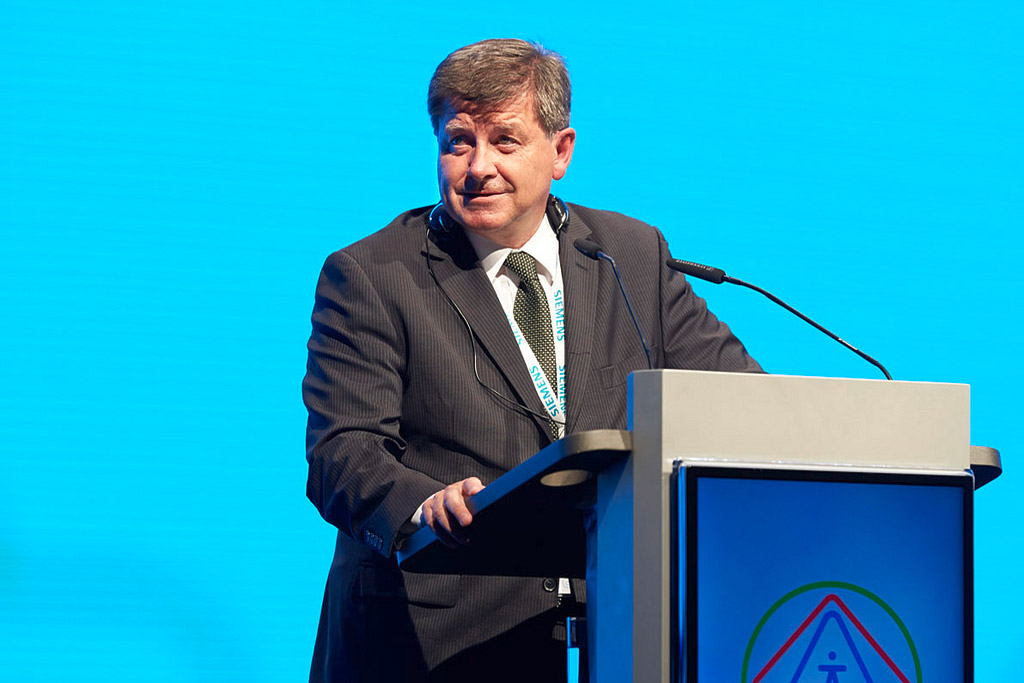
“Financial analysts may consider that the crisis is almost over,” ILO Director-General Guy Ryder said in a news release accompanying the report.
“However, it is still very much a reality for millions of jobseekers in Spain, especially youth. Even if the fast pace of job creation witnessed in the second quarter of 2014 were to continue, it would still take until 2023 to restore employment to 2007 levels.”
According to the ILO, Spain’s jobless rate of over 24 per cent in the second quarter of 2014 continues “to surpass previous historical peaks,” while the country’s youth unemployment rate exceeds 50 per cent, ranking as the second highest in the European Union after Greece.
The report also notes that much of Spain’s unemployment is long term, with over 60 per cent of jobseekers unemployed for more than a year and another 42 per cent unemployed for more than two. At the same time, many Spanish jobseekers risk dropping out of the labour market altogether.
Although Ryder observed that the global economic recovery had delivered some employment gains, with over 200,000 net new jobs created during the first half of 2014, he admitted that growth remained “incomplete” as the average Spaniard’s income was now eight per cent lower than in 2007.
Raymond Torres, the Director of the ILO’s Research Department, similarly argued that while the Spanish economy was “burgeoning” with start-ups and small businesses, many of them lacked the momentum to grow and provide much-needed employment opportunities.
“The result is that the economy lacks the network of medium-sized enterprises, which is needed for growth with quality jobs,” said Torres. “Unlocking this potential would considerably boost prosperity in the country.”
In an effort to answer the demands made by the continuing unemployment crisis, the ILO’s report has addressed three areas of particular concern, urging an economic strategy that both facilitates transitions to a new growth model and a number of Government-backed social protection measures, such as major work programmes, to bridge the financial burdens facing jobless households.
In addition to these measures, the report suggests, the Spanish Government must increase its efforts towards stimulating quality job creation as a diffusion of low-paid employment may “perpetuate low-productivity traps” and contribute to an overall “brain drain” with the country’s most prepared and educated emigrating to seek employment elsewhere.
Image: DGUV/kongressbild.de
Support Our Journalism
We cannot do without you.. your contribution supports unbiased journalism
IBNS is not driven by any ism- not wokeism, not racism, not skewed secularism, not hyper right-wing or left liberal ideals, nor by any hardline religious beliefs or hyper nationalism. We want to serve you good old objective news, as they are. We do not judge or preach. We let people decide for themselves. We only try to present factual and well-sourced news.
Support objective journalism for a small contribution.


