


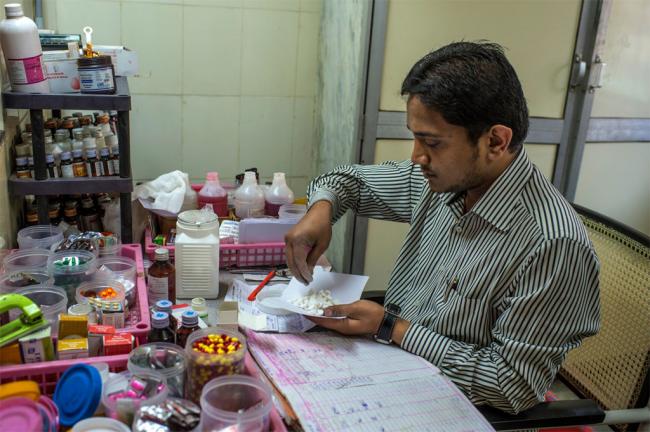
Medicines should help, not harm, says UN health agency launching global patient safety 'challenge'
Underlining that medicines should fulfil their real purpose – help people, not harm them – the United Nations health agency on Wednesday launched a world-wide 'Challenge' that that seeks to reduce severe, avoidable medication-associated damage across the globe by half over the next five years.
“We all expect to be helped, not harmed, when we take medication,” said the Director-General of the UN World Health Organization (WHO), Margaret Chan, announcing the new campaign Global Patient Safety Challenge on Medication Safety.
“Apart from the human cost, medication errors place an enormous and unnecessary strain on health budgets. Preventing errors saves money and saves lives.”
According to estimates, the global cost associated with medication errors has been estimated at $42 billion annually or almost 1 per cent of total global health expenditure. In terms of impact on the health of people, for instance in the United States, medication errors cause at least one death every day and injure approximately 1.3 million people annually.
While low- and middle-income countries are estimated to have similar rates of medication-related adverse events to high-income countries, the impact is about twice as much in terms of the number of years of healthy life lost.
Furthermore, many countries lack good data, something that the new initiative will attempt to address.
The initiative will also improve the way medicines are prescribed, distributed and consumed, and increase awareness among patients about the risks associated with the improper use of medication.
It also urges countries to take early priority action to address key factors, including medicines with a high risk of harm if used improperly, patients who take multiple medications for different diseases and conditions, and patients going through transitions of care, in order to reduce medication errors and harm to patients.
The actions in the Challenge will focus on four areas: patients and the public, health care professionals, medicines as products, and systems and practices of medication.
The initiative also aims to make improvements in each stage of the medication use process including prescribing, dispensing, administering, monitoring and use and the UN health agency will disseminate guidance, and develop strategies, plans and tools to ensure that the medication process has the safety of patients at its core, in all health care facilities.
“Over the years, I have spoken to many people who have lost loved ones to medication-related errors,” said Sir Liam Donaldson, the WHO Envoy for Patient Safety. “Their stories, their quiet dignity and their acceptance of situations that should never have arisen have moved me deeply. It is to the memories of all those who have died due to incidents of unsafe care that this Challenge should be dedicated.”
This is WHO's third global patient safety initiative, following the Clean Care is Safe Care challenge on hand hygiene in 2005 and the Safe Surgery Saves Lives challenge in 2008.
Photo: WHO
Source: www.justearthnews.com
Support Our Journalism
We cannot do without you.. your contribution supports unbiased journalism
IBNS is not driven by any ism- not wokeism, not racism, not skewed secularism, not hyper right-wing or left liberal ideals, nor by any hardline religious beliefs or hyper nationalism. We want to serve you good old objective news, as they are. We do not judge or preach. We let people decide for themselves. We only try to present factual and well-sourced news.
Support objective journalism for a small contribution.


