


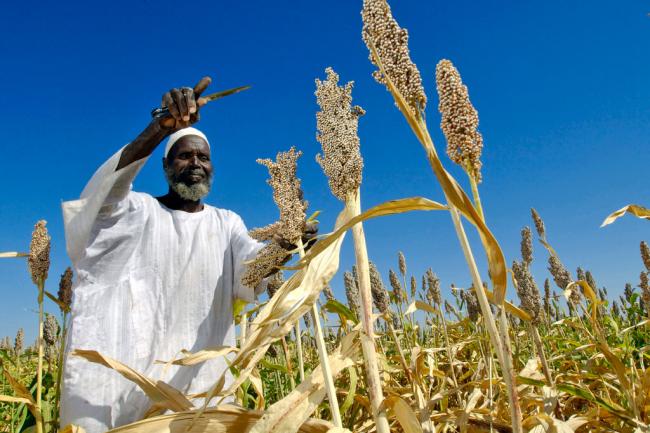
Good governance of natural resources vital for post-conflict recovery – UN-backed study
"Understanding the nexus between governance and natural resources is crucial to the recovery of post-conflict countries,” said Achim Steiner, the Executive Director of the United Nations Environment Programme (UNEP), in a press release.
“This study makes it clear that, while natural resources offer the opportunity for growth in post-conflict situations, their exploitation must be accompanied by capable, accountable institutions that manage natural wealth in a transparent and inclusive manner," he added.
Launched yesterday, Governance, Natural Resources, and Post-Conflict Peacebuilding reports on how natural resources are essential to sustaining people and peace in post-conflict countries, but governance failures often jeopardize such efforts. Nevertheless, with persistence and commitment on the part of government, civil society, and the international community, it is possible to improve governance of natural resources and thereby help ensure that a country's natural resources bring peace, health, and economic development and not crime, corruption, and a relapse to violence.
The study relies upon the combined expertise and field experience of more than seventy researchers, diplomats, military personnel, and practitioners from governmental, intergovernmental, and nongovernmental organizations to illustrate the mutually reinforcing relationship between natural resources, good governance, and peace. It examines the theory, practice, and reality of post-conflict governance in fifty conflict-affected countries around the world to explore the opportunity and challenge of effectively and equitably governing the use of natural resources and then converting the subsequent revenues into the jobs, infrastructure, and public service needed to consolidate and sustain peace.
Writing in the book's foreword, Óscar Arias Sánchez, former President of Costa Rica and 1987 Nobel Peace Prize Laureate, calls on the international community to "[take] seriously the idea that peace is much more than a white flag or a treaty. Peace is a state of affairs that can only be sustained through strong institutions, through prosperity and above all, through investment in education and human development."
Edited by Carl Bruch, Director of International Programs at the Environmental Law Institute, Carroll Muffett, President of the Center for International Environmental Law, and Sandra S. Nichols, an environmental and natural resources attorney, the book explores lessons from past and ongoing peacebuilding efforts; describes how these lessons may be applied to create more effective governance initiatives; and presents an emerging theoretical and practical framework for policymakers, researchers, practitioners, and students.
"This analysis makes it clear that good governance of natural resources and peace go hand in hand,” said Scott Fulton, the President of the Environmental Law Institute.
“Not only do transparency, accountability, and equity in the governance of natural resources strengthen the rule of law, empower marginalized communities, and rebuild social ties; it also helps post-conflict economies recover quickly and sustainably," he noted.
The study finds that, although the post-conflict period is a time of fragility, post-conflict peacebuilding provides societies the chance to make governance structures more effective, efficient, and equitable and to address problems and injustices that contributed to the conflict. Good governance of natural resources can support the reestablishment of security, delivery of basic services, strengthening of the economy and livelihoods, and improved legitimacy and cooperation.
UN Photo/Fred Noy
Support Our Journalism
We cannot do without you.. your contribution supports unbiased journalism
IBNS is not driven by any ism- not wokeism, not racism, not skewed secularism, not hyper right-wing or left liberal ideals, nor by any hardline religious beliefs or hyper nationalism. We want to serve you good old objective news, as they are. We do not judge or preach. We let people decide for themselves. We only try to present factual and well-sourced news.
Support objective journalism for a small contribution.


