


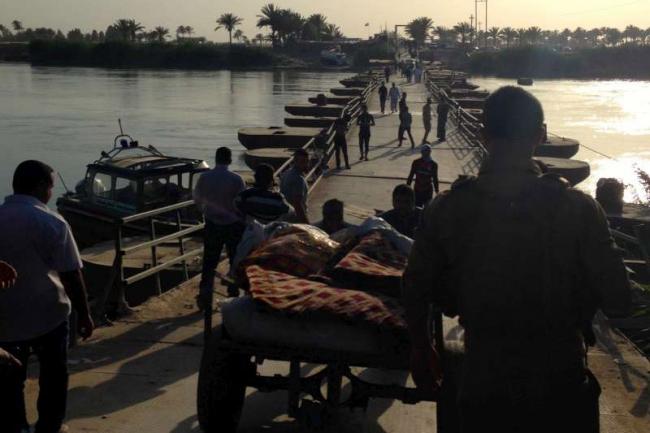
Displaced Iraqis face mounting difficulties as fighting continues
According to a spokesperson for the Office of the UN High Commissioner for Refugees (UNHCR), the Assistant High Commissioner for Protection of Refugees, Volker Turk, recently returned to Geneva from a trip to Iraq, where 114,000 have recently been displaced from the city of Ramadi, in Anbar province, as fighting between Government forces and extremists intensified.
Of the total, around 54,000 have gone to Baghdad, 15,000 to Sulaimaniyah in the Kurdistan region of Iraq, 2,100 to Babylon and around 900 to Diyala. Around 39,000 of those displaced remain in Anbar, with many unable to move further afield.
Inside Anbar, internally displaced people (IDPS) seek shelter wherever they can find it, in places such as Khalidiya and Amriyat Al Fallujah, southeast of Fallujah, where they stay with relatives and host families or seek shelter in mosques and schools.
Overcrowding is a major issue and in one community centre in Al Habaniya, people displaced from previous waves of violence shared space with new arrivals; in some cases as many as four families share a single tent.
“We are also concerned about the processing arrangements in place at the Bzabz Bridge – a series of pontoons across the Euphrates River, about 65 kilometres west of Baghdad, which marks the boundary between Anbar and the capital,” UNHCR spokesman Adrian Edwards told journalists.
He added, “We are also liaising with the Iraqi authorities, advocating for them to ease restrictions on the movement of people to safe areas.”
People waiting on the Anbar side had no shelter and faced worsening conditions. The newly displaced were exhausted and anxious to move on to more secure locations. Some people had walked for miles without food and water.
“While more people have been able to move into Baghdad in recent days, reports overnight suggest many displaced people are now waiting in Diyala trying to cross into the Kurdistan region of Iraq,” Edwards said.
UNHCR has distributed mattresses, blankets, kitchen utensils, hygiene sets, fans and coolers to 8,000 people in Ameriyat Al Fallujah and Baghdad in recent days, with more distribution to another 12,000 people underway.
Meanwhile, a spokesperson for the World Food Programme (WFP) said the agency has provided food assistance to around 60,000 people fleeing Ramadi.
She added that continued relief efforts would require financial support from the international community because $250 million was needed for emergency operations between now and September for emergency operations and logistics.
Photo: UNHCR/G. Ohara
Support Our Journalism
We cannot do without you.. your contribution supports unbiased journalism
IBNS is not driven by any ism- not wokeism, not racism, not skewed secularism, not hyper right-wing or left liberal ideals, nor by any hardline religious beliefs or hyper nationalism. We want to serve you good old objective news, as they are. We do not judge or preach. We let people decide for themselves. We only try to present factual and well-sourced news.
Support objective journalism for a small contribution.


