


 Cambodia
Cutting disaster risk will boost equality, improve resilience
Marking the International Day for Disaster Risk Reduction on Friday, UN chief António Guterres called on countries everywhere to boost resilience and adaptation, to build a safer and more just future for all.
According to various estimates, up to 75 per cent of extreme weather events are currently connected to climate change, fuelled by carbon emissions.
The countries experiencing the greatest losses from disasters are those who contribute the least to the problem.
UN figures reveal that from 1970 through 2019, some 91 percent of all of deaths from weather, climate, and water hazards occurred in developing countries.
The UN Office for Disaster Risk Reduction (UNDRR) forecasts that by 2030, the world will face some 1.5 significant disasters per day. In light of such trends scaling up disaster risk reduction efforts is a must.
Those with least, face ‘greatest risk’
“Those with least are often at greatest risk from extreme weather. They may live in places that are more susceptible to flooding and drought; and they have fewer resources to deal with damage and to recover from it”, said the UN chief, marking the day under the theme: “Fighting inequality for a resilient future”.
Mr. Guterres urged countries to break the cycle of poverty and disaster by honouring the 2015 Paris Agreement, striving to achieve the Sustainable Development Goals (SDGs) and implementing the Sendai Framework for Disaster Risk Reduction.
One of the tools to tackle inequality at the global level is the Loss and Damage Fund which is expected to be operationalized at the COP28 climate conference in early December.
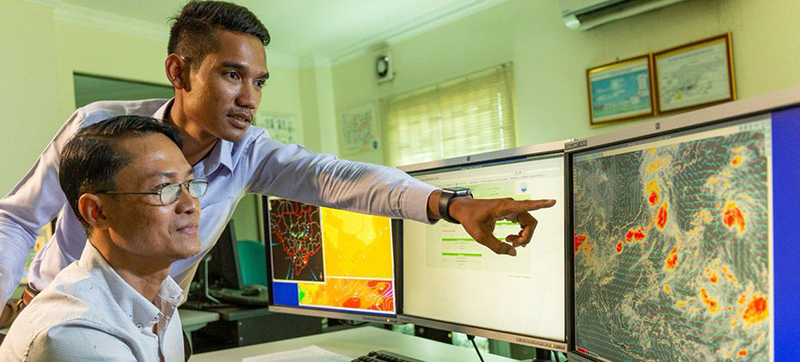
Another important initiative aims to ensure that that every person on Earth is covered by an early warning system by 2027.
Early warnings for all
At the September UN Climate Ambition Summit, the UN Development Programme (UNDP) announced a large-scale, collaborative push to establish the Early Warning Systems in some of the world’s most climate-vulnerable countries, for which an initial injection of US$1.3 million from the Green Climate Fund (GCF) will be used for the first group of countries.
These include Antigua and Barbuda, Cambodia, Chad, Ecuador, Ethiopia, Fiji, and Somalia.
Support Our Journalism
We cannot do without you.. your contribution supports unbiased journalism
IBNS is not driven by any ism- not wokeism, not racism, not skewed secularism, not hyper right-wing or left liberal ideals, nor by any hardline religious beliefs or hyper nationalism. We want to serve you good old objective news, as they are. We do not judge or preach. We let people decide for themselves. We only try to present factual and well-sourced news.
Support objective journalism for a small contribution.


