


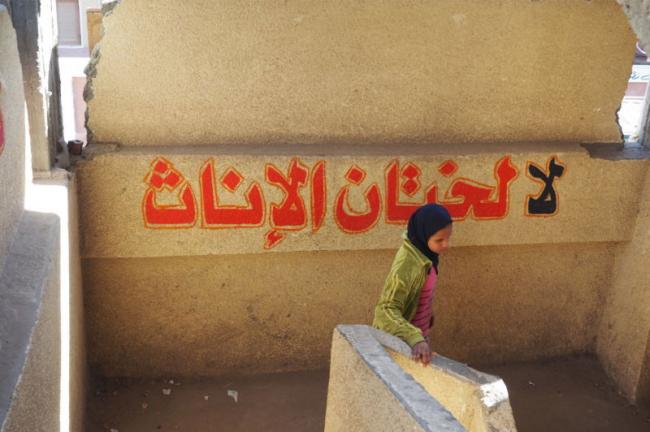
Breaking silence, disproving myths first steps towards eliminating female genital mutilation – UN chief
“Change is coming from within the communities. Breaking the silence and disproving the myths around female genital mutilation are the first steps along the way to eliminating it altogether,” said Ban in his message on the Day.
“If everyone mobilized – women, men and young people – it is possible, in this generation, to end a practice that currently affects some 130 million girls and women in 29 countries where we have data,” said Ban. “I call for all people to end FGM and create the future we want where every girl can grow up free of violence and discrimination, with full dignity, human rights and equality.”
According to the United Nations, FGM has no health benefits, and it harms girls and women in many ways. It involves removing and damaging healthy and normal female genital tissue, and interferes with the natural functions of girls' and women's bodies.
Immediate complications can include severe pain, shock, haemorrhage (bleeding), tetanus or sepsis (bacterial infection), urine retention, open sores in the genital region and injury to nearby genital tissue.
Long-term consequences can include recurrent bladder and urinary tract infections, cysts, infertility, an increased risk of childbirth complications and newborn deaths, and the need for later surgeries.
“I am truly inspired by actions already being taken by health professionals, such as the Mauritanian Association of Midwives, which refuses to practice female genital mutilation and actively promotes the abandonment of the practice,” the Secretary-General said.
“We must also ensure that parents do not seek to bypass health workers in finding alternative methods of subjecting their daughters to FGM,” he added.
On Friday's commemoration is co-organized by the UN Children's Fund (UNICEF) and the UN Population Fund (UNFPA) along with the International Confederation of Midwives and the International Federation of Gynecology and Obstetrics (FIGO). A joint statement released by all four organizers said that the support of health workers in the global efforts to end FGM is critical.
“Health workers also have a deep understanding of the harmful consequences of this practice. They see the urinary, menstrual, and obstetric complications – including haemorrhage, infection and death – caused by it. And, they also witness the emotional wounds FGM inflicts, trauma which often lasts a lifetime,” they co-conveners said.
According to UNICEF, around one in five girls have been cut by a trained health-care provider. In some countries, this can reach as high as three in four girls. Countries with the highest number of FGM cases performed by health workers are – Egypt (77 per cent), Sudan (55 per cent), Kenya (41 per cent), (Nigeria, 29 per cent), and (Guinea, 27 per cent).
“Female genital mutilation (FGM) violates the human rights and undermines the health and well-being of some 3 million girls each year,” said the joint statement. “FGM is illegal in many countries, and medical providers who perform it in these places are breaking the law. But in every country, whether legal or not medical providers who perform FGM are violating the fundamental rights of girls and women.”
FGM reflects deep-rooted inequality between the sexes, and constitutes an extreme form of discrimination against women. It is nearly always carried out on minors and is a violation of the rights of children, the UN says.
The practice, concentrated in some 29 countries in Africa and the Middle East, from Yemen and Gambia to Somalia and Mauritania, also violates a woman's rights to health, security and physical integrity, the right to be free from torture and cruel, inhuman or degrading treatment, and the right to life when the procedure results in death.
Nearly one in five women who has undergone FGM lives in Egypt. The practice is almost universal in Somalia, Guinea, Djibouti and Egypt, where more than 90 per cent of girls and women have been cut.
UNFPA and UNICEF are jointly implementing the largest global programme to accelerate the abandonment of FGM.
Photo: Omar Gharzeddine/UNFPA
Support Our Journalism
We cannot do without you.. your contribution supports unbiased journalism
IBNS is not driven by any ism- not wokeism, not racism, not skewed secularism, not hyper right-wing or left liberal ideals, nor by any hardline religious beliefs or hyper nationalism. We want to serve you good old objective news, as they are. We do not judge or preach. We let people decide for themselves. We only try to present factual and well-sourced news.
Support objective journalism for a small contribution.


