


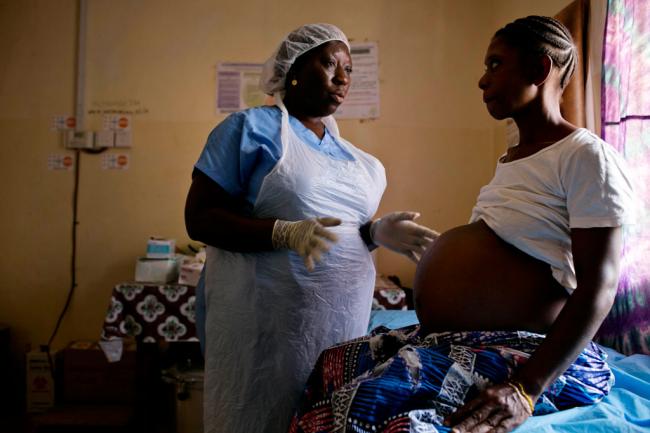
Aiming to curb pregnancy risks and improve experience, UN launches new prenatal care model
According to the WHO, last year around 303,000 women died from pregnancy-related causes, and 2.7 million babies died within the first month of life, in addition, 2.6 million babies were stillborn.
“If women are to use antenatal care services and come back when it is time to have their baby, they must receive good quality care throughout their pregnancy,’ said Dr. Ian Askew, Director of Reproductive Health and Research at WHO in a news release yesterday. “Pregnancy should be a positive experience for all women and they should receive care that respects their dignity.”
Antenatal, or prenatal, care enables health providers to deliver critical care to pregnant women, including good nutrition, family planning counselling, and healthy lifestyle promotion.
WHO developed the new recommendations on antenatal care to enable women to have more contacts with their health care providers throughout their pregnancy. According to recent evidence, this model is expected to reduce likelihood of still births, due to providing more opportunities for health care providers to detect and manage potential problems.
By example, the agency noted that a minimum of eight contacts for antenatal care can reduce perinatal deaths by up to eight per 1,000 births, when compared to a minimum of four visits.
“More and better quality contacts between all women and their health providers throughout pregnancy will facilitate the uptake of preventive measures, timely detection of risks, reduces complications and addresses health inequalities,” said Dr. Anthony Costello, the WHO Director of Maternal, Newborn, Child and Adolescent Health. “Antenatal care for first time mothers is key. This will determine how they use antenatal care in future pregnancies.”
WHO predicts that the new model also increases maternal and foetal assessments to detect problems, increases the likelihood of positive pregnancy outcomes, and improves communication between health providers and pregnant women.
“Counselling about healthy eating, optimal nutrition and what vitamins or minerals women should take during pregnancy can go a long way in helping them and their developing babies stay healthy throughout pregnancy and beyond,” stated Dr. Francesco Branca, the Director Department on Nutrition for Health and Development, WHO.
In addition, the agency aims to provide flexibility for countries to adopt the new antenatal care model, and adjust it to their specific needs.
Sample recommendations include, among others:
Antenatal care model with a minimum of eight contacts recommended to reduce perinatal mortality and improve women’s experience of care;
Counselling about healthy eating and keeping physically active during pregnancy;
One ultrasound scan before 24 weeks’ gestation (early ultrasound) is recommended for pregnant women to estimate gestational age, improve detection of fetal anomalies and multiple pregnancies, reduce induction of labour for post-term pregnancy, and improve a woman’s pregnancy experience; and
Health-care providers should ask all pregnant women about their use of alcohol and other substances (past and present) as early as possible in the pregnancy and at every antenatal visit.
Photo: UNICEF/Kate Holt
Source: www.justearthnews.com
Support Our Journalism
We cannot do without you.. your contribution supports unbiased journalism
IBNS is not driven by any ism- not wokeism, not racism, not skewed secularism, not hyper right-wing or left liberal ideals, nor by any hardline religious beliefs or hyper nationalism. We want to serve you good old objective news, as they are. We do not judge or preach. We let people decide for themselves. We only try to present factual and well-sourced news.
Support objective journalism for a small contribution.


