


‘World has ignored hepatitis at its peril,’ warns UN health agency ahead of World Day
“The world has ignored hepatitis at its peril,” said Dr. Margaret Chan, Director General of the UN World Health Organization (WHO). “It is time to mobilize a global response to hepatitis on the scale similar to that generated to fight other communicable diseases like HIV AIDS and tuberculosis.”
The number of people with hepatitis B and C is more than 10 times the number of people infected with HIV, according to UN figures.
Only about 1 in 20 people with viral hepatitis know they have it; and just 1 in 100 with the disease is being treated.
In May of this year, the World Health Assembly – WHO’s decision-making body – called for treating 8 million people for hepatitis B or C by 2020, to reduce new viral hepatitis infections by 90 per cent, and to decrease the number of deaths by 65 per cent in 2030, as compared with 2016. These targets are part of the first ever Global Health Sector Strategy on viral hepatitis.
“We need to act now to stop people from dying needlessly from hepatitis,” said Dr. Gottfried Hirnschall, WHO’s Director of the HIV Department and Global Hepatitis Programme. These comments come ahead of World Hepatitis Day, marked annually on 28 July. This year’s theme is “Know hepatitis – Act now” encourages people to get tested and demand treatment.
Hepatitis B and C are transmitted through contaminated blood, as well as through contaminated needles and syringes in healthcare setting and among people who inject drugs.
The viruses can also be transmitted through unsafe sex and from an infected mother to her newborn child.
There is a vaccine and treatment for hepatitis B, but not for hepatitis C. Some countries are working to curb the rate of infection of the virus by lowering the prices of hepatitis C medicines, such as in Egypt, where the price of medicines fell from $900 in 2014 to $200 in 2016 as a result of access to generic drugs.
According to WHO, Brazil and Pakistan are also expanding treatment coverage, and Georgia plans to eliminate the disease entirely.
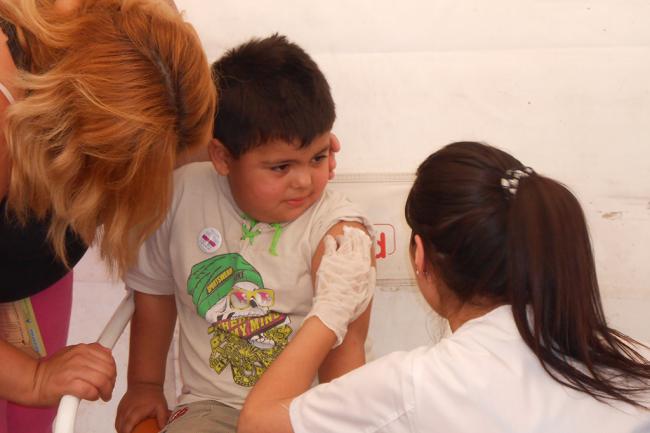
Photo: WHO/PAHO
Source: www.justearthnews.com
Support Our Journalism
We cannot do without you.. your contribution supports unbiased journalism
IBNS is not driven by any ism- not wokeism, not racism, not skewed secularism, not hyper right-wing or left liberal ideals, nor by any hardline religious beliefs or hyper nationalism. We want to serve you good old objective news, as they are. We do not judge or preach. We let people decide for themselves. We only try to present factual and well-sourced news.
Support objective journalism for a small contribution.


