 PM Modi
PM Modi expresses displeasure over NCERT judiciary chapter, wants accountability fixed
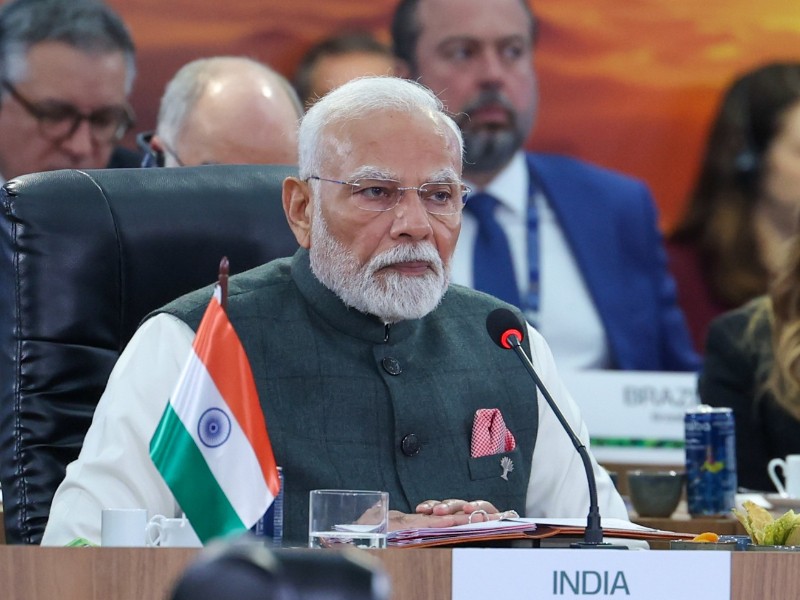
New Delhi/IBNS: A reference to judicial corruption in a Class 8 social science textbook has triggered concern at the highest level of government, with Prime Minister Narendra Modi expressing clear displeasure during a Cabinet meeting on Tuesday, sources said on Thursday.
According to sources, the Prime Minister objected to the inclusion of a corruption-related case involving the judiciary in material intended for middle school students.
He questioned both the appropriateness of introducing such sensitive issues at that stage of education and the approval process that allowed the content to be published.
“What are we teaching Class 8 children about judicial corruption?” the Prime Minister asked, sources present at the meeting said.
He also sought to know who was responsible for monitoring and clearing the textbook before it reached classrooms, signalling concern over institutional oversight.
Textbook content comes under scrutiny
The controversy centres on a chapter in a Class 8 social science textbook published by the National Council of Educational Research and Training.
The chapter contains a case study referring to corruption within the judiciary, an inclusion that has now drawn scrutiny within the government.
While there was no immediate official announcement on whether the content would be revised or withdrawn following the Cabinet discussion, sources indicated that authorities overseeing textbook approvals were expected to closely examine the issue, particularly questions of age suitability and vetting safeguards.
Supreme Court imposes blanket ban
The matter soon escalated to the judiciary.
On Thursday, the Supreme Court of India imposed a “complete blanket ban” on any further publication, reprinting or digital circulation of the Class 8 social science book, citing what it described as “offending” content related to judicial corruption.
A bench headed by Chief Justice Surya Kant ordered that all physical and digital copies of the textbook currently in circulation be immediately seized and removed from public access.
“They have fired a gunshot. The judiciary is bleeding,” the Chief Justice remarked during the hearing, which was initiated suo motu.
Court sees ‘calculated move’ against judiciary
The bench, also comprising Justices Joymalya Bagchi and Vipul M Pancholi, said there appeared to be a “deep-rooted conspiracy” and a “calculated move” to undermine the institution and damage the dignity of the judiciary.
The court said it was nearly shocked after a newspaper report flagged the publication of the textbook.
Following the report, the bench asked the court’s secretary general to verify whether the book had indeed been released by NCERT.
Instead of introspection, the bench observed, the NCERT director submitted a written response defending the content.
On a prima facie reading of both the textbook and the administrative reply, the court concluded that the narrative risked eroding public confidence in the judicial system, especially among impressionable students.
Show cause notices and contempt warning
The Supreme Court issued show cause notices to the NCERT director and the secretary of the Department of School Education, seeking explanations on why action, including contempt proceedings, should not be initiated against those responsible for introducing the chapter.
“As an abundant precaution, a complete blanket ban is hereby imposed on any further publication, reprinting or digital dissemination of the book titled ‘Exploring Society: India and Beyond’ (Vol II),” the bench said.
The court warned that any attempt to bypass the order through electronic platforms or alternative titles containing the same material would amount to wilful defiance of its directions.
“It is my duty as the head of the institution to find out who is responsible; heads must roll. We would like to have a deeper probe,” the Chief Justice added.
Government apologises, chapter to be rewritten
Appearing for the government, Solicitor General Tushar Mehta tendered an unconditional apology on behalf of the Department of School Education.
He informed the court that the two individuals who prepared the chapter would no longer be associated with any work of the ministry.
“There are 32 books which went into the market and are being withdrawn. The entire chapter will be revisited by a new team,” he said. “We cannot teach our Class 8 students that justice is being denied in the country.”
The matter has been listed for further hearing on March 11.
A day earlier, NCERT had apologised for what it termed “inappropriate content” and confirmed that the chapter would be rewritten in consultation with appropriate authorities.
Content at the centre of the row
The disputed section, titled “Corruption in the Judiciary”, refers to corruption, case backlogs and a shortage of judges as challenges faced by the judicial system.
It also notes that judges are bound by a code of conduct governing their behaviour both inside and outside the courtroom.
Support Our Journalism
We cannot do without you.. your contribution supports unbiased journalism
IBNS is not driven by any ism- not wokeism, not racism, not skewed secularism, not hyper right-wing or left liberal ideals, nor by any hardline religious beliefs or hyper nationalism. We want to serve you good old objective news, as they are. We do not judge or preach. We let people decide for themselves. We only try to present factual and well-sourced news.
Support objective journalism for a small contribution.