 Haj
Haj
Planning Haj in 2027? India announces major changes, Kolkata added as embarkation point
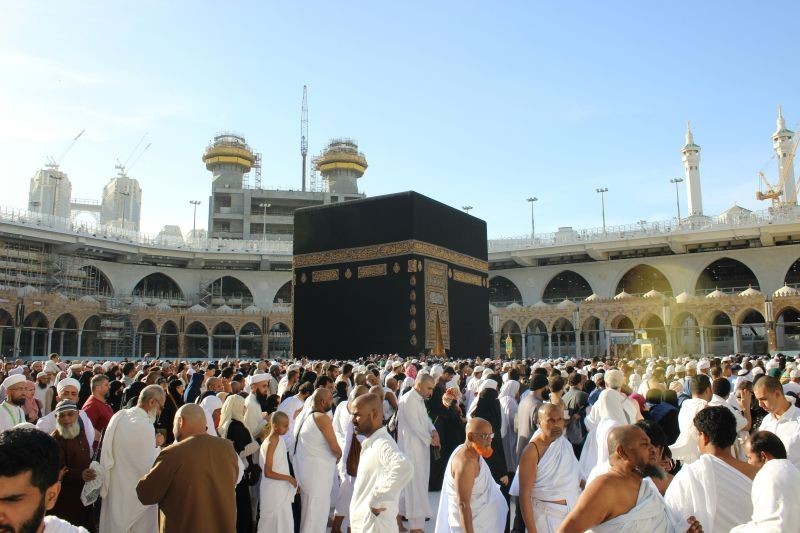
Union Minister for Minority Affairs and Parliamentary Affairs Kiren Rijiju on Tuesday released the Haj Policy 2027 and announced that the Haj Committee of India has begun inviting applications from prospective pilgrims for Haj 2027.
Pilgrims can submit their applications online through the Haj Committee of India portal and the Haj Suvidha App, making the process more accessible, flexible and user-friendly.
According to the policy, the distribution of the Haj quota between the Haj Committee of India and private tour operators is expected to remain unchanged at a ratio of 70:30. Of the projected quota, 1,22,518 seats will be allocated to the Haj Committee of India, while 52,507 seats will be reserved for the private sector.
The Government of India, however, will continue efforts to secure an increase in the Haj quota for Indian pilgrims, which stood at 1,75,025 last year.
The announcement follows the Haj Review Meeting chaired by Rijiju on June 18, during which the conduct of Haj 2026 was reviewed and the roadmap for Haj 2027 was finalised.
The early release of the policy and simultaneous opening of applications reflect the Ministry's focus on timely preparations and adherence to the timelines prescribed by the Kingdom of Saudi Arabia.
Haj Policy 2027 builds on several pilgrim-centric initiatives introduced during Haj 2026, including sofa-cum-beds in Mina, high-speed train travel between Makkah and Madinah, hotel-style accommodation in Makkah and the 20-day Short Haj Package.
These measures were aimed at making the pilgrimage safer, more comfortable and dignified for Indian pilgrims.
In recognition of these efforts, the Indian Haj Mission received two Labbaytum Awards from the Saudi Ministry of Hajj and Umrah under the "Best Haj Coordination and Communication" category for Haj 2026, marking the first time India has received the honour.
Among the key changes introduced in Haj Policy 2027 is enhanced on-ground support for pilgrims. The ratio of State Haj Inspectors has been improved from one inspector for every 150 pilgrims to one for every 135 pilgrims.
To address the growing waiting list in a transparent and equitable manner, preference will be given to the top 20 per cent of final waitlisted applicants from Haj 2026.
The Short Haj Package, which received a positive response in its inaugural year, has been retained.
Kolkata has been added as an embarkation point following strong demand from the region.
The policy also aligns medical screening procedures with Saudi health guidelines. Screening protocols have been strengthened to ensure that individuals with serious chronic medical conditions are not cleared for travel, prioritising the health and safety of pilgrims.
In line with the Government's digital transformation agenda, the Ministry is exploring a range of artificial intelligence (AI)-based interventions to improve end-to-end Haj management. These include AI-assisted application and document verification, demand forecasting for flight allocation across embarkation points, and real-time grievance monitoring and escalation.
The initiatives will be introduced in phases as part of a broader effort to build a technology-enabled Haj ecosystem.
A key component of the digital initiative is the development of a conversational AI assistant for Haj pilgrims. The platform is designed to provide round-the-clock support in Hindi, Urdu and major regional languages, enabling pilgrims to seek information and assistance through voice or text in their preferred language.
The AI assistant is expected to help pilgrims at every stage of the journey—from filling out application forms and obtaining information on payments, flights, accommodation and baggage, to lodging grievances and seeking emergency support. The initiative aims to reduce application errors, minimise dependence on intermediaries and make accurate information readily available, particularly for first-time and elderly pilgrims.
Integration with Saudi Arabia's Nusuk platform is also planned to ensure seamless coordination between Indian and Saudi systems and provide pilgrims with consistent, real-time information throughout their journey.
Rijiju urged all eligible pilgrims to submit their applications within the prescribed timelines and directed the Haj Committee of India and other concerned agencies to ensure a smooth, transparent and efficient application process.
He reiterated the Government of India's commitment to providing every Indian pilgrim with a safe, comfortable, transparent and dignified Haj experience.
Support Our Journalism
We cannot do without you.. your contribution supports unbiased journalism
IBNS is not driven by any ism- not wokeism, not racism, not skewed secularism, not hyper right-wing or left liberal ideals, nor by any hardline religious beliefs or hyper nationalism. We want to serve you good old objective news, as they are. We do not judge or preach. We let people decide for themselves. We only try to present factual and well-sourced news.
Support objective journalism for a small contribution.