Avoid ‘my-state’ attitude, talk to Centre: SC to Tamil Nadu on language row
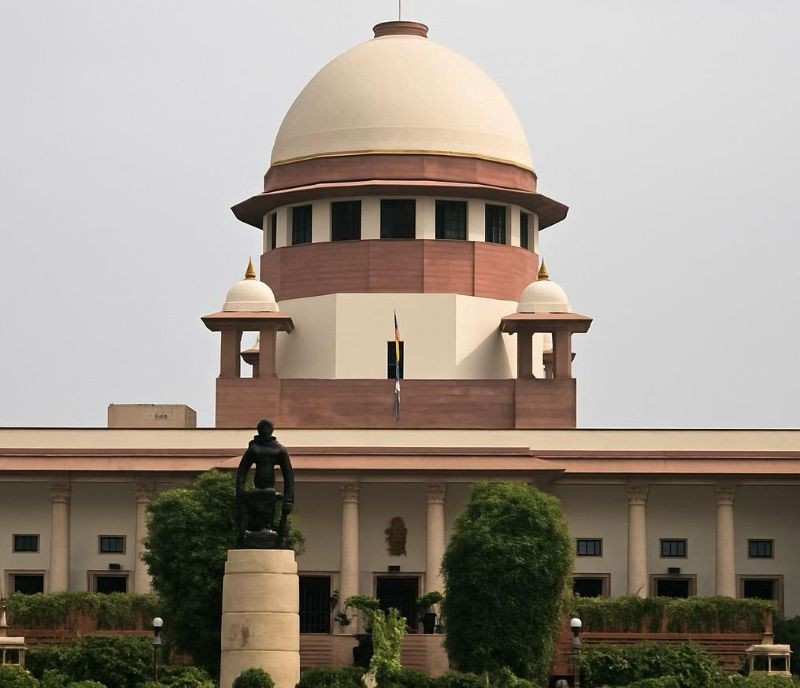
The Supreme Court on Monday advised the Tamil Nadu government to engage directly with the Centre over its demand to retain the state’s two-language policy, rather than airing its objections through the media, while hearing a case related to the allocation of land for new Jawahar Navodaya Vidyalayas (JNVs).
The remarks came during the hearing of a petition concerning the establishment of Central schools in Tamil Nadu, which follow a three-language formula, while the state has a statutory two-language policy.
“Don’t make it into a language issue. We are a federal society. You are part of the Republic. If you come one step forward, they will also come one step forward. The ‘my-state-my-state’ attitude must be avoided,” said Justice B.V. Nagarathna, who was part of the two-judge Bench along with Justice R. Mahadevan.
Senior advocate P. Wilson, appearing for Tamil Nadu, reiterated the state’s objections, arguing that JNVs follow a three-language policy that is at odds with Tamil Nadu’s two-language framework.
Justice Nagarathna said the state was free to place conditions during consultations with the Centre, including insisting on the two-language policy instead of the three-language formula followed by JNVs.
“You can say this is our language policy. They will look into it. They cannot discredit your policy. Bring to the notice of the secretaries of the Central government your Act and how you are implementing it,” she said, urging the state to adopt a “positive attitude”.
Calling the proposed schools an opportunity rather than an imposition, Justice Nagarathna said Tamil Nadu stood to benefit.
“After the bifurcation of Andhra Pradesh, Tamil Nadu has gotten all the glory. It is the largest industrialised state in south India. You should grab this opportunity. Don’t see it as an imposition; see it as an opportunity for your students,” she observed.
The Bench directed authorities to ascertain the extent of land required for establishing JNVs in each district of Tamil Nadu.
It clarified that the exercise was only exploratory in nature. “We are only making an exercise. We are not asking you to lay a foundation stone today,” the court said, adding that its directions were issued in the interest of students.
Earlier, the Madras High Court had ruled that Jawahar Navodaya Vidyalayas do not violate the Tamil Nadu Tamil Learning Act, 2006, and directed the state to provide temporary accommodation for 240 students in each district within two months.
The High Court had held that Tamil Nadu’s blanket refusal to allow JNVs curtailed students’ right to choose educational institutions and was inconsistent with the Right of Children to Free and Compulsory Education Act.
Support Our Journalism
We cannot do without you.. your contribution supports unbiased journalism
IBNS is not driven by any ism- not wokeism, not racism, not skewed secularism, not hyper right-wing or left liberal ideals, nor by any hardline religious beliefs or hyper nationalism. We want to serve you good old objective news, as they are. We do not judge or preach. We let people decide for themselves. We only try to present factual and well-sourced news.
Support objective journalism for a small contribution.