


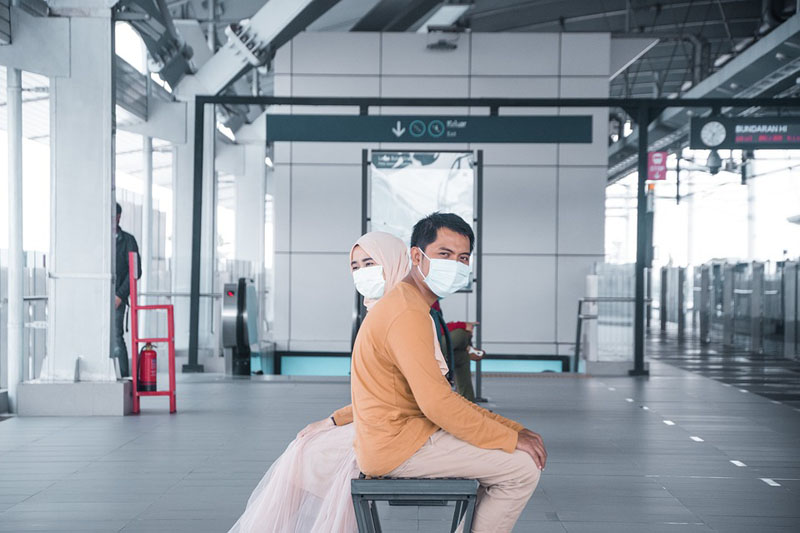
 COVID-19 Pandemic
Strong pandemic defence system could reduce chance of another COVID like pandemic in the next ten years from 27.5 pct to 8pct: Reports
Airfinity’s new risk modelling, that is being presented at the Rhodes Summit in London Friday the 14th, indicates there’s a 27.5 pct chance that a pandemic as deadly as COVID-19 could take place in the next ten years.
It also shows that had the original COVID-19 wild type been as transmissible as Omicron, more than 300.000 thousand people would have died in the UK alone, nearly three times more than was the case.
This new risk-assessment outlines the likelihood of future pandemics under varying degrees of severity. It shows that in a worst case scenario, an avian flu type mutation that transmits from human to human could kill as many as 15.000 in a single day in the UK.
In recent times, we have seen an increase in the frequency of virus emergence. Climate change, the rise in international travel, a growing global population and the increasing threat posed by zoonotic diseases are some of the main factors contributing to the increase in high risk outbreak incidences.
Fast vaccine roll-out, strong delivery infrastructures and other pandemic preparedness strategies are needed to significantly reduce this.
"Our modelling shows that the risk of a pandemic as deadly as COVID-19 in the next ten years is 71% less with these countermeasures in place," the group said in a statement.
If effective vaccines are rolled out 100 days after the discovery of a new pathogen, the likelihood of a pandemic as deadly as COVID-19 in the next decade drops from 27.5% to 8.1%.
However, many high-risk pathogens including zika, MERS and Marburg virus don’t have approved vaccines or treatments, and existing surveillance policies are unlikely to detect a new pandemic before it is too late. This highlights the urgent need for new and data-driven pandemic preparedness measures.
Airfinity’s CEO and co-founder Rasmus Bech Hansen says, “A robust pandemic preparedness system is the world’s insurance against a COVID-19 like pandemic or something even worse. We have calculated the real risks, but also the potential risk reduction that can be achieved. This can help inform decision makers to the level of ongoing pre-emptive investment in the space to keep people safe.”
Support Our Journalism
We cannot do without you.. your contribution supports unbiased journalism
IBNS is not driven by any ism- not wokeism, not racism, not skewed secularism, not hyper right-wing or left liberal ideals, nor by any hardline religious beliefs or hyper nationalism. We want to serve you good old objective news, as they are. We do not judge or preach. We let people decide for themselves. We only try to present factual and well-sourced news.
Support objective journalism for a small contribution.


