


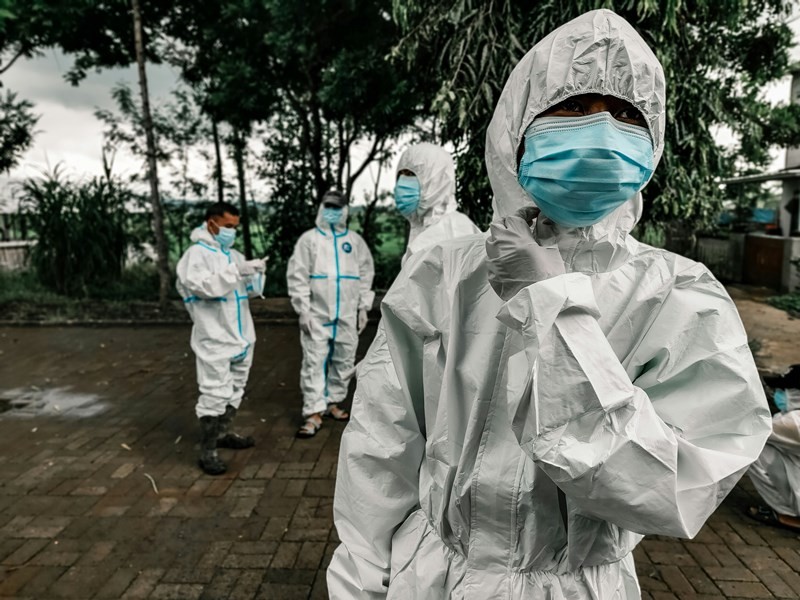
 Ebola
Ebola
Global health alarm: WHO declares Ebola emergency across Congo, Uganda
The World Health Organization (WHO) on Sunday declared the Ebola virus outbreak in the Democratic Republic of the Congo (DRC) and Uganda a Public Health Emergency of International Concern (PHEIC).
However, the WHO clarified that the outbreak has not reached the level of a pandemic emergency.
In a statement, the global health body said: “The Director-General of WHO expresses his gratitude to the leadership of the Democratic Republic of the Congo and Uganda for their commitment to take necessary and vigorous actions to bring the event under control, as well as for their frankness in assessing the risk posed by this event to other States Parties, thereby allowing the global community to take necessary preparedness actions.”
As of May 16, 2026, eight laboratory-confirmed cases, 246 suspected cases, and 80 suspected deaths have been reported in Ituri Province of the DRC across at least three health zones, including Bunia, Rwampara, and Mongbwalu.
In Uganda, two laboratory-confirmed cases, including one death, with no apparent link to each other, were reported in Kampala within 24 hours of each other on May 15 and 16. The cases involved individuals who had travelled from the DRC.
On May 16, another laboratory-confirmed case was reported in Kinshasa, DRC, involving an individual who had recently returned from Ituri.
WHO said unusual clusters of community deaths with symptoms compatible with Bundibugyo virus disease (BVD) have been reported across several health zones in Ituri, while suspected cases have also emerged in Ituri and North Kivu.
The organisation further noted that at least four deaths among healthcare workers in clinical settings suggestive of viral haemorrhagic fever have raised concerns over healthcare-associated transmission, gaps in infection prevention and control measures, and the potential for further spread within health facilities.
"There are significant uncertainties regarding the true number of infected persons and the geographic spread associated with this event at the present time. In addition, there is limited understanding of the epidemiological links with known or suspected cases," WHO said.
WHO Director-General Dr. Tedros Adhanom Ghebreyesus wrote on X: “After consulting the governments of #DRC and #Uganda, where Ebola disease caused by Bundibugyo virus is currently occurring, I have determined that the epidemic constitutes a public health emergency of international concern (PHEIC), as defined under the International Health Regulations.”
Ebola disease was first identified in 1976 during two simultaneous outbreaks—one in Nzara, now part of South Sudan, and another in Yambuku, in what is now the DRC. The latter occurred near the Ebola River, from which the disease derives its name.
While licensed vaccines and therapeutics are available for Ebola virus disease, there is currently no approved vaccine or treatment for other Ebola-related diseases such as Sudan virus disease (SVD) or Bundibugyo virus disease (BVD), though candidate products are under development.
Symptoms of Ebola
The incubation period—the time between infection and the onset of symptoms—ranges from 2 to 21 days.
Symptoms usually appear suddenly and include:
- Fever
- Fatigue
- General weakness and malaise
- Muscle pain
- Headache
- Sore throat
These are often followed by:
- Vomiting
- Diarrhoea
- Abdominal pain
- Skin rash
- Impaired kidney and liver function
Health workers are being urged to remain alert to these symptoms.
Although bleeding is often associated with Ebola, WHO noted that it is less common than widely perceived and typically occurs in the later stages of the disease. Some patients may experience internal and external bleeding, including blood in vomit and stool, bleeding from the nose, gums, or vagina, as well as bleeding at injection sites.
The disease can also affect the central nervous system, potentially causing confusion, irritability, and aggression.
Support Our Journalism
We cannot do without you.. your contribution supports unbiased journalism
IBNS is not driven by any ism- not wokeism, not racism, not skewed secularism, not hyper right-wing or left liberal ideals, nor by any hardline religious beliefs or hyper nationalism. We want to serve you good old objective news, as they are. We do not judge or preach. We let people decide for themselves. We only try to present factual and well-sourced news.
Support objective journalism for a small contribution.


