


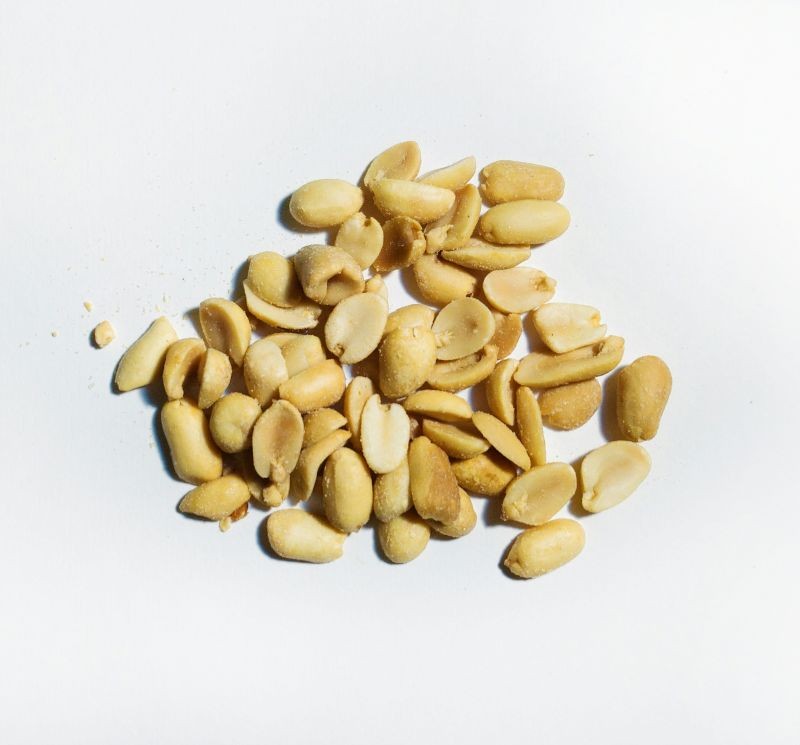
 Peanut
Peanuts may do more than you think! Study uncovers potential metabolic health benefits
New research suggests that peanuts may do more than provide calories, with specific fatty acids associated with peanut consumption linked to a lower risk of developing type 2 diabetes.
Researchers at the German Institute of Human Nutrition Potsdam-Rehbruecke (DIfE), in collaboration with scientists from the University of Barcelona, identified a specific “Peanut Lipidomic Signature” (PeLS) associated with a reduced risk of type 2 diabetes.
Published in The American Journal of Clinical Nutrition, the study examined how peanut consumption alters the body's lipidome — the complete set of fats and fat-like molecules circulating in the blood — and how these changes relate to long-term metabolic health.
Unhealthy dietary patterns are among the major contributors to the global burden of obesity, cardiovascular disease (CVD) and type 2 diabetes (T2D). Research has established that the quality of dietary fat plays an important role in metabolic health.
Reducing saturated fat intake or replacing it with unsaturated fats can help improve blood lipid profiles and lower the risk of cardiovascular disease. However, the effects of different fatty acids on the body's metabolic processes are not uniform.
While conventional blood lipid tests focus on markers such as cholesterol and triglycerides, advanced lipidomics provides a more comprehensive picture of circulating fats, helping researchers identify specific changes associated with health outcomes.
Peanuts Have a Distinctive Fatty Acid Profile
Saturated fatty acids are not a uniform group. Very-long-chain saturated fatty acids (VLCSFAs), which contain more than 20 carbon atoms, are thought to have distinct metabolic effects.
Peanuts, which are botanically classified as legumes, are a dietary source of both VLCSFAs and monounsaturated fatty acids. Their distinctive fatty acid composition has attracted scientific interest because of its potential implications for cardiometabolic health.
Previous prospective cohort studies have reported an inverse association between peanut consumption and the incidence and mortality of cardiovascular disease. However, the biological mechanisms through which peanuts influence circulating lipids, and whether these changes translate into a lower risk of chronic diseases, have remained unclear.
Researchers Combine Clinical Trial and Long-Term Cohort Data
Researchers Dr Inés Domínguez-López and Professor Matthias Schulze of DIfE, working with colleagues from the University of Barcelona, investigated how peanut consumption affects circulating blood lipids and whether these changes are associated with the risk of developing type 2 diabetes and cardiovascular disease.
The researchers adopted a two-part approach, combining data from a clinical dietary intervention with findings from a large population-based cohort study.
First, they analysed data from the ARISTOTLE clinical trial, a six-month randomised controlled study involving 63 healthy adults aged 18 to 33.
Participants consumed either 25 grams of skin-roasted peanuts per day, 32 grams of peanut butter per day, or 32 grams of control butter containing peanut oil. This enabled the researchers to examine changes in circulating blood lipids in response to the different dietary interventions.
The team then analysed data from the EPIC-Potsdam cohort, a long-term study involving more than 27,000 participants. The analysis included 774 cases of newly developed type 2 diabetes and 545 cases of cardiovascular disease.
Combining the two datasets allowed researchers to investigate whether the lipid changes observed during the intervention were associated with disease risk in the larger population.
Peanut Lipidomic Signature Identified
The researchers initially analysed the dietary intervention data to characterise changes in circulating lipids following peanut consumption. They identified 51 within-class fatty acid sums and used high-resolution mass spectrometry to profile the blood lipidome in detail.
This analysis revealed a distinct “Peanut Lipidomic Signature” (PeLS), a pattern of lipid changes associated with peanut consumption.
The researchers observed a significant increase in very-long-chain saturated fatty acids, particularly C24:0 and C22:0, following the peanut intervention.
“This is not merely a simple increase in fat levels, but a complex ‘remodelling’ of the lipidome,” said first author Dr Inés Domínguez-López.
According to the researchers, these fatty acids were preferentially incorporated into specific lipid classes, including ceramides. The process involves the coordinated activity of enzymes that lengthen fatty acid chains.
“By characterising this specific peanut lipid signature, we have uncovered a potential biological marker that links dietary fat quality to metabolic outcomes,” said Schulze.
The findings offer insights into how the composition of dietary fats may influence the body's lipid profile and potentially relate to long-term metabolic health.
Body Mass Index May Explain the Association
To assess the relationship between the peanut-associated lipid signature and disease risk, the researchers examined data from the EPIC-Potsdam cohort.
They found that the PeLS was associated with a lower risk of developing type 2 diabetes. However, no corresponding association was observed for cardiovascular disease.
A key finding was the role of body mass index (BMI) in the relationship between the lipid signature and type 2 diabetes risk.
The researchers found that the association between PeLS and a lower risk of type 2 diabetes was largely explained by BMI.
Domínguez-López said the findings suggest that the potential metabolic benefits associated with these peanut-related lipids may be linked to their relationship with body weight or metabolic processes associated with excess body fat.
However, the findings establish an association rather than proving that peanut consumption directly prevents type 2 diabetes.
Peanuts as Part of a Balanced Diet
The findings add to growing scientific interest in how the quality and composition of dietary fats influence metabolic health.
Peanuts are widely available and relatively affordable, making them an accessible source of dietary fats. Incorporating them into a balanced diet may help improve overall dietary quality, provided portion sizes and total calorie intake are taken into account.
However, the researchers' findings do not establish that peanuts alone can prevent type 2 diabetes or cardiovascular disease. Further research is needed to clarify the biological mechanisms involved and determine whether the identified lipid signature can be used to predict or influence long-term health outcomes.
For now, the study highlights a potential link between peanut consumption, changes in circulating fatty acids and a lower risk of type 2 diabetes, while underscoring the importance of maintaining a healthy body weight and following a balanced diet.
Support Our Journalism
We cannot do without you.. your contribution supports unbiased journalism
IBNS is not driven by any ism- not wokeism, not racism, not skewed secularism, not hyper right-wing or left liberal ideals, nor by any hardline religious beliefs or hyper nationalism. We want to serve you good old objective news, as they are. We do not judge or preach. We let people decide for themselves. We only try to present factual and well-sourced news.
Support objective journalism for a small contribution.


