


 Coronavirus
More than 23 pct population in Delhi exposed to coronavirus: Survey
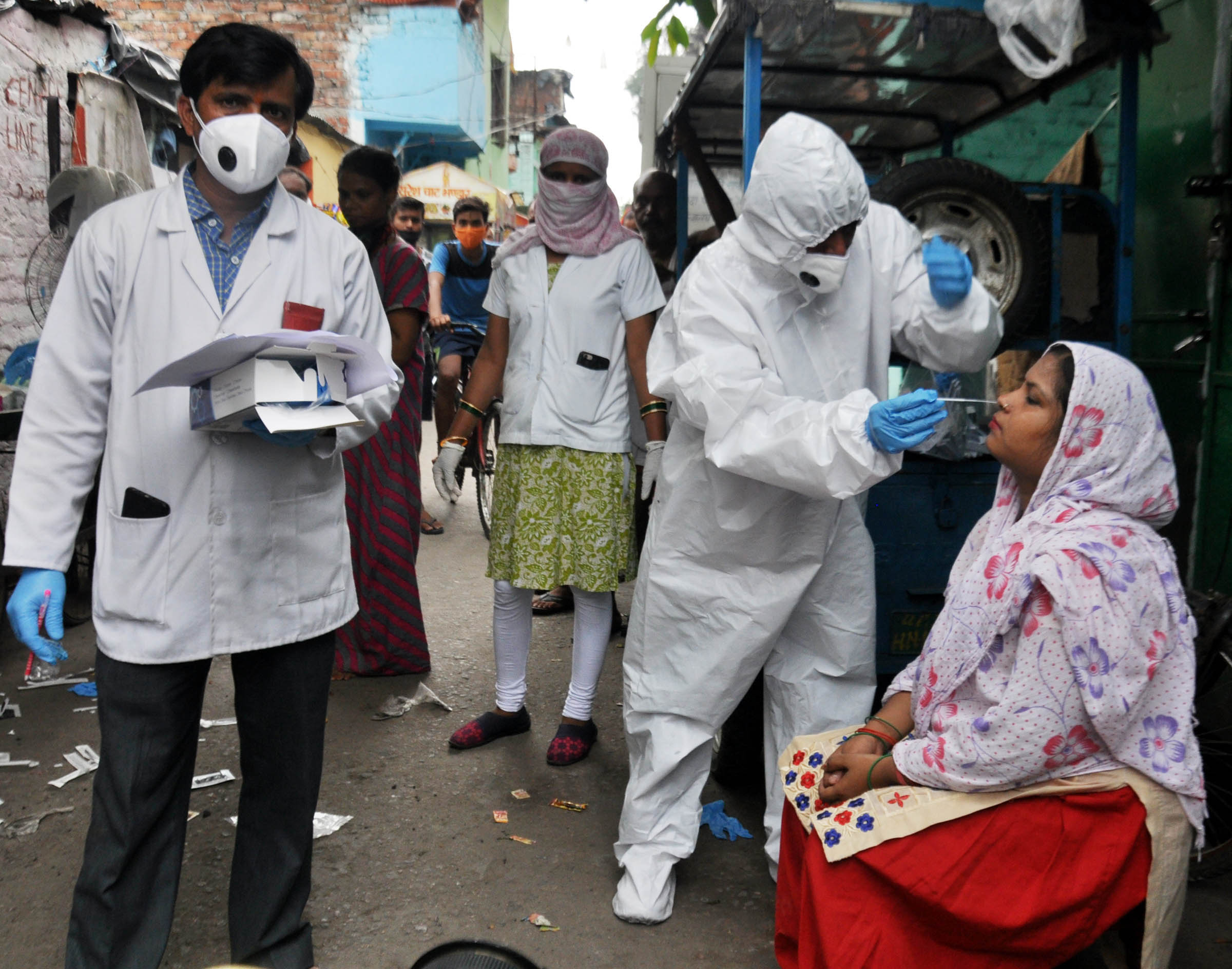
New Delhi: A survey has unveiled that more than 23% of Delhi’s 1.9 crore population showed evidence of past exposure to Sars-Cov-2.
"The results of the sero-prevalence study show that on an average, across Delhi, the prevalence of IgG antibodies is 23.48 percent," read a statement released by the Ministry of Health and Family Welfare.
The Ministry of Health and Family Welfare [MoHFW] commissioned a sero-surveillance study in Delhi.
This study has been done by the National Center for Disease Control [ NCDC] in collaboration with Govt of National Capital Territory of Delhi, following a rigorous multi-stage sampling study design.
Study was conducted from June 27 to July 10.
For all the 11 districts of Delhi, survey teams were formed. Blood samples were collected from selected individuals after taking written informed consent and then their sera were tested for IgG antibodies and infection using COVID KAVACH ELISA approved by Indian Council for Medical Research [ICMR].
It is one of the largest sero-prevalence studies conducted in the country using the ELISA testing.
21,387 samples were collected as per lab standards and were tested.
The tests done help in identification of presence of antibodies in the general population.
These test performed is not a diagnostic test but only provides information about past infection due to SARSCoV-2 in individuals who test positive.
Antibody testing repeatedly done over time i.e. sero-surveillance, generates important evidence for assessing the spread of the pandemic from time to time.
The study also indicates that a large number of infected persons remain asymptomatic. This implies the following:
This can be attributed to the proactive efforts taken by the Government to prevent the spread of infection including prompt lockdown,effective containment and surveillance measures, including contact tracing and tracking, as well as citizen’s compliance to COVID Appropriate Behaviours.
However, a significant proportion of the population is still vulnerable.
Therefore, the containment measures need to continue with the same rigour. Non-pharmacological interventions such as physical distancing, use of face mask/cover, hand hygiene, cough etiquette and avoidance of crowded places etc., must be followed strictly.
Support Our Journalism
We cannot do without you.. your contribution supports unbiased journalism
IBNS is not driven by any ism- not wokeism, not racism, not skewed secularism, not hyper right-wing or left liberal ideals, nor by any hardline religious beliefs or hyper nationalism. We want to serve you good old objective news, as they are. We do not judge or preach. We let people decide for themselves. We only try to present factual and well-sourced news.
Support objective journalism for a small contribution.


