


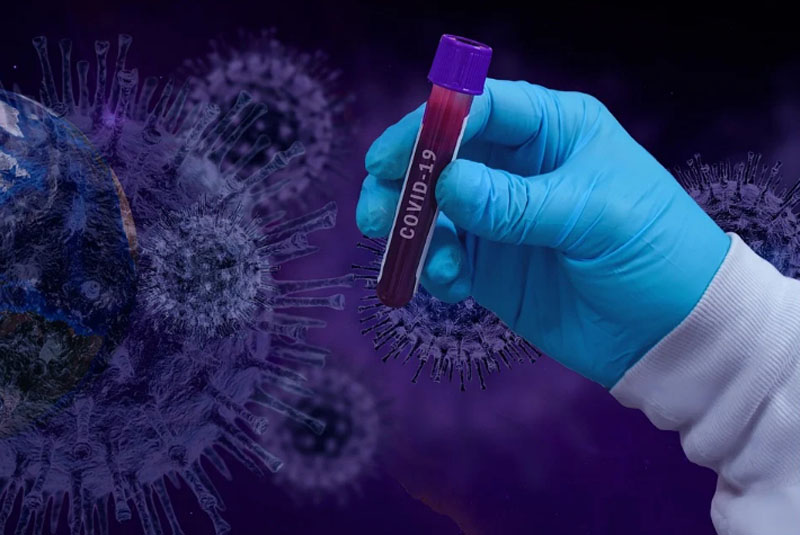
 COVID19 Reinfection
More research needed about COVID-19 reinfection: Bangladeshi experts
Dhaka/Xinhua: Health experts in Bangladesh have stressed the need for doing more research to know about the rapid loss of antibodies in asymptomatic COVID-19 infected people, calling for people to stay vigilant.
They also noted the importance of genome sequencing in order to understand more about COVID-19 reinfection.
Samir Kumar Saha, executive director of Child Health Research Foundation, told the local English newspaper The Business Standard that 29 people have so far been recorded to be re-infected with COVID-19 worldwide.
In Bangladesh, there have also been unproven reports of second- and third-time infections.
"We can confirm whether they are re-infected with the same virus or new ones through genome sequencing. Nothing can be said before a study is done in this regard," said the professor.
He made the remarks following the study on COVID-19 infected people by Imperial College London and Ipsos Mori, a global market research firm, disclosed on Tuesday showed that the proportion of people with detectable antibodies was falling over time.
Nazrul Islam, a noted virologist and former vice-chancellor of Bangabandhu Sheikh Mujib Medical University, told The Business Standard newspaper that antibodies in the COVID-19 infected people normally stay approximately three to four months. But the prevalence of antibodies in asymptomatic cases is very low. So, they are at greater risk of reinfection and their health conditions might turn critical.
Lots of things about the novel coronavirus are still unknown to scientists. Therefore, the patients who have recovered from the COVID-19 pandemic should strictly follow health guidelines, he added.
Bangladesh has reported 401,586 confirmed COVID-19 cases in total. Of them, 318,123 have recovered.
Support Our Journalism
We cannot do without you.. your contribution supports unbiased journalism
IBNS is not driven by any ism- not wokeism, not racism, not skewed secularism, not hyper right-wing or left liberal ideals, nor by any hardline religious beliefs or hyper nationalism. We want to serve you good old objective news, as they are. We do not judge or preach. We let people decide for themselves. We only try to present factual and well-sourced news.
Support objective journalism for a small contribution.


