


 Environment
Forests are more than a resource: How Belarus protects its vital ecosystem
Forests cover more than 40 per cent of Belarus. At the same time, the country recorded twice as many forest fires last year compared to the year before.
Ahead of the International Day of Forests, observed on 21 March, deputy resident representative of the UN Development Programme (UNDP) in Belarus Armen Martirosyan told UN News about the threats facing this critical ecosystem and efforts to protect it.
According to him, forests are not merely a natural resource, but a complex, self-regulating ecosystem. Its importance extends far beyond national borders.
“Forests absorb and store carbon, playing a key role in climate change mitigation. They regulate water systems, protect soils from erosion and improve air quality,” Martirosyan said.
Ecosystem and economy
Today, forests cover nearly 10 million hectares of Belarus. That area has increased by one million hectares over the past 30 years, or one hectare per capita, which is twice the global average rate of growth, according to UNDP.
Forest ecosystems play a crucial role in preserving biodiversity, providing habitats for thousands of plant and animal species. Their economic contribution is equally significant, employing around 40,000 people in the forestry sector, with wood products accounting for 8.4 per cent of exports. Non-timber forest products, such as berries, mushrooms and medicinal plants, are also important.
Forests also provide key spaces for recreation and tourism, creating new opportunities for small businesses and employment in the regions.
“Ecotourism is becoming a priority in Belarus,” Martirosyan said. “Forests offer local communities opportunities to create jobs, develop small businesses and design educational eco-routes for residents and visitors alike.”
Emerging threats
However, forest ecosystems are facing growing threats, primarily linked to the impacts of climate change.
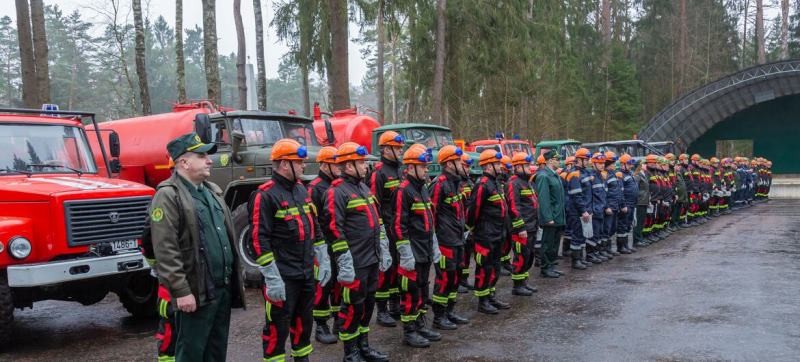
One of the most serious challenges remains forest fires. Martirosyan stressed that this is directly connected to rising temperatures, shorter frost periods, changing precipitation patterns and intensity as well as the increasing frequency of extreme weather events. According to experts, since the start of the 2025 fire season, more than 700 fires have been recorded in Belarus, affecting over 1,200 hectares of forest, nearly twice as much as the previous year.
Coniferous forests, which dominate in Belarus, are particularly vulnerable, as fires can cause severe damage to biodiversity and destroy entire ecosystems, he warned.
“Forest pests are another serious challenge,” he said, pointing to an increase in recent years in insects such as bark beetles and sawflies, which is also linked to climate warming and the declining resilience of forest ecosystems.
UNDP support
Cooperating with the Ministry of Forestry of Belarus for many years, UNDP is helping to introduce modern approaches to forest management and the UN agency’s experts have developed recommendations for updating legislation in this field.
In 2025, proposals were prepared on the use of digital technologies and innovative methods for forest inventory, protection and conservation along with more effective fire management. In February 2026, with UN support, a strategy and national action plan for the conservation and sustainable use of biodiversity were adopted in Belarus.
A new project was launched last year to strengthen preparedness for fire prevention and response. It is the first project implemented by UNDP in Belarus with financial support from the Government of the People’s Republic of China under South-South cooperation framework. Another project focuses on developing ecotourism and is being implemented in cooperation with the Ministry of Natural Resources with support from the Russian Federation.
“Ecotourism creates new sources of income for local communities while supporting protected areas,” the UNDP representative explained, adding that the project helps develop ecotourism infrastructure, create new routes and services, and train specialists working in Belarus’s nature reserves.
“A forest is a living organism, he said. “It must be treated not simply as a resource, but as part of our shared reality, one on which our future depends.”
Three steps to protect forests
Joint efforts with partners at the international, national and local levels help build a systematic approach to forest management, ensure sustainable results and preserve forests for future generations, UNDP’s Martirosyan said, emphasising that protecting forests requires focusing on three key areas.
the use of innovation and digital technologies to monitor forest conditions and detect threats early
strengthening partnerships between the government, international organizations and local communities
education and raising environmental awareness, particularly among young people
Support Our Journalism
We cannot do without you.. your contribution supports unbiased journalism
IBNS is not driven by any ism- not wokeism, not racism, not skewed secularism, not hyper right-wing or left liberal ideals, nor by any hardline religious beliefs or hyper nationalism. We want to serve you good old objective news, as they are. We do not judge or preach. We let people decide for themselves. We only try to present factual and well-sourced news.
Support objective journalism for a small contribution.


