


Eastern region's first successful NGS procedure completed in Guwahati based IHR
The Institute of Human Reproduction utilized the Next-Generation Sequencing (NGS) technology for the first time in Northeast India to successfully fertilize, impregnate and deliver a healthy baby on Oct 13, 2016.
Now at 4 months after delivery, the baby boy is doing well and has achieved normal milestone.
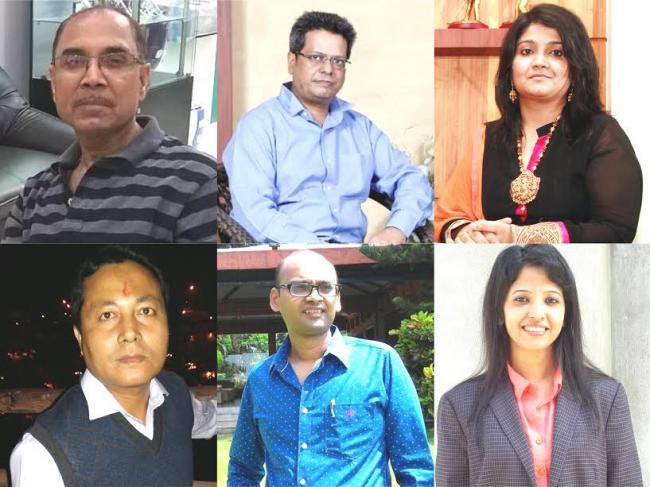
"We are happy and proud to inform about the successful milestone we achieved through the process. This is a remarkable achievement for the team of IHR. With the development of NGS, identification of implantable embryos continues to improve. This technology is useful for couples with repeated IVF failures, couples of advanced age, couples with repeated abortions or with inherited chromosomal rearrangements such as Robertsonian or reciprocal translocation,” said Dr Deepak Goenka, gynaecologist & infertility specialist and director, Institute of Human Reproduction.
NGS is an emerging technology which provides an unprecedented data for genetic analysis. With the help of this technique, a highly accurate detection of chromosomally abnormal embryos can be achieved.
Institute of Human Reproduction (IHR) is one of the pioneer hospitals in the world that uses this technology which provides an outstanding accuracy.
The newer technique - NGS - screens for all 23 pairs of chromosomes for aneuploidies.
It provides a higher accuracy and sensitivity compared to other platforms. Using NGS, more detailed genetic information can be obtained through the genome sequencing of embryos.
The use of this technique is cost efficient.
The sensitivity and specificity of this test is 99%.
IHR has been doing Preimplantation Genetic Diagnosis (PGD) and Preimplantation Genetic Screening (PGS) since 2008. In 2009, the institute performed the first successful delivery of a baby with the help of PGD to a parent who had recurrent pregnancy loss.
Most of the initial work at that time involved biopsies of single blastomeres from day 3 embryos and the use of the Fluorescence In Situ Hybridization (FISH) technique. But the limited diagnostic accuracy of the FISH technology compromised any potential benefit of screening.
IHR is one of the few institutes in India, and the first in Eastern India, to have started using the new technology to give better pregnancy results.
“When Rakhi (name changed to protect identity) visited IHR in 2014, she had a history of infertility for more than 3 years. Her previous reports showed bilateral tubal block and polycystic ovaries. The patient was advised IVF. She underwent her first IVF cycle in August 2014, from which 6 blastocysts were obtained and three FET’s were done but none of them resulted in successful pregnancy. Rakhi underwent second IVF cycle in October 2015. Six blastocysts of grade A were obtained and PGS with NGS was done. Out of the six blastocysts only one was normal. FET was done with the normal blastocyst. Pregnancy test done on February 22, 2016 was positive and she delivered a healthy baby on October 13, 2016,” said Dr Deepak Goenka who accompanied a team of doctors including Rashmi Goenka (Chief Embryologist), Dr Kanchan Murarka (IVF Specialist), Dr Rajib Saikia (O & G), Dr Akbar Hussain (Anaesthetist) and Dr Rahul Verma (Paediatrician) in achieving the milestone.
(Reporting by Hemanta Kumar Nath)
Support Our Journalism
We cannot do without you.. your contribution supports unbiased journalism
IBNS is not driven by any ism- not wokeism, not racism, not skewed secularism, not hyper right-wing or left liberal ideals, nor by any hardline religious beliefs or hyper nationalism. We want to serve you good old objective news, as they are. We do not judge or preach. We let people decide for themselves. We only try to present factual and well-sourced news.
Support objective journalism for a small contribution.


