


Dying with dignity: India’s slow, uneasy acceptance of euthanasia
While euthanasia must remain tightly regulated, denying dignity in death to those trapped in irreversible suffering is becoming harder to justify, writes Sujoy Dhar as the Harish Rana case sets a significant precedent.
For 13 years, Harish Rana existed in a space between life and death.
The young man, who slipped into a vegetative state after a head injury in 2013, was kept alive by artificial nutrition and intermittent medical support—his body sustained, his consciousness absent. Last week, at a Delhi hospital, that long limbo ended. Acting on a Supreme Court order, doctors withdrew life support through a carefully monitored process. Rana died soon after.
According to the Supreme Court Observer, a legal journalism platform that reports, analyses and makes sense of the work of the Supreme Court, Rana’s fall from the fourth floor resulted in a diffuse axonal injury.
He suffered from quadriplegia and 100 percent disability. He was put under Clinically Assisted Nutrition and Hydration (CANH) treatment. This became his primary form of consumption of food and hydration, through a Percutaneous Endoscopic Gastrostomy Tube (PEG) tube.
In Harish Rana’s case, the SC held that artificial nutrition is a “medical treatment” which may be withheld in the patient’s “best interest”, it said.
His passing has been described as a landmark in India’s evolving approach to passive euthanasia. But beyond the legal milestone lies a more human question—one that has lingered quietly in hospital corridors and family homes for decades: what does it mean to live without awareness, without agency, without hope of recovery?
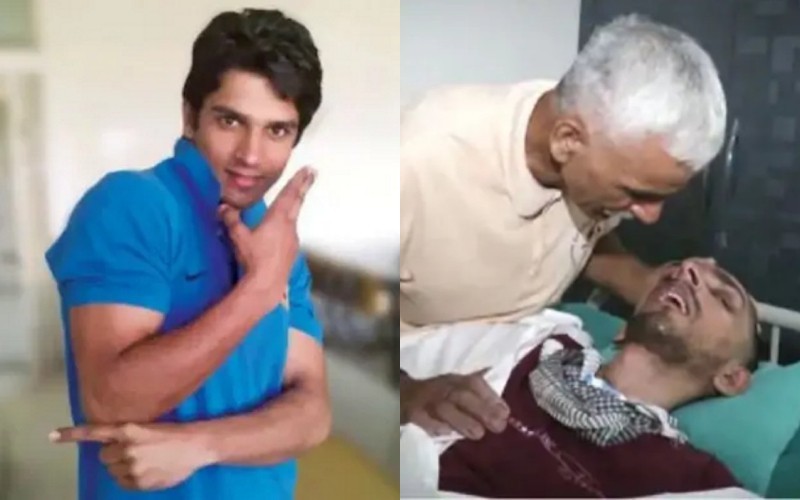 Harish Rana had been in a vegetative state for 13 years after an accident. Photo: YouTube Screenshot
India has confronted this question before. In a Mumbai hospital, nurse Aruna Shanbaug lay in a similar state for 42 years after a brutal sexual assault. In 2011, when a plea was made to allow her euthanasia, the Supreme Court refused.
Yet, in the same judgment, it broke new ground by permitting passive euthanasia under strict conditions. Shanbaug was denied release, but the law took its first tentative step forward. Shanbaug died of pneumonia on 18 May 2015 after being in a persistent vegetative state for nearly 42 years.
That step has since turned into a slow, cautious walk. In 2018, the court recognised “living wills,” allowing individuals to state in advance how they wish to be treated if they become incapacitated. In 2023, it simplified procedures to make such directives easier to implement. And now, in 2026, Rana’s case marks perhaps the most visible application of these evolving principles.
Between suffering and sanctity
The resistance to euthanasia in India—and in many parts of the world—often rests on a deeply held belief: that life is sacred, a gift not to be taken away by human hands. Religion and tradition reinforce this view, urging endurance over choice.
But the lived reality is more complex.
Families caring for patients in irreversible conditions often find themselves trapped in a relentless cycle of emotional and financial strain. Doctors, bound by duty, prolong life even when recovery is medically implausible. Patients, if they could speak, might say something altogether different.
During the Shanbaug case, journalist Pinki Virani, who had petitioned for euthanasia, voiced a sentiment that still resonates: no one should be condemned to endure such a state indefinitely. Yet the court, wary of misuse and lacking a legal framework, chose caution.
That caution is not without reason. India’s healthcare system remains uneven. Access to palliative care—the kind that eases pain and provides dignity at the end of life—is still limited. As palliative care pioneer Harmala Gupta once argued, asking someone to choose death without first ensuring relief from suffering is ethically fraught.
Globally, countries have grappled with the same dilemma, but some have moved ahead with structured systems. The Netherlands and Belgium permit euthanasia under strict conditions, requiring proof of “unbearable suffering” and multiple layers of consent.
Canada’s Medical Assistance in Dying (MAiD) programme places patient autonomy at its core, though it continues to evolve amid debate. In parts of the United States, assisted dying—distinct from euthanasia—is legal, allowing patients to choose the timing of their death under medical supervision.
Even in societies shaped by strong religious traditions, attitudes have shifted. The focus has gradually moved from abstract sanctity to lived dignity—from preserving life at all costs to recognising the limits of medicine and the rights of individuals.
India, by contrast, has chosen a middle path—permitting passive euthanasia but stopping short of active intervention. It reflects both cultural hesitation and institutional caution.
In the wake of renewed debate around end-of-life care, medical voices in India have increasingly called for a more compassionate, patient-centric approach.
Speaking at a public discussion on end-of-life care in Nagpur in 2025, critical care expert Dr. Shivkumar Iyer, a senior intensivist and member of the Indian Society of Critical Care Medicine, emphasised that dignity must remain central to the conversation.
“A good death is one where individuals make their own treatment decisions and die with dignity, in accordance with their values,” he said as quoted by Times of India, underlining the need to balance medical ethics with humane considerations.
A humane path forward
The case for euthanasia in India is not about ideology; it is about compassion, tempered with responsibility.
Rana’s case demonstrates that a system—however complex—can work. A multidisciplinary medical team, legal oversight, and adherence to strict protocols ensured that the process was neither arbitrary nor rushed. It was, in effect, an attempt to balance ethics with empathy.
But isolated cases cannot substitute for a robust framework.
If euthanasia is to remain part of India’s healthcare landscape, it must be anchored in safeguards: clear consent mechanisms, independent medical evaluations, psychological assessments, and protection against coercion.
Equally important is the expansion of palliative care, so that choosing death is never a consequence of untreated pain or neglect.
The debate, ultimately, is not about choosing between life and death. It is about recognising that dignity must accompany both.
For too long, the conversation around euthanasia in India has been framed in absolutes—permitted or prohibited, moral or immoral. But real lives unfold in shades of grey.
A paralysed child in Bihar whose parents once pleaded for relief, a nurse in Mumbai who lay silent for decades, a young man in Delhi whose life was sustained but not lived—these are not abstract cases. They are human stories that defy easy answers.
Rana’s passing does not settle the debate. It deepens it.
India now stands at a point where silence is no longer an option. The legal scaffolding exists, however tentative. The ethical questions are clearer, if no less difficult. What remains is the willingness to confront them—not through dogma, but through dialogue.
Because while life may indeed be sacred, suffering, too, is real. And a society that values compassion must find a way to acknowledge both.
Key milestones in India’s euthanasia debate
2011: In the landmark Aruna Shanbaug case, the Supreme Court, while rejecting euthanasia for her, allowed passive euthanasia under strict judicial guidelines, marking the first legal opening on end-of-life decisions in India.
2018: The Supreme Court recognised the legality of living wills or advance directives, empowering individuals to state in advance that they do not wish to be kept alive on life support in irreversible medical conditions.
2023: The court further simplified procedures for implementing passive euthanasia and living wills, easing earlier bureaucratic hurdles and making the process more practical for families and hospitals.
2026: The Harish Rana case became a landmark real-world implementation of passive euthanasia, with life support withdrawn under court supervision—bringing legal principles into practice and reigniting national debate on dignity in death.
Support Our Journalism
We cannot do without you.. your contribution supports unbiased journalism
IBNS is not driven by any ism- not wokeism, not racism, not skewed secularism, not hyper right-wing or left liberal ideals, nor by any hardline religious beliefs or hyper nationalism. We want to serve you good old objective news, as they are. We do not judge or preach. We let people decide for themselves. We only try to present factual and well-sourced news.
Support objective journalism for a small contribution.


