


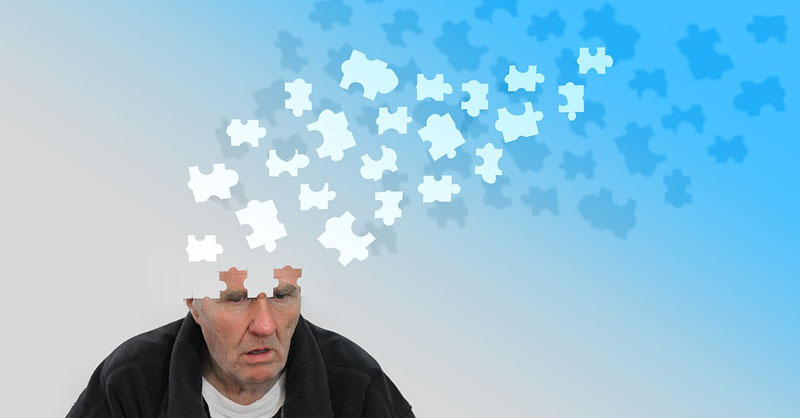
 Alzheimer
Australian scientists make breakthrough in Alzheimer's research
Canberra: A team from Australia's national science agency has used artificial intelligence to make a breakthrough in Alzheimer's disease research.
The Commonwealth Scientific and Industrial Research Organization (CSIRO) said on Wednesday that, in partnership with the Queensland University of Technology, it has developed a world-first benchmark for measuring brain atrophy in neurodegenerative diseases.
Cerebral atrophy is the loss of nerve cells and the connections that help them communicate as a result of disease, infections or traumatic injury.
Its progress is measured in patients with neurodegenerative diseases including Alzheimer's via magnetic resonance imaging (MRI) but changes can be in the sub-millimeter range, making them difficult to detect.
By using advanced machine learning techniques, the CSIRO team was able to produce MRIs of brains with predefined signs of neurodegeneration in the cortex region -- the layer of the brain most affected by Alzheimer's.
"Extremely accurate methods are needed to observe these signs in brain images when they begin to appear so they can be addressed earlier rather than later," Filip Rusak, a research scientist from CSIRO's Australian e-Health Research Center, said in a media release.
"Before these findings, there was no way to conclusively determine the sensitivity of the various methods used to measure cortical thickness in Alzheimer's patients."
With the breakthrough, researchers can now test the sensitivity of methods for quantifying changes in cortical thickness down to 0.01 millimeters.
Better testing of those methods could lead to new technologies for early diagnosis of Alzheimer's and any other disease involving neurodegeneration.
The team described it as a significant step forward to better understanding dementia and other brain diseases.
"The findings will help researchers pick the right tools for the job. The right tool increases the chances of accurately assessing disease progression," Rusak said.
(With UNI inputs)
Support Our Journalism
We cannot do without you.. your contribution supports unbiased journalism
IBNS is not driven by any ism- not wokeism, not racism, not skewed secularism, not hyper right-wing or left liberal ideals, nor by any hardline religious beliefs or hyper nationalism. We want to serve you good old objective news, as they are. We do not judge or preach. We let people decide for themselves. We only try to present factual and well-sourced news.
Support objective journalism for a small contribution.


