


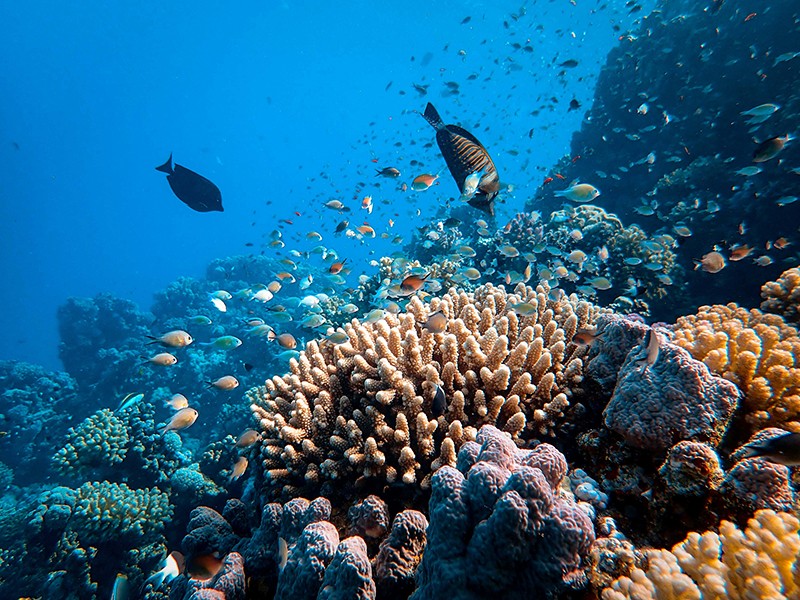
 Ocean life
A new UN Treaty could change the world’s oceans forever — And it takes effect this week
Nearly two decades in the making, a landmark international agreement aimed at protecting and sustainably using marine life in international waters and the global seabed is set to enter into force on Saturday, marking a major advance in efforts to safeguard ocean ecosystems for generations to come.
Formally known as the Biodiversity Beyond National Jurisdiction (BBNJ) Agreement, the legally binding UN treaty governs ocean areas beyond national jurisdictions—commonly referred to as the high seas—as well as the international seabed.
These areas account for more than two-thirds of the ocean’s surface and over 90 per cent of Earth’s living space by volume, reflecting the vast scale of life supported beneath the ocean’s surface.
Why it matters
The BBNJ aims to ensure that the high seas and international seabed are managed sustainably and equitably for the benefit of all humanity. It is also the first legally binding global ocean treaty to explicitly promote inclusive ocean governance, with provisions for the participation of Indigenous Peoples, local communities, and commitments to gender balance.
Once fully implemented, the agreement is expected to make a significant contribution to addressing the so-called “triple planetary crisis” of climate change, biodiversity loss and pollution.
Speaking to UN News, Mzee Ali Haji, a Tanzanian diplomat who led his country’s negotiation team during the BBNJ talks, said the agreement represents a major step toward protecting international waters.
“Everyone should bear in mind that there is now control of activity in the high seas. When you pollute, you are responsible for your actions,” he said.
Strengthening ocean law
The BBNJ strengthens the existing international legal framework by building on the UN Convention on the Law of the Sea (UNCLOS)—often described as the “constitution for the oceans”—which has governed maritime activity, seabed exploitation and marine protection since it entered into force in 1994.
The treaty also seeks to improve the implementation of UNCLOS by providing clearer guidance on biodiversity management and aligning ocean governance with modern challenges such as climate change and the 2030 Agenda for Sustainable Development.
What ‘entry into force’ means
Once the treaty enters into force, it becomes legally binding for the 81 countries that have ratified it so far, requiring them to implement its provisions at the national level.
Under the agreement, entry into force occurs 120 days after ratification by at least 60 countries, a threshold that has now been met.
Who has ratified so far
Countries that have ratified the BBNJ include several major economies, notably China, Germany, Japan, France and Brazil.
China’s participation is particularly significant given its role in ocean-based industries such as shipbuilding, aquaculture, fisheries, and offshore oil and gas. The country exported $155 billion in ocean-related goods in 2023, according to UN trade data.
Major economies yet to ratify
Some major economies have yet to ratify the treaty.
The United States, the world’s largest economy and one of the top five exporters of ocean-related goods (about $61 billion), signed the agreement in 2023, but it has not been ratified and remains pending in the Senate.
India, a leading developing-economy exporter of ocean goods ($19 billion), adopted the treaty in 2024, though domestic legislation required for ratification is still pending. The United Kingdom introduced ratification legislation in 2025, but parliamentary approval has not yet been completed.
Russia remains among a small group of countries that have neither adopted nor ratified the agreement, citing concerns over preserving existing governance frameworks and ensuring freedom of navigation and shipping in international waters.
Is this a setback?
Despite the absence of some major economies, Haji remains optimistic about the treaty’s impact.
“Developing countries and small island states need support. We expect that, in the future, others will accept this agreement because it will help them,” he said. “The protection of the high seas is the responsibility of all of us.”
What comes next
The treaty remains open for additional ratifications, which would strengthen its effectiveness over time.
“When you negotiate something, you can’t get 100 per cent acceptance immediately,” Haji said. “Some countries observe first, and when they see the advantages, they join. I believe more will do so in the future.”
Beyond wider participation, effective implementation and enforcement will be critical. Under the treaty, the first meeting to review progress and compliance is scheduled to take place within one year of the agreement’s entry into force.
Support Our Journalism
We cannot do without you.. your contribution supports unbiased journalism
IBNS is not driven by any ism- not wokeism, not racism, not skewed secularism, not hyper right-wing or left liberal ideals, nor by any hardline religious beliefs or hyper nationalism. We want to serve you good old objective news, as they are. We do not judge or preach. We let people decide for themselves. We only try to present factual and well-sourced news.
Support objective journalism for a small contribution.


