Poverty in India declines from 21.2% in 2011-12 to 8.5% in 2022-24: NCAER research
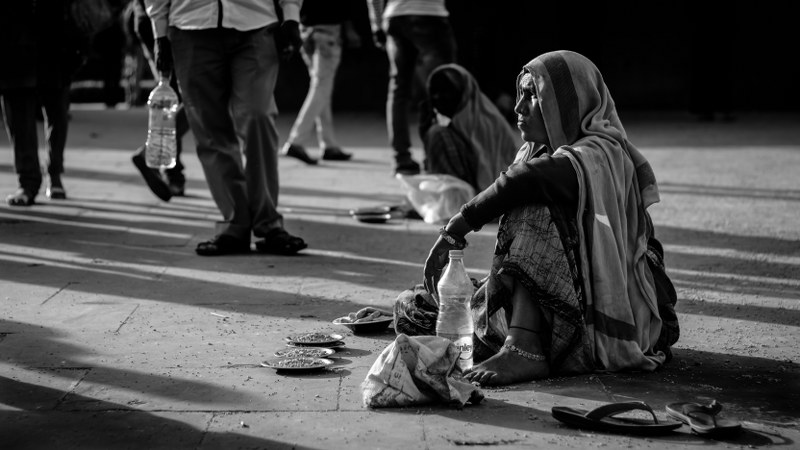
New Delhi: Poverty in India is estimated to have declined to 8.5% in 2022-24 from 21.2% in 2011-12, despite the challenges posed by the pandemic, according to a research paper by the economic think tank NCAER.
The paper, titled "Rethinking Social Safety Nets in a Changing Society" and authored by Sonalde Desai of NCAER, used data from the newly completed Wave 3 of the India Human Development Survey (IHDS) as well as data from Waves 1 and 2 of the IHDS.
"According to the IHDS findings...poverty declined significantly between 2004-2005 and 2011-12 (from a headcount ratio of 38.6 to 21.2), and it continued to decline between 2011-12 and 2022-24 (from 21.2 to 8.5) despite the challenges posed by the pandemic," the paper said.
"Accidents of birth are more likely to affect long-term chronic poverty, accidents of life may have a transitory effect on moving in and out of poverty," it said.
The paper stated that economic growth and the decline in poverty create a dynamic environment that necessitates adaptable social protection programs.
It suggested that traditional strategies aimed at addressing chronic poverty in large segments of society may become less effective, as accidents of birth become less significant compared to accidents of life.
Ensuring that social protection systems keep pace with social transformation will be a key challenge for India as it aims for equitable development.
According to the paper, during periods of economic growth, as opportunities increase, the long-term determinants of poverty may decrease, while life accidents related to natural disasters, illness, death, and shifts in occupation-specific opportunities may gain importance.
Earlier this year, NITI Aayog CEO B V R Subrahmanyam had said the latest consumer expenditure survey indicates that poverty has come down to 5 per cent in the country and people are becoming prosperous both in rural and urban areas.
"If we take the poverty line and inflate it with the Consumer Price Index (CPI) to today's rate, we see that the average consumption of the lowest fractional, the 0-5 per cent, is about the same. This means poverty in the country is there in the 0-5 per cent group only," the NITI Aayog CEO had said.
The National Sample Survey Office (NSSO), under the Ministry of Statistics and Programme Implementation, released data on household consumption expenditure for 2022-23 on February 24, showing that per capita monthly household expenditure more than doubled compared to 2011-12.
The poverty line recommended by the Tendulkar Committee Report was set at Rs 447 for rural areas and Rs 579 for urban areas for 2004-2005, with variations between states.
These poverty thresholds were later adjusted by the Planning Commission to Rs 860 for rural areas and Rs 1,000 for urban areas for 2011-12.
Support Our Journalism
We cannot do without you.. your contribution supports unbiased journalism
IBNS is not driven by any ism- not wokeism, not racism, not skewed secularism, not hyper right-wing or left liberal ideals, nor by any hardline religious beliefs or hyper nationalism. We want to serve you good old objective news, as they are. We do not judge or preach. We let people decide for themselves. We only try to present factual and well-sourced news.
Support objective journalism for a small contribution.