Centre likely to review restrictions on rice export ban in Sept if monsoon favourable: Report
New Delhi: The central government is likely to review the restrictions on exporting certain rice varieties in September, following the conclusion of the ongoing kharif season and the availability of final production figures, Moneycontrol reported, citing government officials.
To ensure sufficient domestic supply, the government banned the export of non-basmati rice in July 2023 and imposed a 20 percent export duty on parboiled rice.
The kharif season aligns with the south-west monsoons in India, typically from June to October.
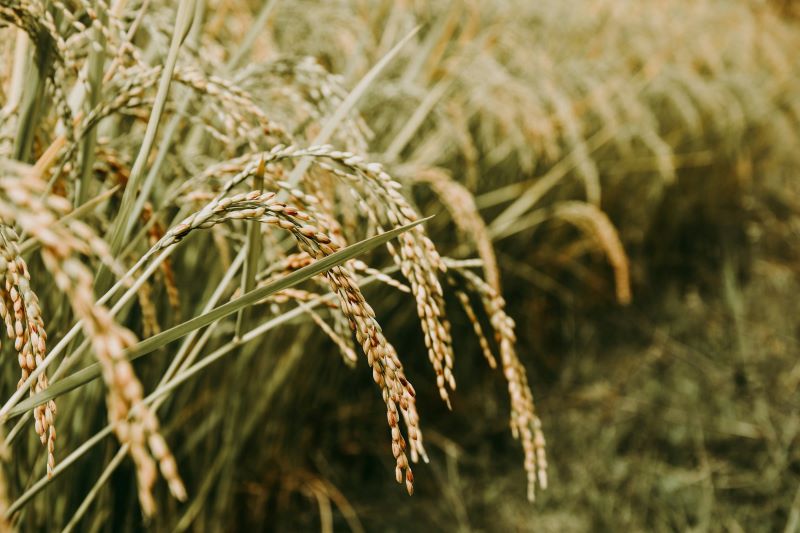
Paddy (rice) is the main kharif crop, but recent agriculture ministry estimates show that the area under paddy cultivation has slightly decreased year-on-year to 2.2 million hectares, with pulses taking the lead.
Since paddy is a rain-fed crop, the monsoon season is crucial for rice sowing.
June ended with a rainfall deficit, which narrowed to 10.9 percent as of June 30 from 13.8 percent the previous day, according to the Indian Meteorological Department (IMD).
The official mentioned that the June rainfall deficit is unlikely to affect rice production, as most sowing (transplanting) occurs in July and August.
"Most areas have moved to transplanting, which mainly happens in July and August. So, the deficit rainfall in June is not concerning," the official said, according to the report.
Transplanting involves moving rice seedlings from a nursery to puddled fields 15 to 40 days after seeding to achieve higher yields.
The official added that rainfall distribution between July and September will be critical for rice production, and the decision to lift the ban on non-basmati rice exports will largely depend on the monsoon performance during these months.
Recent data shows an improvement in July's rainfall, with the country's overall monsoon deficit narrowing to 3 percent on July 4 compared to nearly 11 percent at the end of June, thanks to heavy rains in the northwest and northeast of India.
The IMD predicts above-normal rainfall in July.
Support Our Journalism
We cannot do without you.. your contribution supports unbiased journalism
IBNS is not driven by any ism- not wokeism, not racism, not skewed secularism, not hyper right-wing or left liberal ideals, nor by any hardline religious beliefs or hyper nationalism. We want to serve you good old objective news, as they are. We do not judge or preach. We let people decide for themselves. We only try to present factual and well-sourced news.
Support objective journalism for a small contribution.