

Tax cuts, but no salary hikes? Modi puts India Inc on the spot
New Delhi, Nov 19 (IBNS): Prime Minister Narendra Modi on Thursday confronted India’s corporate leadership with an uncomfortable question: if the government has reduced corporate taxes and offered substantial income tax relief to individuals, why have companies not responded with higher employee salaries and more jobs?
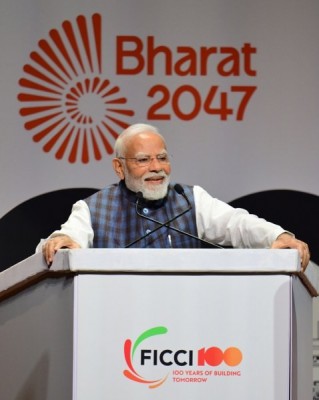
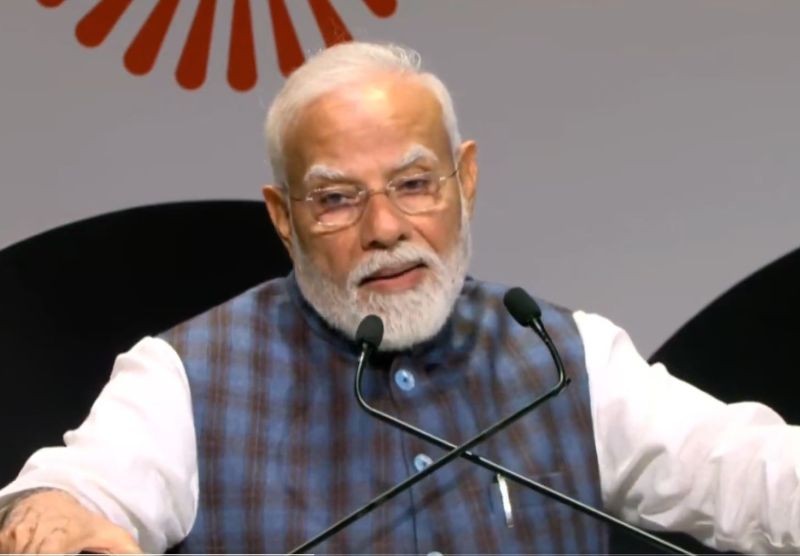
Addressing the centenary Annual General Meeting and Annual Convention of the Federation of Indian Chambers of Commerce and Industry (FICCI) at Bharat Mandapam in New Delhi, Modi questioned whether India Inc had passed on any meaningful benefits of government tax concessions and business-friendly reforms to its workforce.
Pointing to the reduction in the basic corporate tax rate from 30 percent to 22 percent, Modi asked business leaders whether the relief had translated into better salaries and increased recruitment.
“In 2014, the corporate tax rate was 30%. We have reduced it to 22%,” he said, before asking whether companies had increased employee salaries or expanded their workforce.
He also referred to the government’s decision to provide income tax relief on annual earnings up to Rs 12 lakh under the new tax regime, saying the move had significantly enhanced people’s purchasing power.
PM Modi roasted FICCI live. 🔥 " We reduced tax from 30% to 22%, made income up to 12 lakhs tax-free... Still not satisfied? Did I increase the number of employees? Did I give a salary hike?" Even after 100 years, I have to repeat Gandhi's words... Whose failure is this? The faces of industry leaders are worth seeing 😂 https://t.co/SO1pA9tdsV
— Hit Janta 🪳 (@HCP_2026) November 19, 2026
But he questioned whether businesses had reciprocated the government’s efforts.
“Have you increased the salaries of your employees? Have you increased the number of employees in your organisations? No. You say, Modi ji, you do your part, we will see. It will continue like this,” he said.
In a pointed remark directed at corporate leaders, Modi also suggested that their appetite for government concessions remained insatiable.
He said the government had taken significant steps to improve the ease of doing business, reduce taxation and simplify compliance, but industry needed to demonstrate a greater commitment to employment generation and economic growth.
The remarks place the spotlight on a persistent debate surrounding India’s economic growth: whether the benefits of corporate profitability and government incentives are translating into better wages, more secure employment and stronger household purchasing power.
Modi also highlighted changes in income tax return filing and refund procedures, saying refunds that earlier took months could now reach taxpayers within a week.
He urged businesses to look beyond seeking further concessions and demonstrate their contribution to India’s economic ambitions.
Key points from Modi’s address
1. Corporate tax reduced from 30% to 22%
Modi reminded India Inc that the government had substantially reduced the basic corporate tax rate, questioning whether companies had used the relief to expand operations, increase investment and improve employee compensation.
2. Where are the salary hikes?
The Prime Minister directly asked business leaders whether employees had received better salaries following the government’s tax concessions. He questioned why workers were not seeing a corresponding improvement in their earnings.
3. More tax relief for individual taxpayers
Referring to the income tax relief that effectively makes annual income up to Rs 12 lakh tax-free under the new tax regime, subject to applicable conditions, Modi said the government had taken a major step to increase household purchasing power.
4. Where are the new jobs?
Modi asked whether companies had increased the number of employees in their organisations, challenging corporate India to contribute more actively to employment generation.
5. Industry’s appetite for concessions
In a sarcastic observation, the Prime Minister suggested that no amount of government support seemed sufficient to satisfy corporate India’s demands, urging businesses to reciprocate policy support with tangible economic contributions.
6. Faster income tax refunds
Modi highlighted the government’s efforts to simplify tax administration, claiming that refunds that once took months could now be processed within a week.
7. Government has done its part, industry must respond
The Prime Minister called on businesses to move beyond seeking tax concessions and focus on investment, manufacturing, employment and higher wages.
8. Growth must benefit ordinary Indians
His remarks underlined the need to translate economic growth and corporate incentives into wider benefits for employees, consumers and households.
The FICCI centenary convention provided a platform for Modi to challenge Indian businesses to reflect on their contribution to the country’s next phase of economic growth.
His message was clear: government concessions must be matched by greater corporate responsibility, particularly in creating jobs, raising wages and strengthening India’s productive capacity.
Support Our Journalism
We cannot do without you.. your contribution supports unbiased journalism
IBNS is not driven by any ism- not wokeism, not racism, not skewed secularism, not hyper right-wing or left liberal ideals, nor by any hardline religious beliefs or hyper nationalism. We want to serve you good old objective news, as they are. We do not judge or preach. We let people decide for themselves. We only try to present factual and well-sourced news.
Support objective journalism for a small contribution.