

Export quality abroad, inferior at home? Modi puts India Inc in the dock
New Delhi/IBNS: Prime Minister Narendra Modi on Thursday challenged Indian businesses to stop treating the country’s vast domestic market as a guaranteed destination for products of inferior quality, asserting that Indian consumers deserve the same standards of goods offered to international buyers.
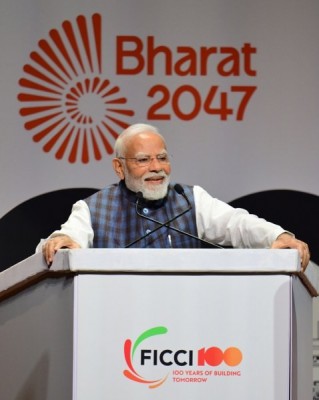
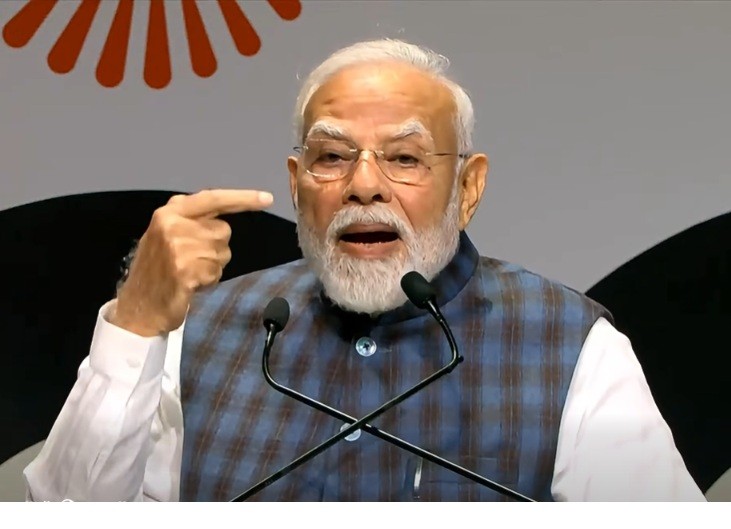
Addressing the centenary Annual General Meeting and Annual Convention of the Federation of Indian Chambers of Commerce and Industry (FICCI) at Bharat Mandapam in New Delhi, Modi questioned the continued use of the phrase “export quality” by sellers to convince Indian customers about the superior quality of a product.
“Do not take 140 crore Indians for granted as an assured market where anything will sell,” he told industry leaders.
Questioning why Indian consumers should receive anything less than the best, he said: “Do they not deserve good quality? This mindset must change; my countrymen deserve top quality.”
The Prime Minister said India’s domestic market should not become a comfort zone for businesses but should give them the confidence to compete in global markets.
Modi also urged corporate leaders to make India First the foundation of their long-term investment decisions over the next 20 years, linking domestic manufacturing, self-reliance and global competitiveness with the country’s development ambitions.
He identified opportunities across pharmaceuticals, agriculture, food processing, steel, aluminium, engineering goods and machinery, while calling for reduced dependence on imports.
1. Indian consumers deserve the best
Modi criticised companies that use the label “export quality” as a selling point in the domestic market. He said Indian consumers should receive the same high standards of products as buyers overseas.
2. Domestic market should not be a comfort zone
He urged businesses to use India’s large consumer base as a platform to build globally competitive products rather than depend solely on domestic demand.
3. Make India First the investment mantra
The Prime Minister asked industry leaders to make national interests the foundation of every long-term investment decision over the next two decades, saying this would strengthen self-reliance and open new business opportunities.
4. Reduce dependence on imports
Pointing to India’s dependence on imported finished and specialised products, Modi called for greater domestic manufacturing capabilities in steel, aluminium and pharmaceutical ingredients. He questioned why India should export raw materials while importing value-added products.
5. Invest in agriculture and food processing
He urged companies to invest in agricultural infrastructure, procurement systems and food processing, and develop products suited to overseas markets. He also highlighted the scope for increasing India’s share of global agricultural exports.
6. Expand engineering and machinery exports
Modi identified hand tools, power tools, packaging equipment, irrigation systems and factory machinery as sectors where Indian manufacturers could build a stronger international presence, particularly in developing economies.
6. Create jobs and raise salaries
The Prime Minister asked companies whether reductions in corporate tax rates had translated into higher employee salaries and increased hiring. He challenged India Inc to ensure that the benefits of economic reforms also reach workers.
7. Make better use of free trade agreements
He urged Indian businesses to take advantage of free trade agreements signed with major economies, invest in overseas market research and understand the requirements of international consumers.
8. Carry forward the Swadeshi message
Invoking Mahatma Gandhi’s call for Swadeshi in 1930, Modi questioned why Indian industry still needed to be reminded about self-reliance and indigenous manufacturing a century later.
9. Plan for the next 20 years
Marking FICCI’s centenary, he called on industry leaders to reflect on what Indian businesses could achieve in the coming two decades and contribute to the vision of a developed and self-reliant India.
The Prime Minister also cited India’s economic growth prospects and recent export performance, urging businesses to prepare for emerging opportunities rather than remain confined to established markets.
He said India’s growth story was creating new opportunities and called on industry to be ready to seize them.
Support Our Journalism
We cannot do without you.. your contribution supports unbiased journalism
IBNS is not driven by any ism- not wokeism, not racism, not skewed secularism, not hyper right-wing or left liberal ideals, nor by any hardline religious beliefs or hyper nationalism. We want to serve you good old objective news, as they are. We do not judge or preach. We let people decide for themselves. We only try to present factual and well-sourced news.
Support objective journalism for a small contribution.