 Nepal
Nepal
Protests against MCC in Nepal: A chapter from Chinese debt trap playbook
China’s protracted lobbying efforts aimed at blocking international development assistance to smaller countries exposes its bullying behavior. For firming up its iron grip over such countries, China lures them with debt financing linked with superfluous and unviable infrastructure projects. After these projects get stuck or shelved because of their inherent problems or motivated approach of the financer, the leftover debt imprint is too overwhelming for the vulnerable client countries.
After a few commercial setbacks, the real Chinese game unfolds for these countries in the form of an unavoidable debt trap. This trap subsequently dictates future international dealings by the trapped countries including financing from sources other than China. To counter competing financing from its adversaries, China deploys several means including misinformation campaigns and manipulation of local politicians in the target countries.
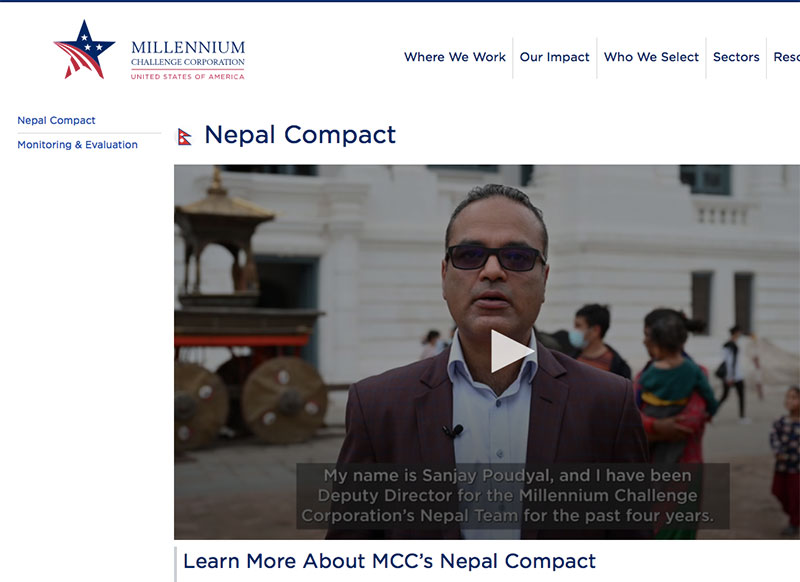
The problems being faced by Millennium Challenge Corporation (MCC) in Nepal serve as an ideal case study for understanding how China stabs its competitors’ development proposals for smaller and needy countries.

Despite being a well meaning and focused program, MCC has failed to take off in Nepal as it is yet to be ratified by the country’s Parliament. Nepal’s ever-bickering politicians have further muddled the issue with a group bent on opposing all constituents of the program. Ironically, some members of this group fail to acknowledge the clearly visible problems in the projects pushed by China under its Belt and Road Initiative.

Noting that the program has wrongly been made a sponsored propaganda citing it as anti-national; he underlined the need to cut through the misconception against the project. Nepal’s Leftist political parties however continue to oppose the pact alleging it to be aimed at countering China.
As the deadline nears, Nepal faces several risks associated with turning down the MCC offer. Rejection of it would tantamount to refusing a substantial amount of money at a time when Nepal’s economy is suffering due to the pandemic, rising energy prices, and recession in the Gulf and other countries from where migrant workers remit money to Nepal. Since Nepal has already used some of the MCC funds, it would need to return it while arranging its own finances.
Rejection of MCC might also influence other development partners of Nepal to slow down on their aid. The allies of US including UK, EU, Israel, Japan and South Korea may reduce their footprints in the country, thus causing a huge amount of developmental loss. Further, these countries provide preferential treatment to Nepal Army in training and in UN Peacekeeping duties, both and which may get impacted if MCC is rejected.
Support Our Journalism
We cannot do without you.. your contribution supports unbiased journalism
IBNS is not driven by any ism- not wokeism, not racism, not skewed secularism, not hyper right-wing or left liberal ideals, nor by any hardline religious beliefs or hyper nationalism. We want to serve you good old objective news, as they are. We do not judge or preach. We let people decide for themselves. We only try to present factual and well-sourced news.
Support objective journalism for a small contribution.