Make sure saffron does not disappear from Kashmir: Omar Abdullah
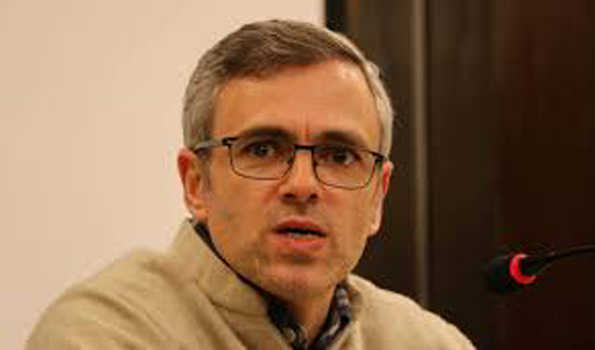
Srinagar, Mar 3 (IBNS): Former Jammu and Kashmir Chief Minister Omar Abdullah on Sunday said more care should be taken that saffron does not disappear from the Valley.
Omar made the remarks amid reports of lower production of the spice in recent times.
"We need to do more, much more to ensure saffron doesn’t disappear from Kashmir - The World’s Most Expensive Spice Is on the Verge of Disappearing - Eater," Omar tweeted.
We need to do more, much more to ensure saffron doesn’t disappear from Kashmir - The World’s Most Expensive Spice Is on the Verge of Disappearing - Eater https://t.co/FEO96xMW4O
— Omar Abdullah (@OmarAbdullah) March 2, 2019
Kashmiri saffron is considered as one of the finest in the world.
As per UNI news agency report, the saffron which grows in the valley, mostly in Pampore in south Kashmir, is the sweetest, most precious spice in the world, which sells around Rs 3 lakh per kg.
However, over the years the production has drastically reduced despite central government funded National Saffron Mission (NSM) programme. The production in 2016 decreased from 4.2 kg per hectare to 1.4 kg per hectare, as per official records, reported the news agency.
The saffron growers have blamed the government for the decline, alleging that they have failed to set up irrigation system under NSM.
“The irrigation system, which consists of laying the water supply pipes and installing the sprinklers, was to be installed to manage the drought affecting the area,” the growers said.
However, they alleged that the failure of authorities to complete the project has resulted in the drastic fall of the production over last about three years.
Image: UNI
Support Our Journalism
We cannot do without you.. your contribution supports unbiased journalism
IBNS is not driven by any ism- not wokeism, not racism, not skewed secularism, not hyper right-wing or left liberal ideals, nor by any hardline religious beliefs or hyper nationalism. We want to serve you good old objective news, as they are. We do not judge or preach. We let people decide for themselves. We only try to present factual and well-sourced news.
Support objective journalism for a small contribution.