 Kargil
Kargil Remembrance: India’s firm stance against terrorism from Pakistan
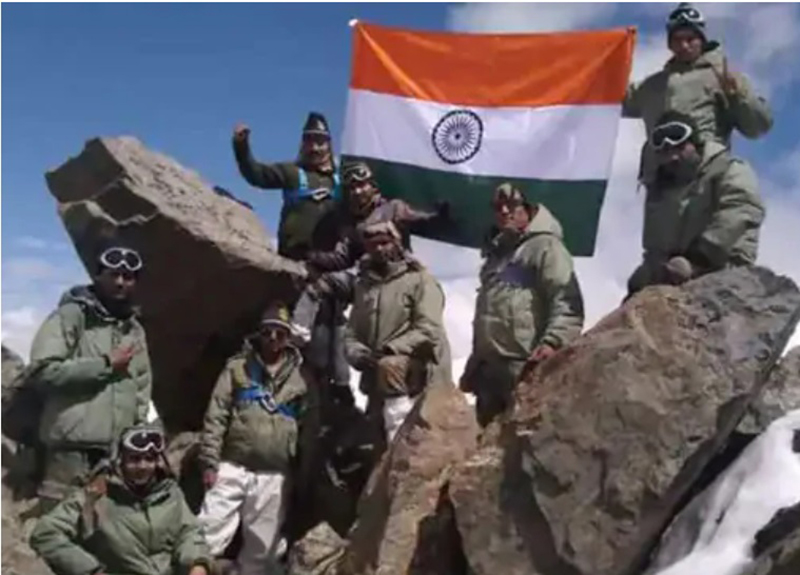
Prime Minister Narendra Modi used the 25th Kargil Vijay Diwas celebrations as a platform to deliver a stark warning to Pakistan, underscoring India’s resolute stance against terrorism.
Speaking from Drass, the site of one of the most pivotal battles of the Kargil War, Modi directed his remarks towards the sponsors of terrorism in Pakistan, stating, “Pakistan has learned nothing from its history. It is seeking to remain relevant by relying on terror. Today I am speaking from a place from where the masters of the terrorists are able to directly hear my voice. I want to convey to the patrons of terrorists that their unholy plans will never be successful. Our brave hearts will crush terrorism with all their might; the enemy will be given a crushing response.”
Modi’s address came at a time when Pakistan’s role in terrorism has been under intense scrutiny, particularly following recent violence in the Union Territory of Jammu and Kashmir and the broader region. Although the 1999 Kargil conflict involved Pakistani military forces, the current focus is on Pakistan’s ongoing support for terrorist activities.
Recent incidents have spotlighted the escalating internal security challenges faced by Pakistan. On July 15, terrorists breached the Bannu cantonment in Khyber Pakhtunkhwa, resulting in the death of eight Pakistani security personnel and injuring 141 others. The attack was claimed by Jaish Fursan e Muhammad, a group with suspected ties to the Tehreek-e-Taliban-e-Pakistan (TTP). This was followed by a deadly assault on a rural health center in Dera Ismail Khan and further violence in South Waziristan and Mardan.
Pakistan’s response has been characterized by an extensive security operation, “Azm-e-Istehkam” (Resolve for Stability), launched by the army. Lt Gen Ahmed Sharif Chaudhry, Director-General of the Inter-Services Public Relations (ISPR), defended the operation in a press conference, detailing that over 22,000 security operations have been conducted this year alone, leading to significant terrorist casualties. Chaudhry also emphasized that the operation involves a comprehensive approach, including political, diplomatic, and socio-economic strategies.
Despite these efforts, Pakistan faces a profound challenge from within. The country’s security forces are grappling with increasing attacks from groups like the TTP, while simultaneously contending with a struggling economy. Pakistan’s financial instability has led to repeated requests for aid from the International Monetary Fund, highlighting a severe economic crisis that persists alongside its security issues.
Moreover, Pakistan’s continued reliance on terrorism as a tool against India remains a contentious issue. Modi’s address in Drass not only reaffirmed India’s stance against terrorism but also highlighted a broader strategic shift in India’s focus towards its other neighbor, China. The PM’s comments reflect a growing frustration with Pakistan’s unchanging policies, which, according to critics, hinder Pakistan’s prospects for economic and social development.
As Pakistan deals with its own internal strife and the repercussions of its foreign policy decisions, the call for a normalized relationship with India becomes increasingly apparent. The ongoing enmity and the persistent use of terrorism as a strategic tool not only strain bilateral relations but also undermine Pakistan’s own stability and progress.
(Photo nd text courtesy: Khalsavox.com)
Support Our Journalism
We cannot do without you.. your contribution supports unbiased journalism
IBNS is not driven by any ism- not wokeism, not racism, not skewed secularism, not hyper right-wing or left liberal ideals, nor by any hardline religious beliefs or hyper nationalism. We want to serve you good old objective news, as they are. We do not judge or preach. We let people decide for themselves. We only try to present factual and well-sourced news.
Support objective journalism for a small contribution.