 Khalistan
Divisive rhetoric by Pannun echoes Pakistan’s agenda
A recent video circulating on WhatsApp and social media has sparked significant concern and debate.
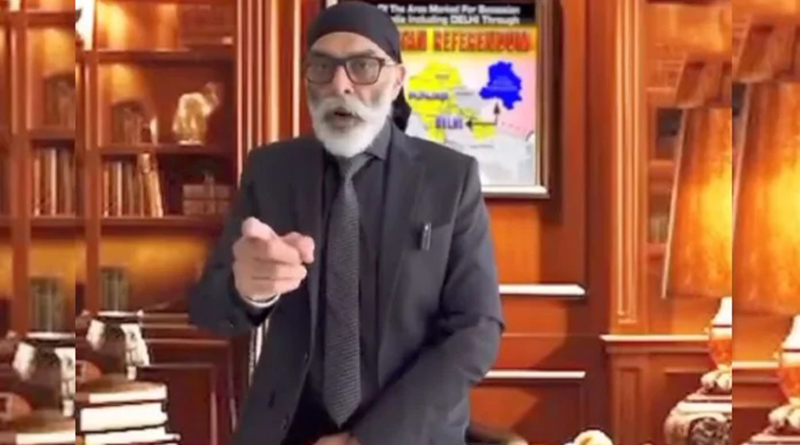
The footage features Gurpatwant Singh Pannun, a leader of Sikhs for Justice, who comments on the political situation in Bangladesh.
In the video, Pannun praises Bangladeshi protesters for allegedly evicting former Prime Minister Sheikh Hasina and ominously suggests that the Indian regime is the next target, predicting the balkanization of India.
Several aspects of this video warrant a closer examination. Notably, Pannun, who typically addresses his audience in Punjabi, chose to speak in English this time. This linguistic shift likely indicates an attempt to reach a broader audience beyond Punjab, intending to sow seeds of discord across India.
The reference to balkanization is particularly troubling, as it echoes a narrative historically driven by Pakistan. This raises the possibility that Pannun might be acting as a mouthpiece for Pakistan and its intelligence agencies, who have long harbored ambitions to destabilize India by promoting internal fragmentation.
The concept of a fragmented India is not new. It dates back to the early 20th century, when Choudhary Rehmat Ali, who coined the term “Pakistan” in 1932, envisioned an Islamic map of India. In his book “Pakistan: The Fatherland of the Pak Nation” (1946), Ali outlined a vision of a divided India, split into seven mini-states under different names, apart from today’s Pakistan.
Such a fragmented vision of India aligns disturbingly well with the aspirations of modern-day extremists within the country, and outside. The resurfacing of this ideology, as implied in Pannun’s statements, serves as a grim reminder of the persistent threats to India’s unity and stability.
Another article published on April 8, 2019, on the website of the International Institute for Strategic Studies, outlined a plan for the fragmentation of India, wherein it proposed that China, along with its ally Pakistan, could support insurgent groups in India to further this.
It is crucial to recognize that Pannun’s rhetoric is not merely an isolated expression of dissent but part of a broader, more insidious campaign to weaken India from within.
By invoking the specter of balkanization using the Khalistan movement, Pannun and his ilk seek to exploit and exacerbate existing social, religious, and regional tensions, thereby undermining national cohesion.
India, a nation characterized by its rich diversity and pluralism, must remain vigilant against such divisive propaganda.
The strength of our democracy lies in our ability to embrace and celebrate our differences while standing united against those who seek to tear us apart.
The Indian government, civil society, and citizens must collectively condemn and counteract these attempts to sow discord.
(Image and text courtesy: Khalsavo.com)
Support Our Journalism
We cannot do without you.. your contribution supports unbiased journalism
IBNS is not driven by any ism- not wokeism, not racism, not skewed secularism, not hyper right-wing or left liberal ideals, nor by any hardline religious beliefs or hyper nationalism. We want to serve you good old objective news, as they are. We do not judge or preach. We let people decide for themselves. We only try to present factual and well-sourced news.
Support objective journalism for a small contribution.