 Khalistan
Canada’s four-decade dance with Khalistan extremism
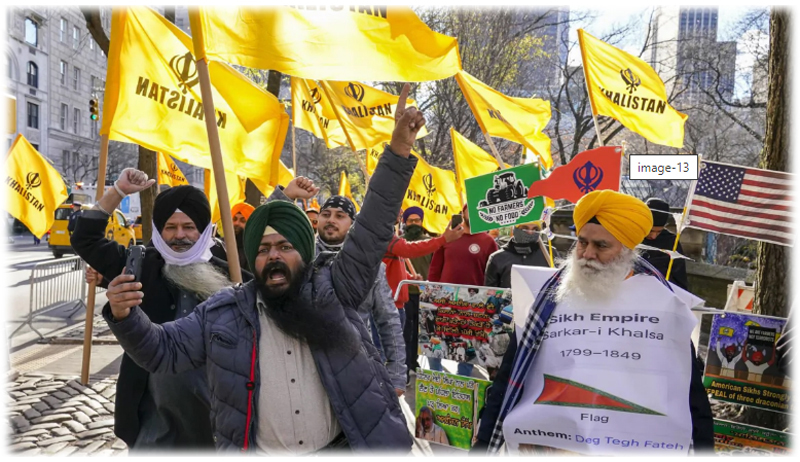
In a recent interview, India’s External Affairs Minister S. Jaishankar expressed concern over the growth of Khalistani extremism generated out of Canada, blaming the Canadian political landscape for providing space for separatists to propagate their radical ideology.
This issue has persisted for over four decades, with little progress towards mitigating the threat posed by Khalistani extremists.
Canada’s historical complacency and apparent lack of understanding regarding the vacuity and irrationality of the Khalistan project raise serious questions about the nation’s commitment to fostering positive international relations.
At the peak of the Khalistani insurgency, Canada’s then Deputy Prime Minister, Dr. Allan J. MacEachen, visited India in 1983. During the visit he mentioned that Canada had no interest in directly or indirectly encouraging the ‘so-called Khalistan movement’ and also assured that his government would not allow political asylum for individuals from India.
Despite these assurances, the bombing of Air India Flight 182 in 1985 revealed the continued existence of Khalistani terror networks in Canada. The tragic incident resulted in the loss of 329 lives, including 268 Canadian citizens. Surprisingly, Canada seems to have forgotten the lessons from this tragedy, as it continues to grapple with the consequences of its lenient approach towards Khalistani elements.
The case of Gerald Vincent Bull, the Canadian engineer assassinated in 1990, highlights the inconsistency in Canada’s response to threats emanating from its soil. While Bull’s assassination, linked to his involvement in the “Supergun” project, did not strain relations between Canada and Israel, the presence of Hardeep Singh Nijjar, a known Khalistani terrorist, in Canada sparked tensions with India. Nijjar, who fled India in 1997 on a fake passport and had been identified as a most-wanted terrorist, in the list handed over by the then Punjab Chief Minister to Canadian Prime Minister Justin Trudeau in 2018.
In the current diplomatic standoff between India and Canada surrounding Nijjar’s death, and glorification of terrorists like Talwinder Singh Parmar underscores the persistent threat of Khalistani extremism. Parmar, a naturalized Canadian citizen and a key suspect in the Air India bombing was later gunned down in 1992. His association with Pakistan ISI and their shared objective of destabilizing Punjab raises serious concerns about the nexus between a section of Canadian Sikhs and foreign elements aiming to exploit regional conflicts.
Despite these alarming developments, Canada seems unmoved by the threat posed by Khalistani terrorists. The Canadian government’s indifference to ‘Kill India’ posters circulated by Sikhs for Justice (SFJ) and its lenient stance on a tableau glorifying the assassins of Prime Minister Indira Gandhi raises questions about the nation’s commitment to curbing extremist activities on its soil.
For over four decades, no remotely viable proposal for Khalistan has surfaced.
There are also no takers in Punjab, and in the Sikh diaspora, for the theocratic idea of Khalistan, further underscoring the vacuity of the idea. Canada, with its strong research agencies, should be more discerning in its approach, refraining from providing space to Khalistani extremists whose success could ultimately ruin global peace and prosperity, as well as domestic security. It is imperative for Canada to reassess its relationship with Khalistani extremist groups, considering the potential damage to bilateral ties and regional stability. The time for Canada to act responsibly and address this issue head-on is long overdue.
(Photo and text courtesy: Khalsavox.com)
Support Our Journalism
We cannot do without you.. your contribution supports unbiased journalism
IBNS is not driven by any ism- not wokeism, not racism, not skewed secularism, not hyper right-wing or left liberal ideals, nor by any hardline religious beliefs or hyper nationalism. We want to serve you good old objective news, as they are. We do not judge or preach. We let people decide for themselves. We only try to present factual and well-sourced news.
Support objective journalism for a small contribution.