 Nuclear Disarmament
As India engages with Japan and South Korea on nuclear disarmament its stand remains consistent
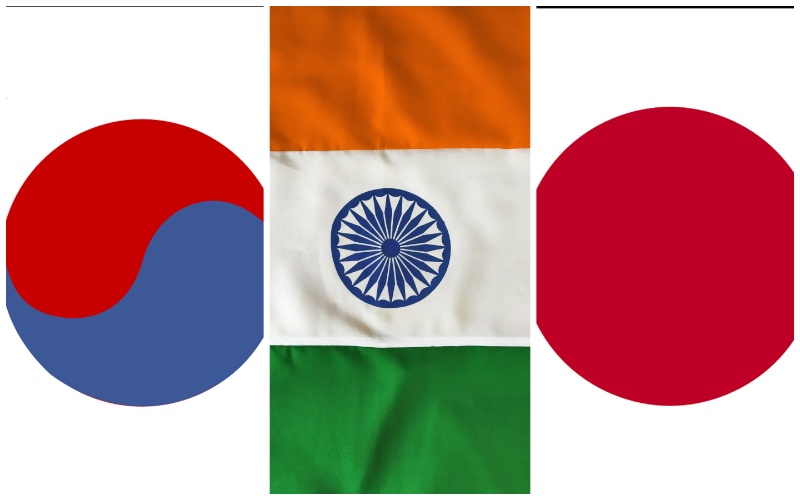
India, which has adhered to a long-standing commitment to universal nuclear disarmament, recently held consultations with Japan and South Korea on disarmament and non-non-proliferation of nuclear weapons.
According to the Press Information Bureau (PIB), Indian and South Korean delegations on Apr 26 held talks on the developments in the field of disarmament and non-proliferation relating to nuclear, chemical and biological domains.
Besides regional non-proliferation issues, outer space security- related matters, conventional weapons including AI in the military domain and multilateral export control regimes were also discussed in the consultations held in the South Korean capital of Seoul.
Meanwhile, on Apr 24, India held the 10th round of consultations with Japan on disarmament, non-proliferation and export control.
In the meeting held in Tokyo, the two sides exchanged views on developments in the areas of disarmament and non-proliferation relating to nuclear, chemical and biological domains, outer space security, non-proliferation issues, conventional weapons and export control.
According to a journal article titled "India and Nuclear Disarmament" by Rajesh Basrur published on JSTOR, India continues to pursue the capabilities it feels are consistent with minimum deterrence.
The prerequisites for India's participation in the disarmament process include deep cuts by the United States and Russia, multilateral steps toward a convention committing all nations to universal disarmament and toward the adoption of the principle of No First Use, and the involvement of China and Pakistan in the process, the journal article read.
A key to facilitating India's participation would be its full transition from an outsider to an insider vis-a-vis the nonproliferation regime, it added.
India has been a long-time supporter of nuclear disarmament, and much before other countries held up these measures, India had proposed universal nuclear disarmament, a nuclear test ban treaty, and a freeze on the production of fissile material.
According to a research paper published in the South Asian Voices (SAV), an online policy platform for strategic analysis on South Asia, hosted by Washington-based Stimson Centre, India has been calling for global nuclear disarmament since independence in 1947, and the country's approach to nuclear disarmament is going through a definite shift.
"At present, India continues to express its support for any initiative that can lead up to the complete elimination of nuclear weapons, the factors that contributed to its strong support for nuclear disarmament are gradually evolving," the research paper read.
According to a fact sheet titled "Nuclear Disarmament India" published in the Nuclear Threat Initiative (NTI), a nonprofit, nonpartisan global security organization focused on reducing nuclear and biological threats imperiling humanity, India has adopted a no-first-use (NFU) policy and declared that it would never threaten or use nuclear weapons against a non-nuclear weapons state.
It added that India maintains a doctrine of credible minimum nuclear deterrence which is ambiguously defined, suggesting that the country keeps a small but survivable nuclear force.
The Indian Ministry of External Affairs stated that the country engaged in relevant multilateral forums and with partner countries on disarmament, non-proliferation and international security affairs.
India’s engagement is based on its longstanding commitment to the goals of universal and non-discriminatory nuclear disarmament and the objectives of non-proliferation of weapons of mass destruction and their delivery systems, according to the ministry.
Support Our Journalism
We cannot do without you.. your contribution supports unbiased journalism
IBNS is not driven by any ism- not wokeism, not racism, not skewed secularism, not hyper right-wing or left liberal ideals, nor by any hardline religious beliefs or hyper nationalism. We want to serve you good old objective news, as they are. We do not judge or preach. We let people decide for themselves. We only try to present factual and well-sourced news.
Support objective journalism for a small contribution.