 Pakistan
Silenced by Force: How Pakistan’s social media activists are being abducted
In an era where the power of social media is undeniable, Pakistan’s intelligence agencies are resorting to a disturbing and increasingly common practice: abducting social media activists and vloggers who dare to criticize the government and military establishment.
This alarming trend of enforced disappearances is not just a gross violation of human rights but a clear attempt to silence dissent and intimidate critics into submission.
The latest victims of this shadowy practice—Naeem Ahmad Yasin, Arsalan Akbar, and Aun Khosa—highlight the perilous state of free expression in Pakistan.
Aun Khosa, a vlogger and comedian with a substantial following on YouTube, is among those who have gone missing. His crime? Singing a parody song criticizing soaring electricity bills and the economic mismanagement that has plagued Pakistan. Khosa’s rendition of “Bill Bill Pakistan,” a satirical take on the popular patriotic song “Dil Dil Pakistan,” struck a chord with many frustrated citizens but also apparently drew the ire of those in power. Days after releasing the video, Khosa was abducted from his home by unidentified men, leaving his family in terror and despair.
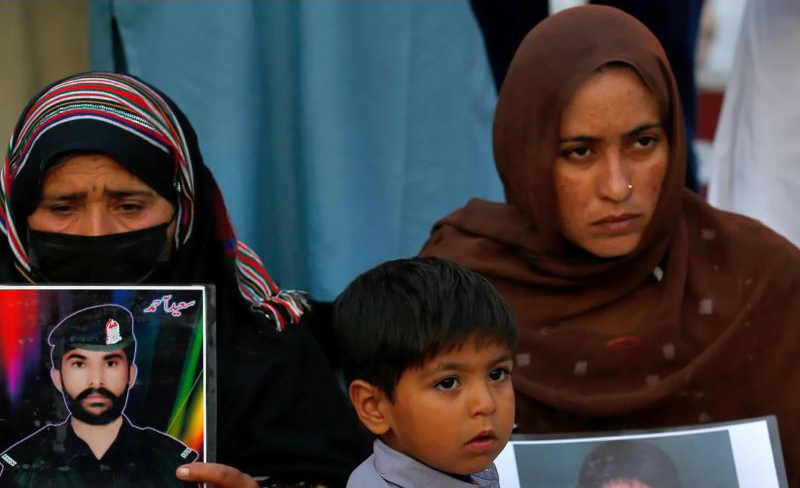
This pattern of enforced disappearances is not new in Pakistan, but it has become more pronounced under the current government led by Prime Minister Shehbaz Sharif. Social media activists, particularly those associated with former Prime Minister Imran Khan’s Pakistan Tehreek-e-Insaf (PTI) party, are being targeted with alarming regularity. The families of the missing have turned to the courts in desperation, but their cries for justice are met with delays and indifference. While the Lahore High Court has ordered the recovery of Khosa and other activists, the efficacy of these directives remains to be seen.
The international community, including organizations like Amnesty International, has expressed deep concern over these disappearances, calling on the Pakistani government to disclose the whereabouts of the missing and ensure an impartial investigation. However, such calls often fall on deaf ears in a country where the military wields significant power behind the scenes, often operating with impunity.
The enforced disappearances in Pakistan are part of a broader strategy to stifle dissent and control the narrative, particularly on social media, which has emerged as a powerful platform for political expression and activism. In a country where traditional media is often muzzled, social media has become a vital outlet for citizens to voice their concerns and challenge the status quo. The abductions of figures like Khosa send a chilling message to others: criticize at your own risk.
This oppressive environment not only threatens the lives and freedoms of those who speak out but also undermines the very foundations of democracy in Pakistan. When citizens live in fear of abduction for expressing their views, the promise of free speech enshrined in Pakistan’s constitution becomes a hollow illusion. The erosion of civil liberties and the culture of impunity surrounding these disappearances are deeply troubling and demand urgent attention from both domestic and international actors.
Pakistan stands at a crossroads. The path it chooses will determine whether it becomes a nation that values and protects the rights of its citizens or one that continues to suppress dissent through fear and intimidation. The global community must hold Pakistan accountable for these human rights violations, ensuring that the voices of the missing are not silenced forever in the shadows.
The case of Aun Khosa and others like him should serve as a wake-up call. The time for Pakistan to address the scourge of enforced disappearances is now—before more voices are silenced, and before the country slips further into the abyss of authoritarianism. The judiciary must act decisively, not just in ordering recoveries but in holding those responsible accountable, no matter how powerful they may be. Only then can Pakistan hope to reclaim its place as a nation where freedom of expression is not just a right but a reality.
(Image and text courtesy: Khalsavox.com)
Support Our Journalism
We cannot do without you.. your contribution supports unbiased journalism
IBNS is not driven by any ism- not wokeism, not racism, not skewed secularism, not hyper right-wing or left liberal ideals, nor by any hardline religious beliefs or hyper nationalism. We want to serve you good old objective news, as they are. We do not judge or preach. We let people decide for themselves. We only try to present factual and well-sourced news.
Support objective journalism for a small contribution.