 Raghu Rai ( 1942-2026)
The Man Behind the Lens: Remembering Raghu Rai
It was an ordinary day in the late 1990s when I set out into the villages of Howrah district alongside Dominique Lapierre, the celebrated French writer whose soul seemed stitched into the soil of Bengal. To the villagers we visited that day, he was not a foreign author — he was "Dominic Da," their own.
What I did not expect, as a rookie journalist still finding my footing, was to find Raghu Rai walking among us.
There he was — no entourage, no fuss — just a man with a camera, moving through the lanes of rural Howrah with the quiet ease of someone who had always belonged there. We ate together that afternoon and talked about many things. At one point, the village folk, overwhelmed by Lapierre's near-mythic presence, insisted on garlanding us on a makeshift stage — the kind of honour that is simultaneously touching and mortifying. Raghu Rai bore it with a gentle smile. It is possible Lapierre had invited him; the two men shared a sensibility, both drawn irresistibly to India's broken and beautiful edges.
I did not fully grasp, in that moment, who was standing beside me. There was no performance of greatness, no air of the legendary. He was simply a man present in the world, watching it carefully.
Only as my own journalism deepened over the years did I recognize what I had witnessed that day: the face of true humility—not the performative modesty of those who secretly wish to be noticed, but the real kind, born of absolute confidence in one's work and indifference to the theatre of fame.
Raghu Rai, who passed away in Delhi on April 26, 2026, at the age of 83, was that rare kind of artist.
An Engineer Who Chose Light
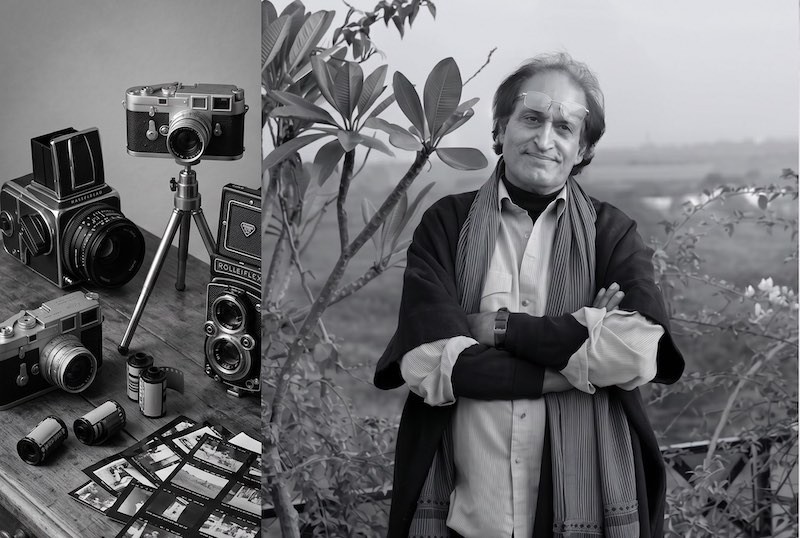
Born in December 1942 in Jhang, Punjab — a town that now lies in Pakistan — he trained first as a civil engineer before discovering photography at age 23. He joined The Statesman in New Delhi as their chief photographer in 1966, and within a few years had announced himself to the world. In 1971, the legendary Henri Cartier-Bresson, impressed by Rai's exhibition at Gallery Delpire in Paris, nominated him to Magnum Photos — the world's most prestigious photographers' cooperative. Rai remains, to this day, the first and most celebrated Indian photographer to have been part of that singular institution.
For millions of Indians across generations, Raghu Rai was not just a photographer — he was the custodian of a visual memory we did not know we needed.
His coffee table books occupied pride of place in our living rooms: on Kolkata with its teeming, immortal streets; on Mother Teresa, documented with an intimacy that transcended journalism; on the Taj Mahal, where he once captured the monument reflected against a riverside cremation, life and death sharing the same frame with no apology; on the ghats of Benaras, where spirituality and mortality meet at the water's edge every morning; on the Dalai Lama, the Emergency, and the Bangladesh war. Over a career spanning six decades, he was working on his 57th book at the time of his death. Each one was not merely a collection of photographs — it was an argument that India was worth looking at, carefully, repeatedly, and without flinching.
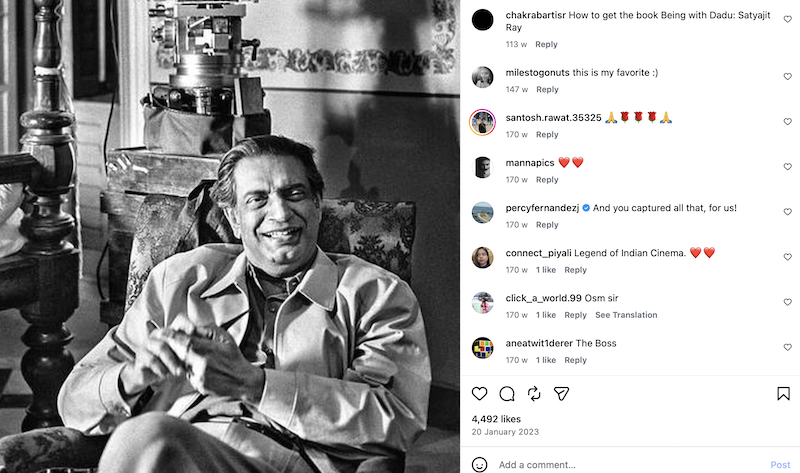
His portraits of the great and the iconic were in a league of their own. He photographed Satyajit Ray with the reverence one master reserves for another—those contemplative and unhurried images of the filmmaker remain among the most enduring visual records of one of India's greatest minds.
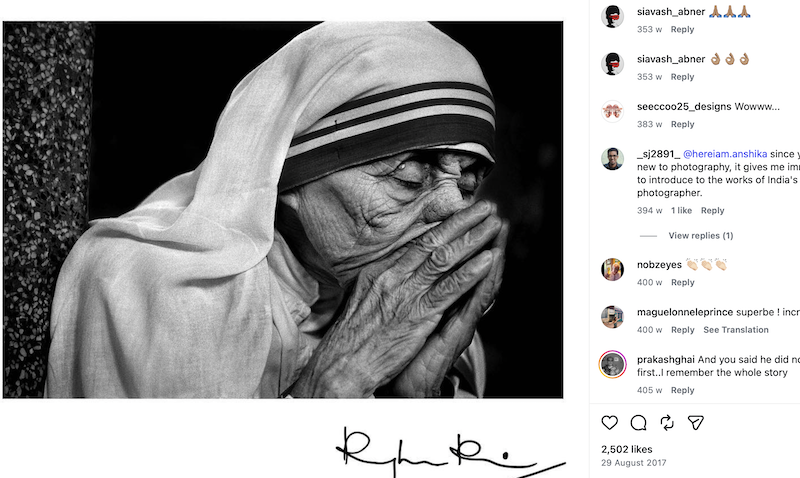
With Mother Teresa, he found something rarer than celebrity: he found her living her faith, bent over the sick and the dying in the lanes of Calcutta, her face weathered and luminous at once.
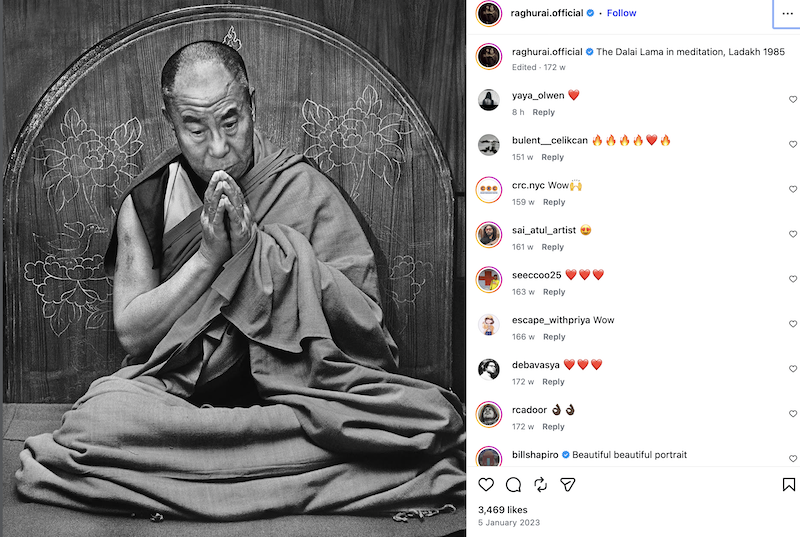
The Dalai Lama—a subject Rai returned to across decades, eventually producing an entire book on him—was captured not in the pageantry of his office but in the warmth of his humanity: laughing, thinking, praying, simply being.
He photographed Indira Gandhi with an intimacy few journalists were ever afforded, tracing her arc from political ascendancy to the Emergency years with an unflinching eye. Musicians like Bismillah Khan and Hariprasad Chaurasia, their faces lost in the rapture of performance, came alive under his lens in ways that made you feel you could almost hear the notes.
And then there were the nameless—the rickshaw puller in rain-soaked Calcutta, the child at a temple door, the widow on a Benaras ghat—whom Rai elevated with the same seriousness and care as any head of state or Nobel laureate. For him, there was no hierarchy of subjects. Every face holds a universe, and his camera knew it.
Eyes of Bhopal
And then there is Bhopal. Of all his works, his documentation of the 1984 gas tragedy has most permanently lodged itself in the conscience of the nation. Among those images, one refuses to leave us — a father carrying the limp body of his young child to burial in the poisoned earth, the tiny form wrapped in cloth, a small hand still visible.
It is a photograph that arrived like a wound and never quite healed. Reproduced on front pages across the world, it became the defining image of the worst industrial disaster in human history — and more than that, it became an indictment of power, of negligence, of the quiet understanding that it is always the poorest who pay the highest price. Decades later, that image still arrives uninvited — in conversations about corporate accountability, about justice perpetually deferred, about what governments owe the people they fail. That is the true measure of a great photograph: it refuses to age. It insists on remaining present tense.
One of the most haunting photographs in photojournalism history is almost certainly "The Burial of Bhopal"—a photograph Raghu Rai took in the immediate aftermath of the December 1984 gas tragedy. It shows a young child—a small boy—being buried in the earth, his face is partially visible, his eyes open and glazed, staring upward into nothing.
The father's hands are visible, pressing the soil.It insists on remaining in the present tense.
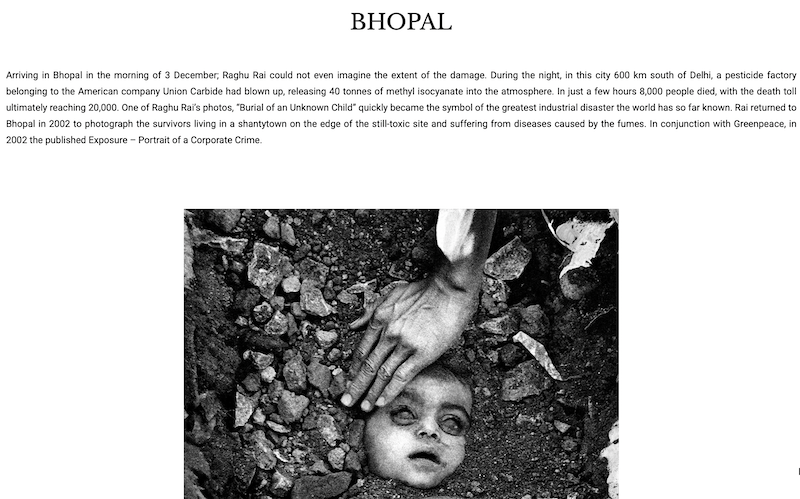
Rai returned to Bhopal not once but many times, accumulating a body of witness that no single frame could carry alone.
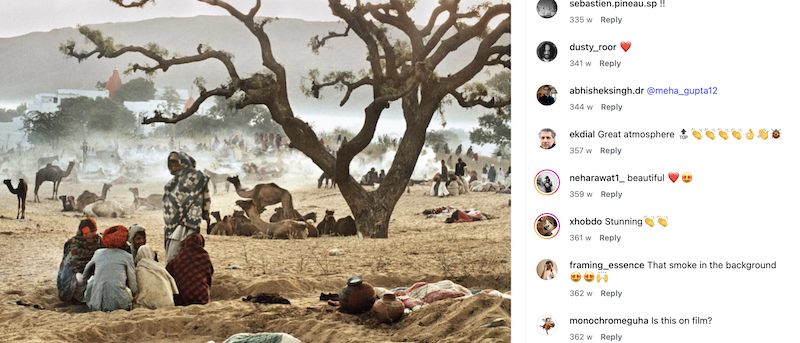
He worked through his long career with India Today as Picture Editor, Visualiser and Photographer during the magazine's formative years, producing trailblazing essays on the social, political and cultural upheavals of his era. His photo essays appeared in Time, Life, GEO, Le Monde, The New York Times, Newsweek, Vogue and The New Yorker, among many others. He was awarded the Padma Shri in 1972 for his haunting body of work on the Bangladesh war and its refugees. In 1992, he received the Photographer of the Year award in the United States for his National Geographic essay on wildlife management in India. In 2009, France conferred on him the Officier des Arts et des Lettres.
He inspired generations of young photographers across India to pick up a camera not as a tool of ambition but as an instrument of witness — to walk into a place and disappear into it, to earn the trust of a face before pressing the shutter.
He once described his method simply: he dressed plainly, carried one camera, merged with people, and gave them no reason to perform. The result was a body of work of extraordinary honesty.
He is survived by his wife Gurmeet, his son Nitin — also a photographer, carrying the lineage forward — and his daughters Lagan, Avani, and Purvai.
I think often of that afternoon in Howrah — the garlands draped around our necks, the food passed around without ceremony, and Raghu Rai watching it all with quiet amusement. He taught me, though he never knew it, that the greatest among us carry their greatness lightly. That the most powerful eye in the room belongs to the one in no hurry to be seen.
India has lost its most devoted witness. The frame, for once, is empty.
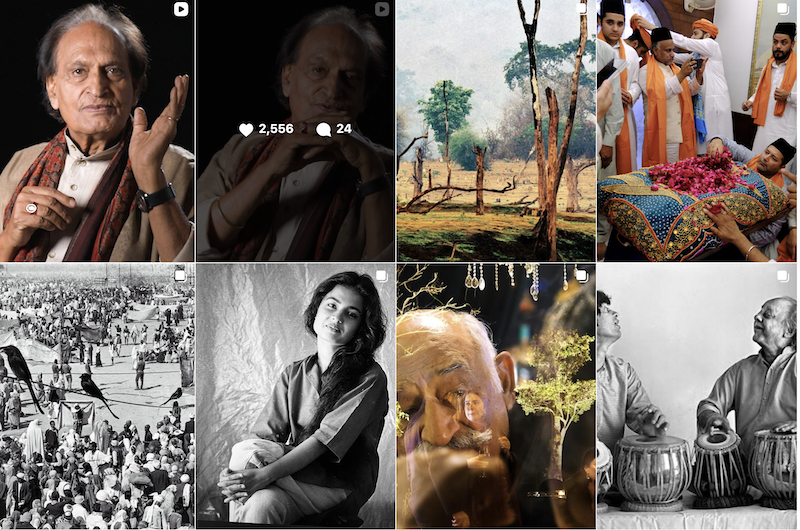
Photo credits: Screenshots of Raghu Rai Official Instagram Account and Raghu Rai Foundation
Support Our Journalism
We cannot do without you.. your contribution supports unbiased journalism
IBNS is not driven by any ism- not wokeism, not racism, not skewed secularism, not hyper right-wing or left liberal ideals, nor by any hardline religious beliefs or hyper nationalism. We want to serve you good old objective news, as they are. We do not judge or preach. We let people decide for themselves. We only try to present factual and well-sourced news.
Support objective journalism for a small contribution.