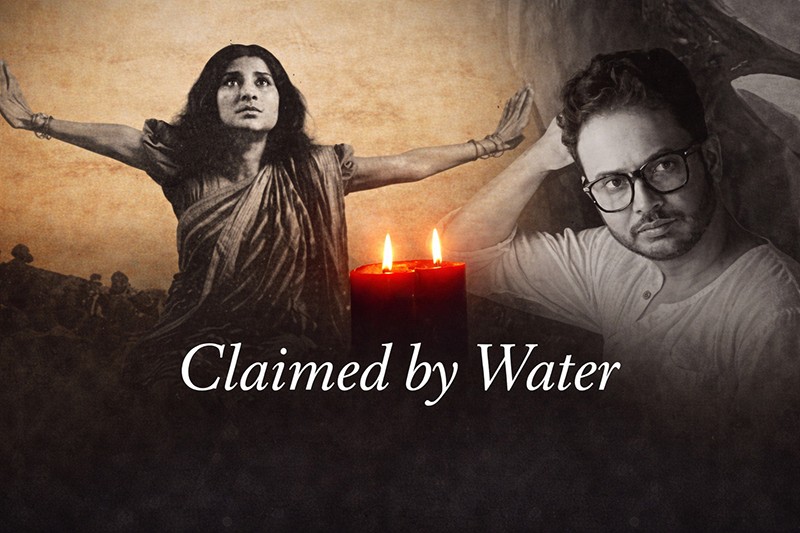
Claimed by Water: Old timers remember losing Bengali theatre's brightest star Keya Chakraborty like Rahul in 1977
The death of actor Rahul Arunoday Banerjee at Talsari last Sunday has stirred a painful memory in Bengal's cultural conscience — of another brilliant performer- Keya Chakraborty- mysteriously lost to water during a film shoot, nearly five decades ago
The Ganges claimed her on March 12, 1977. Keya was 34 years old, at the peak of her powers, and the Bengali stage had never quite seen anyone like her.
Keya Chakraborty died a mysterious death while shooting for a Bengali film, Jeevan Jey Rakam — "Life as it is." She jumped into the Ganges from a boat for a particular scene, was washed away, and the body was recovered bearing multiple injuries.
Whether her death was a suicide, a murder, or an accident has never been definitively established — it remains, to this day, mired in mystery.
What is not in doubt is what Bengal lost that day.
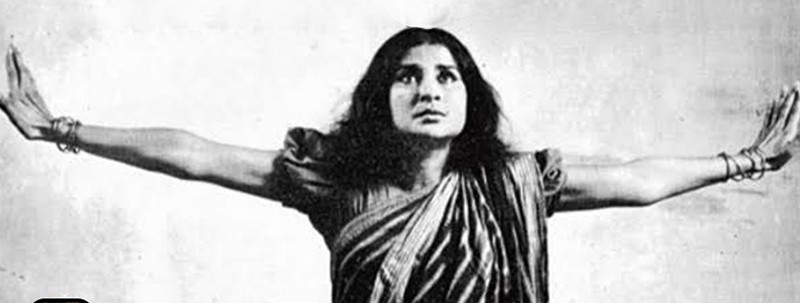 Even at a young age, Keya Chakraborty displayed a rare, instinctive brilliance on stage that set her apart. Photo: Scottish Church College /Internet Archive
A Stage Set on Fire
Keya Chakraborty (1942–1977) was one of the brightest stars in Bengali theatre during the 1960s and 1970s — one of the very few women who commanded genuine authority in that performance space. In an era when a woman stepping onto the professional stage still invited social judgment, Keya didn't walk in — she blazed.
She joined Nandikar, the celebrated theatre group whose logo was designed by Satyajit Ray, alongside luminaries like Rudraprasad Sengupta and Bibhas Chakraborty. This was the golden age of Nandikar — a constellation of talent that included Ajitesh Bandopadhyay, Asit Bandopadhyay, Rudraprasad Sengupta, and Keya Chakraborty performing together in play after landmark play.
The productions she was part of were not light entertainments. Keya appeared in Tin Poisar Pala and Bhalomanush — Bengali adaptations of Brecht's Threepenny Opera and The Good Person of Szechwan — and in Nandikar's celebrated Bengali rendition of Antigone. These were works of moral and political weight, and Keya carried them with a force that left audiences shaken and exhilarated in equal measure.
Teen Poishar Pala alone was performed 469 times; Bhalomanush 357 times; Antigone 286 times. Night after night, Keya was at the centre of it all.
The Woman Behind the Actress
She was more than a performer. Keya taught English at Scottish Church College from 1964 to 1974, giving her a life and an intellectual grounding outside the theatre world. But her heart was always on the stage, and eventually it consumed everything else.
Her ethical sense was so strong that she resigned from Scottish Church College in 1974 when she felt she could no longer devote adequate time to teaching because of her total immersion in the world of acting. After resigning, she took charge of publicity for the Nandikar group.
Her commitment to the group went far beyond performance. In moments of financial crisis at Nandikar, she mortgaged her own jewellery and sought loans from others to keep the group afloat. This was not the behaviour of a woman who merely acted in plays — this was someone for whom theatre was a calling, a community, a way of being in the world.
Off stage, her compassion was just as fierce. According to media reports, in the turbulent early 1970s, she alone rushed late at night into a Naxalite-dominated neighbourhood in North Calcutta to attend to a severely wounded innocent young man. On another occasion, returning from rehearsal on a rainy day, she gave her woollen wrapper to an old man shivering in the cold. Once, she stepped in to save a poor man in her locality who was being beaten by a mob on suspicion of theft.
The playwright Badal Sarkar, who knew her well, later described her with the precision of someone who had watched greatness up close. Sarkar observed that Keya had a deadly emotion in her character — a kind of dream-driven romanticism — that she combined with a free, energetic and healthy mind. She was not party to what he called the "mask-civilisation" of her times; she said what she felt and did not flinch from the displeasure it sometimes caused.
A Voice for Women, Written in Irony
Two years before her death, in 1975, Keya wrote an essay titled "Mrs R P Sengupta" — ostensibly a record of the mundane daily life of a woman endlessly harassed by household chores, with no time to think, let alone write. It is one of the most quietly devastating pieces of feminist writing to emerge from Bengal in that decade.
The piece exposes the absurd weight of domestic custom pressing down on a woman artist's time and creativity. The theatre essay never gets written. The reader, arriving to meet Bengal's most intellectually alive actress, is instead ushered into the confines of her home. Scroll.in The point is made with devastating irony: the problems a woman faces in theatre have everything to do with her life outside it.
Keya was also a woman of the streets, literally. She acted in Michhil — the famous play by Badal Sarkar — which was collectively performed by several groups in Curzon Park in central Calcutta, as a protest against the police killing of a young man named Prabir Dutta in that very field. Theatre, for Keya, was inseparable from conscience.
The Death That Refused Explanation
Nandikar's own records note tersely: "March 12 — Keya Chakraborty died in an accident while shooting for a film." The restraint of that official entry does not begin to capture what was lost — or how it happened.
The shooting was at Sankrail, on the outskirts of Kolkata. A young woman of 34, at the height of her abilities, went into the water for a scene and did not come back. The question of whether it was suicide, murder, or accident was never satisfactorily answered. The mystery clung to her memory long after the Ganges had given her body back.
What followed her death was grief of a particular, unresolved kind — the grief that comes not only from losing someone, but from never knowing exactly how or why. Nearly four decades later, playwright-director Debesh Chattopadhyay made a film, Natoker Mato (Like a Play), inspired by her life and that unanswered death — insisting it was not a biopic, but a film about any woman who "lived with courage and determination on her own terms."
The Echo We Cannot Ignore
Last Sunday, at Talsari beach near the Odisha-West Bengal border, popular Bengali actor Rahul Arunoday Banerjee died while shooting for a television series. He and his co-actor reportedly slipped into a ditch while performing a dance sequence in knee-deep water as the tide came in. Police noted that the shooting team had not obtained any permission to film at the location.
 Rahul’s life cut short, leaving behind silence where his voice once was. Photo: Official FB
Nearly fifty years separate the two deaths. The Ganges and the sea at Talsari are different waters. But the essential failure — of safety, of foresight, of the duty a production owes to the human beings it sends into harm's way — is hauntingly the same.
Keya Chakraborty left behind no systematic archive of safety failures, no investigation, no accountability. She left behind plays that are still counted among the finest in Bengali theatre history, an essay about a woman with no time to write, and a memory so vivid that Calcutta has never quite been able to put it to rest.
She was 34. She had so much more to give.
Keya's creative life, as one writer has noted, illuminates for us the possibility of an alternative public life in Kolkata — one where compassion for others is an organic part of intellectual and political existence. Mainstreamweekly
On a beach in Odisha, last Sunday, another life was cut short in the same senseless way. The least we owe both of them is to finally ask: when does the industry learn?
Keya Chakraborty (1942–1977). Actress, teacher, activist. The Bengali stage has not forgotten her.
The article draws on documented sources about Keya's life, the Nandikar records, Badal Sarkar's remembrances, and her own writing as reported at various times by Mainstream Weekly, ANI, Afribary, Scroll, Taylor and Francis and Silhouette Magazine. Photo: Facebook and AI
Support Our Journalism
We cannot do without you.. your contribution supports unbiased journalism
IBNS is not driven by any ism- not wokeism, not racism, not skewed secularism, not hyper right-wing or left liberal ideals, nor by any hardline religious beliefs or hyper nationalism. We want to serve you good old objective news, as they are. We do not judge or preach. We let people decide for themselves. We only try to present factual and well-sourced news.
Support objective journalism for a small contribution.