Education a top priority in ties with India, says Australian envoy at opening of UNSW office
New Delhi, July 18 (IBNS): In a major step to take forward its widening outreach to India, including in student recruitment and collaborations in cutting-edge research, the University of New South Wales, Sydney, on Tuesday evening inaugurated its new premises in the Indian capital as Australia announced its intent about making India a major focus of its economic and diplomatic strategy with education as a "flagship sector".
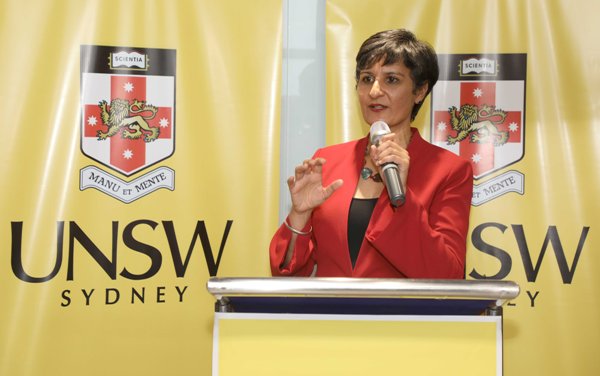
Australian High Commissioner to India Harinder Sidhu graced the inauguration of the centre, located in the Jasola commercial complex in New Delhi, while UNSW Pro-Vice Chancellor (International) Laurie Pearcey flew down especially to attend the event.
Addressing the select gathering at the event, High Commissioner Sidhu, who is of Indian origin in an increasingly multiracial Australia, termed the opening of the new office “a big milestone” in the bilateral relationship with India. Referring to the report, ‘An India Economic Strategy to 2035, Navigating from Potential to Delivery’ released last week by the Australian government, Sidhu said it outlined that education is “not just a priority sector but the top priority sector” in bilateral relations with India.
Education is a benchmark of co-operation between our two countries. There’s a lot that we have been doing together and can now do much much more in the field of education and research, she added.
Pearcey, in his remarks, said that from nine overseas students from Southeast Asia in the early 1950s UNSW today has 20,000 international students from 120 countries, “and India is an important part of UNSW”.
He termed the opening of the new office an “incredibly exciting time in the Australia-India relationship”. He stressed on UNSW’s strategy, which is academic excellence, social engagement and global impact.
Manish (one name), Joint Secretary in the Ministry of External Affairs, termed the opening of the centre as “very timely” and said that education is one of the primary areas of bilateral cooperation.
Amit Dasgupta, who has also served as consul-general in Melbourne and is present India Country Director of UNSW, said the India engagement of UNSW started modestly and has “gone from strength to strength, and I believe the best is yet to come”.
He said it was not just a matter of student recruitment, but went beyond that. “A partnership that forged together the twin pillars of teaching and research, how we can collaborate with institutions of academic excellence in India and with the corporate sector and in the process transform lives, that is the mission we have”.
The report, 'An India Economic Strategy to 2035, Navigating from Potential to Delivery’, authored by former secretary of the Department of Foreign Affairs and Trade and one-time High Commissioner to India Peter Varghese, looks at how Australia can capitalise on economic growth in India and states that a strong and productive Australia-India education relationship should be seen as the “flagship sector” of the bilateral relationship.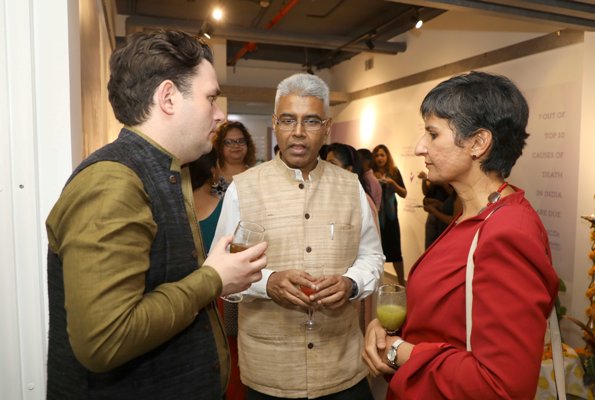
“There is no sector with greater promise for Australia in India than education. Australia’s future growth and prosperity will be driven by our ability to generate and attract the best and brightest.”
According to it, India’s tertiary-age (18 to 22) population is the largest in the world and is projected to peak at 126 million in 2026 before stabilising at 118 million by 2035, yet enrolment in higher education in Australia (27 per cent) is far behind China (43 per cent) and Brazil (51 per cent).
The report estimates that if Australia maintains its growth in international students and can recapture its share of Indian students from its 2009-10 peak, direct revenue from Australian education exports to India could exceed $12 billion by 2035.
Louise McSorley, Counsellor-Education and Research at the Australian High Commission, seconded Manish and said: "We have collaborations for cutting edge research and technology with institutions of higher education. We want to step these up to the next level in the coming years."
Located in Sydney, Australia’s student city, UNSW is one of the world's leading research and teaching universities and is home to more than 52,000 students from nearly 120 countries. UNSW is ranked 45th in the world, according to QS World University ranking.
The event was attended by senior academics like Dr Rupamanjari Ghosh, Vice Chancellor of Shiv Nadar University, Dr. Vivekanand Jha, Head of The George Institute and Sanjay Seth, CEO of TERI-Griha among others.
Image: UNSW Twitter page
Support Our Journalism
We cannot do without you.. your contribution supports unbiased journalism
IBNS is not driven by any ism- not wokeism, not racism, not skewed secularism, not hyper right-wing or left liberal ideals, nor by any hardline religious beliefs or hyper nationalism. We want to serve you good old objective news, as they are. We do not judge or preach. We let people decide for themselves. We only try to present factual and well-sourced news.
Support objective journalism for a small contribution.