 AI
AI
99% of jobs could disappear by 2027, AI expert warns
A leading artificial intelligence researcher has issued one of the starkest warnings yet about the future of human work, arguing that nearly all jobs could disappear within the next five years as machines surpass human abilities across every domain.
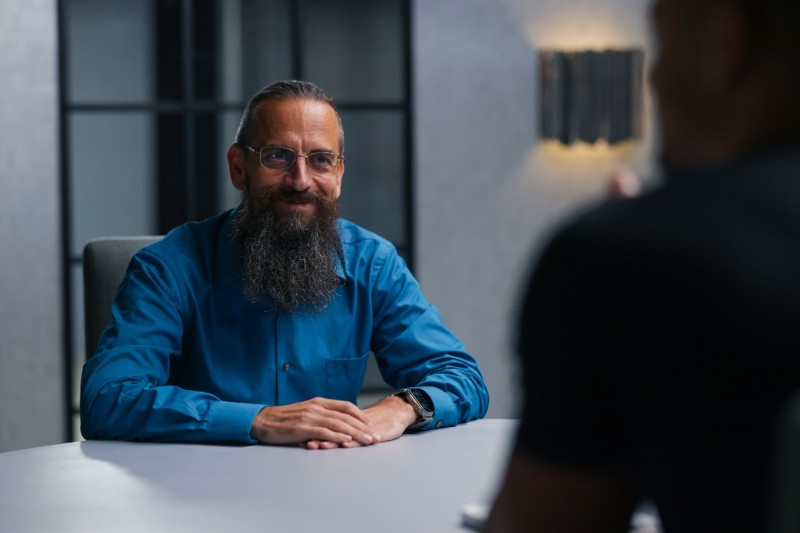
Speaking on The Diary of a CEO podcast hosted by Steven Bartlett, Dr Roman Yampolskiy, a professor of computer science at the University of Louisville and a prominent voice on AI safety, said the rise of artificial general intelligence (AGI) could trigger levels of unemployment never seen in human history.
‘There is not a job that cannot be automated’
According to Dr Yampolskiy, AGI systems capable of outperforming humans across most cognitive tasks could emerge as early as 2027, with devastating consequences for employment soon after.
“In five years, all the physical labour can also be automated,” he said.
“So we're looking at a world where we have levels of unemployment we never seen before. Not talking about 10 percent unemployment, which is scary, but 99 percent.”
Unlike previous industrial revolutions, Yampolskiy stressed that this shift would not create new categories of work to replace what is lost.
“There is not a job which cannot be automated,” he said, calling it an unprecedented moment in human history.
Earlier technologies, he noted, acted as tools that enhanced human productivity rather than eliminating human relevance altogether.
Creative and media jobs are not safe
Dr Yampolskiy rejected the idea that creativity would protect humans from automation, arguing that AI systems are already proving faster, more accurate and more scalable than people even in traditionally human-dominated fields.
He suggested that content creation, journalism and podcasting could all be overtaken by machines, telling Bartlett that his own profession would eventually face obsolescence.
AI systems, he said, can process more data, analyse audiences better and operate without fatigue.
“All you have left is jobs where for whatever reason you prefer another human would do it for you,” Yampolskiy said.
“There are jobs where you want a human, maybe you're rich and you want a human accountant for whatever reason.”
As an example, he added that someone like Warren Buffett might still choose a human accountant, not because AI lacks ability, but because of personal preference.
Five types of jobs that might survive
When pressed on whether any human roles could endure, Dr Yampolskiy outlined a narrow set of exceptions, emphasising that they would support only a tiny fraction of today’s workforce.
One such area involves what he described as a niche preference for human-made goods.
Handmade crafts and artisanal products may retain appeal for some consumers, much like luxury alternatives to mass-produced items.
However, he cautioned that this market would remain extremely small.
Another potential refuge lies in roles rooted in lived human experience.
Counsellors, therapists and similar professions may retain value because humans uniquely understand what it feels like to be human.
“You know better than anyone what it's like to be you,” he said.
Two more roles would exist because of AI itself. One would involve regulation and oversight.
While Yampolskiy doubts long-term control of AI is possible, he believes human intervention could slow the pace of transformation.
“At this point, we're trying to get more time,” he said, suggesting regulation could stretch a five-year disruption into decades.
The other surviving role would be intermediaries — people skilled enough to understand AI systems and explain, manage or deploy them for individuals and organisations unable to do so themselves.
Approaching the technological singularity
Looking further ahead, Dr Yampolskiy warned that humanity could approach the technological singularity by around 2045 — a point where AI-driven progress accelerates beyond human understanding or prediction.
“That’s the definition of singularity,” he said.
“The point beyond which we cannot see, understand, predict, or see the intelligence itself or what is happening in the world.”
To explain the pace of change, he compared AI development to consumer technology.
“Imagine the research and development of an iPhone being automated,” he said.
“It happens every six months, every three months, every month, week, day, hour, minute, second.”
“You cannot keep up with 30 iterations of iPhone in one day,” he added.
‘We’re all getting dumber’
Dr Yampolskiy suggested that this future may already be taking shape, even for experts working at the forefront of AI research.
“Apparently, though, we might already be there,” he said, acknowledging that specialists increasingly struggle to track the speed of innovation.
“Every day, as a percentage of total knowledge, I get dumber. I may still know more because I keep reading. But as a percentage of overall knowledge, we're all getting dumber.”
For Yampolskiy, the greatest risk is not technological advancement itself, but a world in which human labour, judgment and economic relevance are no longer necessary — a transformation he believes is approaching far faster than societies, governments and institutions are prepared to handle.
Support Our Journalism
We cannot do without you.. your contribution supports unbiased journalism
IBNS is not driven by any ism- not wokeism, not racism, not skewed secularism, not hyper right-wing or left liberal ideals, nor by any hardline religious beliefs or hyper nationalism. We want to serve you good old objective news, as they are. We do not judge or preach. We let people decide for themselves. We only try to present factual and well-sourced news.
Support objective journalism for a small contribution.