 Ebola
Ebola
WHO says global Ebola risk remains low despite escalating DRC outbreak
The World Health Organization has raised the public health risk level of the ongoing Ebola outbreak in the Democratic Republic of the Congo from “high” to “very high”, as the virus continues to spread rapidly across the country’s conflict-hit eastern provinces.
WHO chief Dr Tedros Adhanom Ghebreyesus said, however, that the global risk remains “low”.
Emergency Response Intensifies
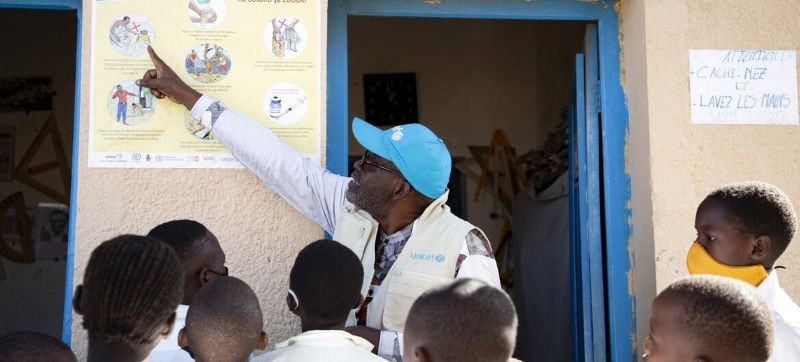
The United Nations is rushing emergency personnel, supplies and funding into eastern DRC to contain the fast-growing outbreak.
So far, 82 confirmed cases and seven deaths have been officially recorded in DRC. However, WHO warns that the actual scale of the outbreak could be significantly larger, with nearly 750 suspected cases and 177 suspected deaths under investigation.
Conflict and Distrust Hampering Containment
The outbreak is unfolding amid escalating violence, mass displacement and deep mistrust of outside authorities, worsened by rumours and misinformation.
As the #Ebola outbreak in the #DRC is spreading rapidly, @WHO is now revising our risk assessment to very high at the national level, high at the regional level, and low at the global level. pic.twitter.com/kDtXg0a51G
— Tedros Adhanom Ghebreyesus (@DrTedros) May 22, 2026
In a sign of growing tensions, a hospital in Ituri province was set ablaze on Thursday by angry relatives after authorities refused to release the body of a deceased family member due to fears of contamination, according to local reports.
Cases Spread Beyond DRC
Two Ebola cases linked to travel from DRC have been confirmed in Uganda, including one death.
Two American nationals — including a doctor and another individual identified as a “high-risk contact” — have been transferred to Europe for treatment and monitoring.
Rare Bundibugyo Strain Detected
The outbreak has been traced to the rare Bundibugyo strain of Ebola, for which there are currently no approved vaccines or treatments.
Only two previous outbreaks of this strain have ever been recorded — in Uganda in 2007 and in DRC in 2012.
Experimental Treatments Underway
WHO said it has deployed 22 international experts to affected areas and released $3.9 million from its emergency contingency fund.
La réponse de l’OMS à #Ebola s'accélère au #Sud_Kivu🇨🇩. Avec un cas confirmé dans cette province touchée par le virus #Bundibugyo, @OMSRDCONGO réagit vite en envoyant des fournitures & équipements médicaux pour les intervenants de première ligne, grâce au soutien de @FCDOGovUK🇬🇧. pic.twitter.com/n1bBmmvwFZ
— OMS RDC (@OMSRDCONGO) May 22, 2026
A continental incident management team is also being established in partnership with the Africa Centres for Disease Control and Prevention.
The agency is accelerating work on experimental vaccines and treatments for the Bundibugyo strain.
Tedros said WHO’s research advisory group has recommended prioritising two monoclonal antibodies for clinical trials, along with testing the antiviral drug Obeldesivir for high-risk contacts.
Restoring Public Trust Critical
Tedros stressed that rebuilding confidence among affected communities will be key to containing the outbreak.
“Building trust in the affected communities is critical to a successful response, and is one of our highest priorities,” he said.
Support Our Journalism
We cannot do without you.. your contribution supports unbiased journalism
IBNS is not driven by any ism- not wokeism, not racism, not skewed secularism, not hyper right-wing or left liberal ideals, nor by any hardline religious beliefs or hyper nationalism. We want to serve you good old objective news, as they are. We do not judge or preach. We let people decide for themselves. We only try to present factual and well-sourced news.
Support objective journalism for a small contribution.